 Critically Endangered
Bornean Orangutan
Pongo pygmaeus
One of the 3 orangutans on WAnimals
Mammals · Primates · Hominidae
Pongo abelii
At extremely high risk of imminent extinction in the wild.
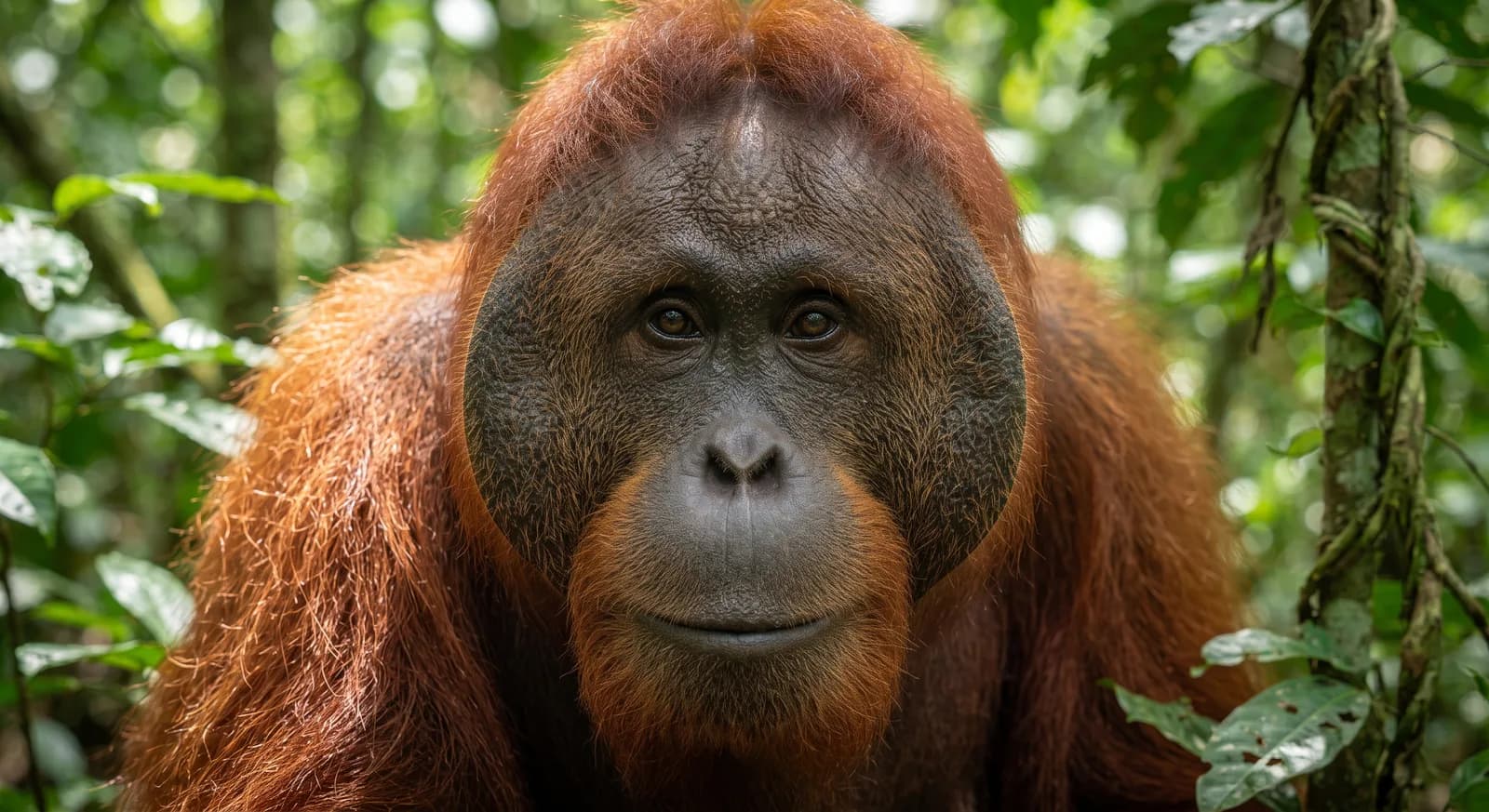
The Sumatran orangutan is slimmer and more social than its Bornean relative, with a narrower face and a long, pale beard in the males. It is the most arboreal of the great apes: it comes down to the ground far less often than the Bornean orangutan, partly because it shares its range with the tiger. It spends the day searching for ripe fruit and builds a fresh nest in the crowns every night. Its population is concentrated today in the Leuser Ecosystem, at the northern tip of the island.
Weight
30 kg – 90 kg
Size
1.2 m – 1.5 m
Life expectancy
45 years
Diet
Herbivore
Feeds mainly on plants.
Activity
Diurnal
Active mainly during the day.
Social structure
Solitary
Lives and hunts alone, joining others only to breed.
Estimated population
Some 14,000 individuals
Sources consulted: Wikipedia (es): Pongo abelii
The pins mark the parks where its presence is documented.
Parks and dive sites where this species has been documented.
Other species in the catalogue with the most in common with Sumatran Orangutan — same habitat, park, country, tags or family.
The sumatran orangutan is classified as critically endangered. Organisations such as the IUCN, WWF and the Wildlife Conservation Society work specifically on its conservation and that of its habitat; looking into their programmes is a good starting point if you want to get involved.
It's documented in 2 protected areas — one reason why protecting these places matters for its conservation.
Based on what we already know about sumatran orangutan.