One of the 26 spiders on WAnimals
Arachnids · Araneae · Thomisidae
Goldenrod Crab Spider
Misumena vatia
It has not yet been assessed against the IUCN criteria. See full glossary
Misumena vatia is a fairly common crab spider across the Holarctic: Eurasia and North America. The male measures between 4 and 5 mm while the female reaches 10 mm. This species was described by the Swedish arachnologist Carl Alexander Clerck in 1757. The genus name Misumena comes from the Greek misoúmenus, meaning hated. The specific name vatia comes from the Latin, meaning bent outwards.
Size
up to 1 cm
Diet
Carnivore
Feeds mainly on other animals.
Activity
Diurnal
Active mainly during the day.
Social structure
Solitary
Lives and hunts alone, joining others only to breed.
Sighting difficulty
Unknown
Fun facts
- The female can change colour between white and deep yellow to match the flower she hunts on, a process taking several days one way and up to a couple of weeks the other.
- Many insects see into the ultraviolet and would spot a spider that did not match the flower, so her camouflage works in that part of the spectrum too.
- The male is far smaller and darker, and does not change colour.
- It changes colour between white and yellow to blend into the flower where it hunts, which is exceptional among European spiders. It does so by moving a liquid pigment into the cuticle.
- The change is not instant: it takes between six and twenty-five days, so it is a medium-term decision rather than reactive camouflage.
- Only the females do it. The males, much smaller and darker, do not change colour.
- It builds no hunting web: it is an ambush predator that grips its prey with the first two pairs of legs, far longer than the hind ones.
- It takes prey considerably larger than itself, including bees and butterflies.
- It was chosen as the first European Spider of the Year, in 2006.
Life cycle & biology
- Habitat & environment
- Flowers of meadows, verges and gardens of Europe and North America
Sources consulted: https://es.wikipedia.org/wiki/Misumena_vatia
Where to find it
See its range on the interactive mapBest time: Spring and summer, on white and yellow flowers
Related species
Other species in the catalogue with the most in common with Goldenrod Crab Spider — same habitat, park, country, tags or family.
Crested Crab Spider
Xysticus cristatus
Common Buzzard
Buteo buteo
Eurasian Hoopoe
Upupa epops
 Least Concern
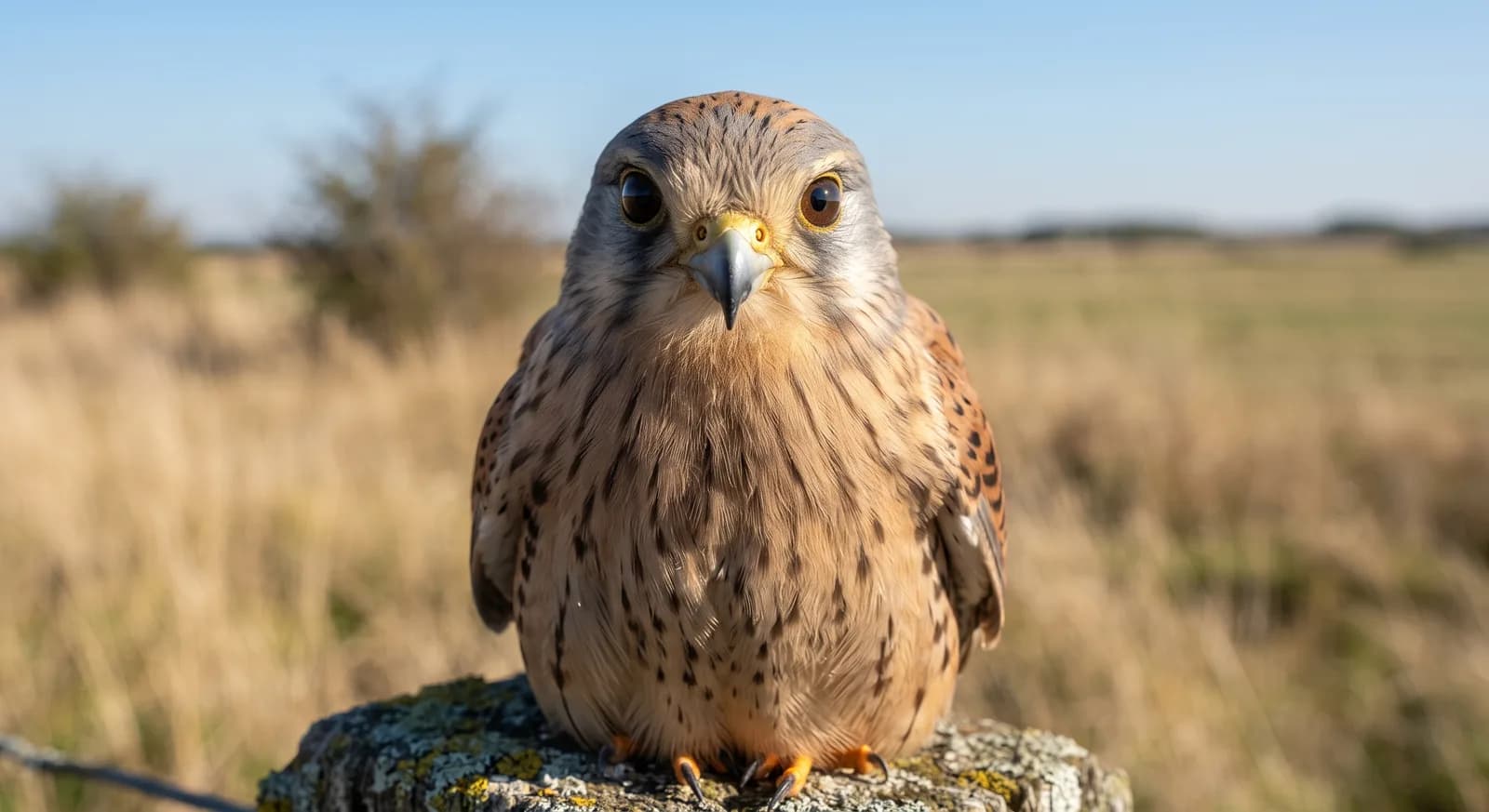
Common Kestrel
Falco tinnunculus
Eastern Coral Snake
Micrurus fulvius
Racer
Coluber constrictor
Keep exploring
Based on what we already know about goldenrod crab spider.
Comments
Share an experience, a fun fact or a tip for seeing the goldenrod crab spider.
Be the first to comment.