One of the 4 kestrels on WAnimals
Birds · Falconiformes · Falconidae
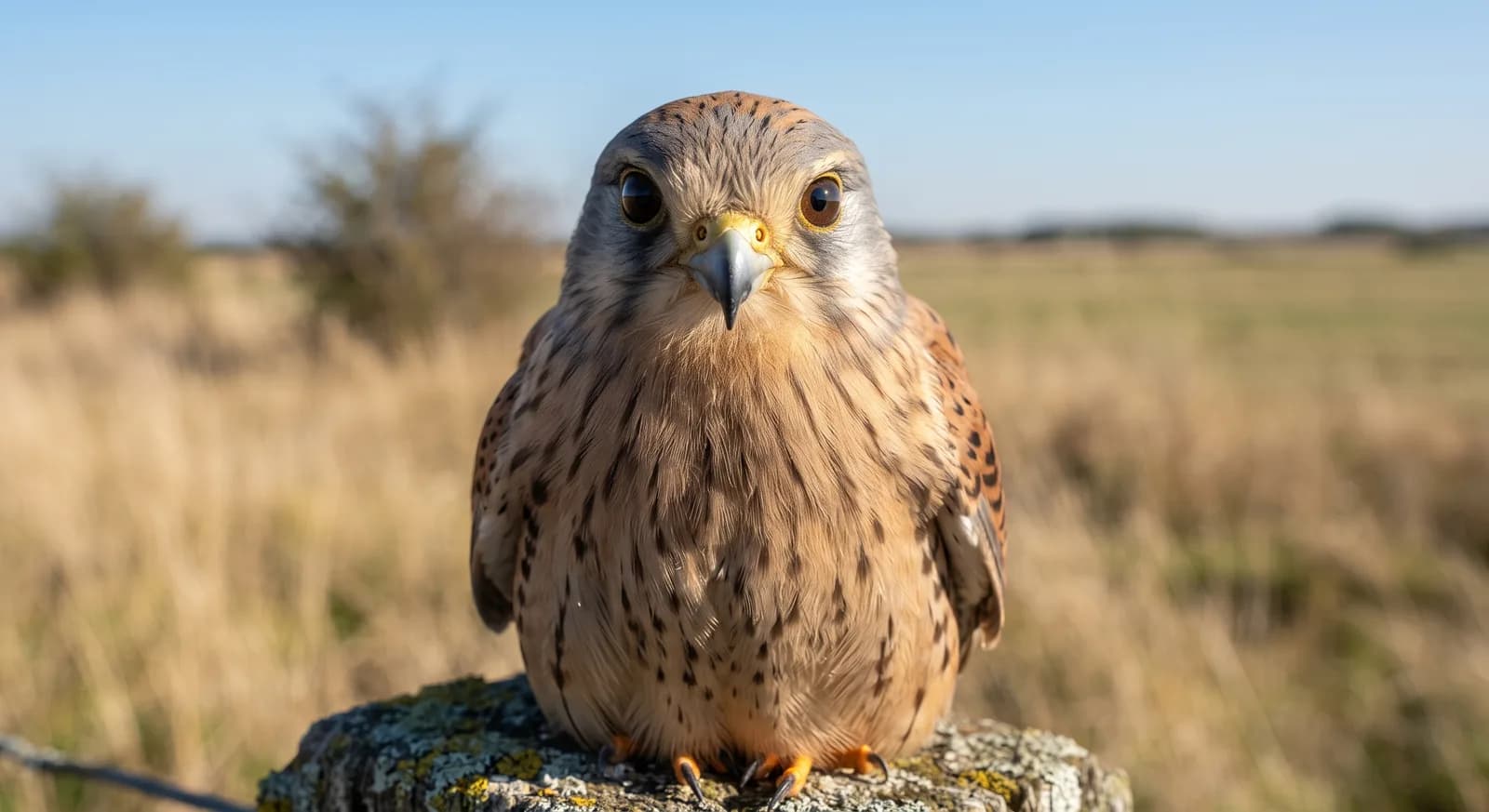
Common Kestrel
Falco tinnunculus
The species is abundant and widely distributed; it faces no significant short-term risk. See full glossary
It can hover almost motionless over a fixed point, scanning the ground below for prey.
Weight
136 g – 314 g
Size
32 cm – 39 cm
Lifespan
2 years
Diet
Carnivore
Feeds mainly on other animals.
Activity
Diurnal
Active mainly during the day.
Social structure
Solitary
Lives and hunts alone, joining others only to breed.
Sighting difficulty
Easy
Fun facts
- Only 66% of individuals survive their first two years.
- It feeds mainly on small rodents, supplemented with small birds, lizards and insects.
- Studies of its ageing have shown the retina deteriorating steadily over the years.
Life cycle & biology
- Skeleton type
- Vertebrate - pneumatised bony skeleton (bird)
- Habitat & environment
- A wide range of open habitats across Europe, Asia and Africa, including farmland, coasts and towns
- Birth weight
- Covered in white down at hatching; exact weight not found as a precise figure
- Size at birth
- Covered in white down, blind and dependent at hatching
- Sexual maturity
- 1 year (though most do not breed until their second)
- Gestation / incubation
- 26-34 days
- Litter / clutch size
- 3 to 7 eggs per clutch (most commonly 4-6)
Sources consulted: Animal Diversity Web; Thai National Parks; GBIF; Oiseaux-birds.com; AnimalHub; Animalia.bio; AnAge (genomics.senescence.info)
Where to find it
See its range on the interactive mapWhere to watch it
Parks and dive sites where this species has been documented.
Related species
Other species in the catalogue with the most in common with Common Kestrel — same habitat, park, country, tags or family.
Eleonora's Falcon
Falco eleonorae
 Least Concern
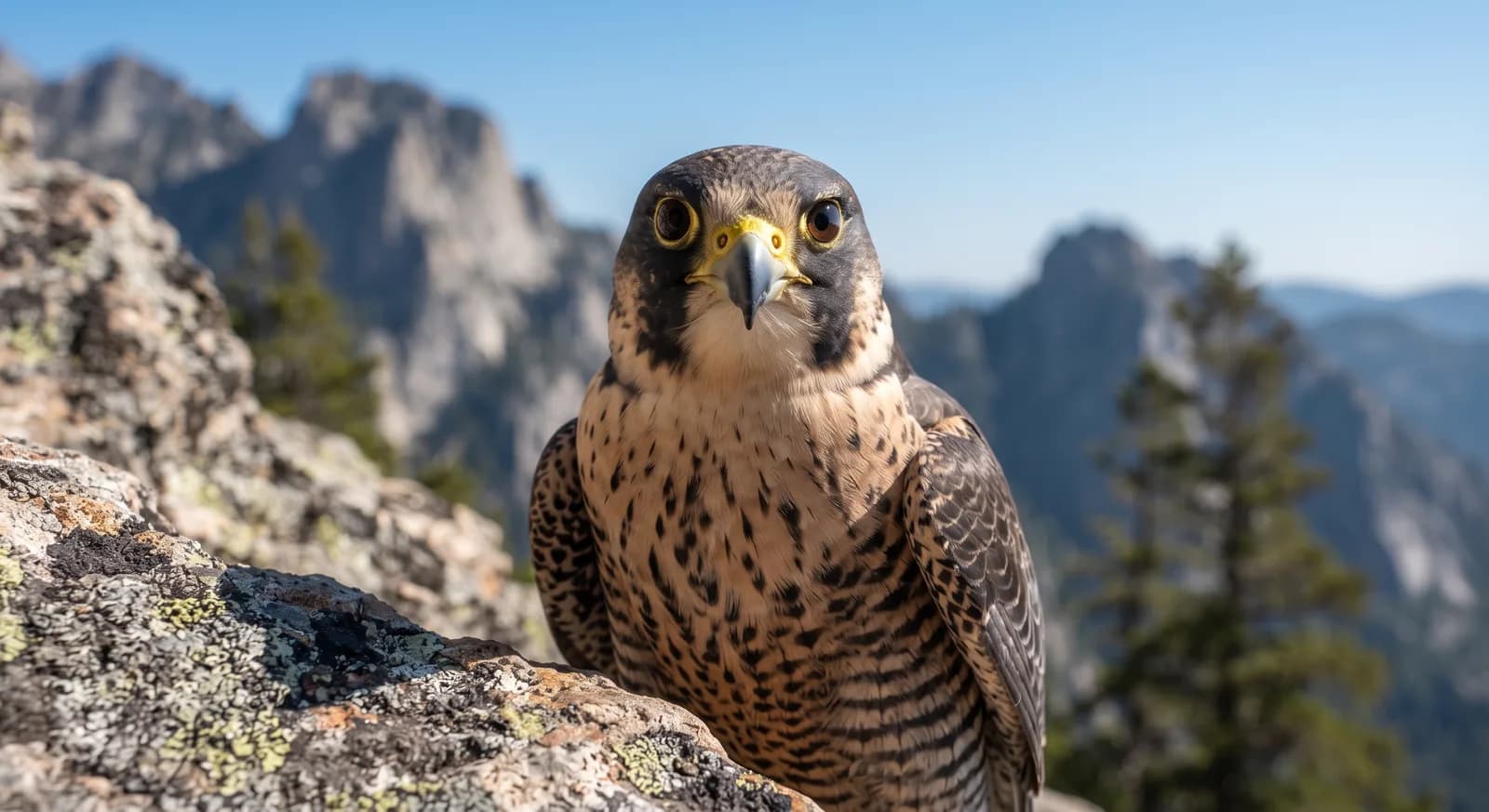
Peregrine Falcon
Falco peregrinus
Eurasian Hobby
Falco subbuteo
Long-eared Owl
Asio otus
Common Blackbird
Turdus merula
Common Chaffinch
Fringilla coelebs
Keep exploring
Based on what we already know about common kestrel.
Comments
Share an experience, a fun fact or a tip for seeing the common kestrel.
Be the first to comment.