One of the 10 owls on WAnimals
Birds · Strigiformes · Strigidae
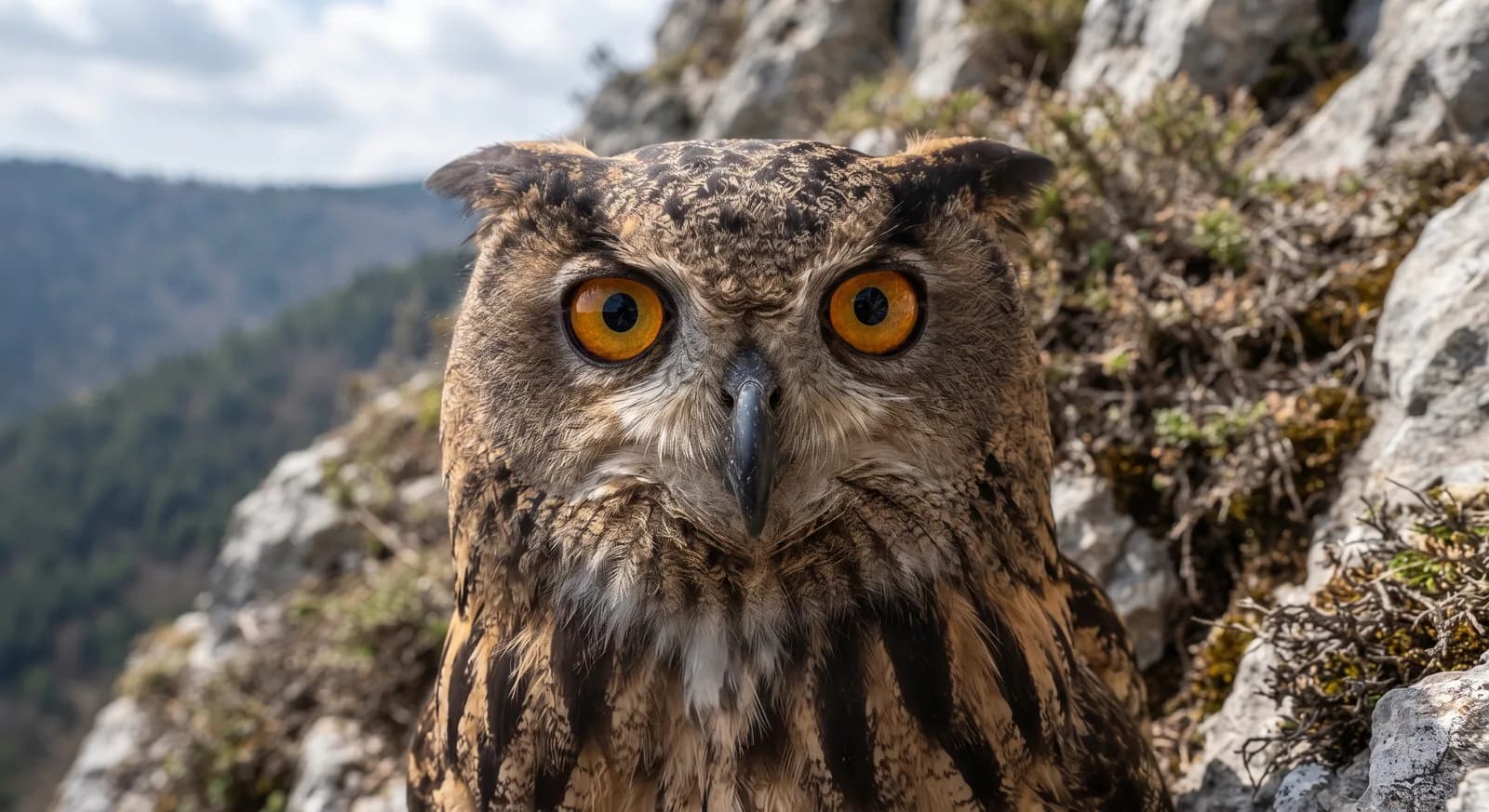
Long-eared Owl
Asio otus
The species is abundant and widely distributed; it faces no significant short-term risk. See full glossary
It builds no nest of its own but takes over those abandoned by other birds, especially crows or squirrels. It is a master of camouflage: when threatened it stretches out and compresses its plumage to look like a branch.
Weight
178 g – 435 g
Size
31 cm – 40 cm
Lifespan
4 years
Diet
Carnivore
Feeds mainly on other animals.
Activity
Nocturnal
Active mainly at night.
Social structure
Solitary
Lives and hunts alone, joining others only to breed.
Sighting difficulty
Easy
Fun facts
- defensaBy day it can hold itself long and thin, ear tufts raised, to blend into the bark of the tree it roosts in.
Life cycle & biology
- Skeleton type
- Vertebrate - pneumatised bony skeleton (bird)
- Habitat & environment
- Coniferous and mixed woodland with open ground nearby for hunting, across much of Europe, Asia and North America
- Birth weight
- 17.4 grams
- Size at birth
- Semi-altricial, blind on hatching and covered in whitish down
- Sexual maturity
- 1 year
- Gestation / incubation
- 25-30 days
- Litter / clutch size
- 2 to 10 eggs per clutch (most commonly 4-6)
- Lifespan in captivity
- Documented record of more than 10-20 years in captivity
Sources consulted: AnAge; Animal Diversity Web; NHPBS NatureWorks; A-Z Animals; Birdfact; The Owl Pages; KyivZoo
Where to find it
See its range on the interactive mapWhere to watch it
Parques y spots de buceo donde se ha documentado esta especie — se muestran 10 de 210 documentados.
Related species
Other species in the catalogue with the most in common with Long-eared Owl — same habitat, park, country, tags or family.
Eurasian Scops Owl
Otus scops
Northern Hawk-Owl
Surnia ulula
Boreal Owl
Aegolius funereus
Eurasian Pygmy Owl
Glaucidium passerinum
 Least Concern
Eurasian Eagle-Owl
Bubo bubo
Great Grey Owl
Strix nebulosa
Keep exploring
Based on what we already know about long-eared owl.
Comments
Share an experience, a fun fact or a tip for seeing the long-eared owl.
Be the first to comment.