Birds · Strigiformes · Strigidae
Eurasian Scops Owl
Otus scops
The species is abundant and widely distributed; it faces no significant short-term risk. See full glossary
Its characteristic call, a low monotonous whistle repeated through the night, is so like the midwife toad's that the two are often confused in the field.
Weight
60 g – 135 g
Size
16 cm – 21 cm
Lifespan
6 years
Diet
Insectivore
Feeds mainly on insects and other invertebrates.
Activity
Nocturnal
Active mainly at night.
Social structure
Solitary
Lives and hunts alone, joining others only to breed.
Sighting difficulty
Easy
Fun facts
- It is one of the few long-distance migratory owls, travelling each year between Europe and sub-Saharan Africa.
- It feeds mainly on large insects such as grasshoppers and beetles.
- It lives in open woodland, parks, gardens and farmland with trees in southern Europe.
Life cycle & biology
- Skeleton type
- Vertebrate - pneumatised bony skeleton (bird)
- Habitat & environment
- Open woodland, parks, gardens and farmland with trees in southern Europe and western and Central Asia, wintering in sub-Saharan Africa
- Birth weight
- ~13 grams (the reference egg weight)
- Size at birth
- Blind on hatching, its eyes opening between 6 and 8 days and fully open by 11-13 days
- Sexual maturity
- ~10 months (a year)
- Gestation / incubation
- 24-25 days (some sources give a wider range of 20-31 days depending on the climate)
- Litter / clutch size
- 3 to 5 eggs per clutch (most commonly 4)
- Lifespan in captivity
- Documented record of up to 12.5 years in captivity
Sources consulted: Birda; AnAge (genomics.senescence.info); Birdfact; Animal Diversity Web; The Owl Pages; Animalia.bio; KyivZoo
Where to find it
See its range on the interactive mapBest time: From April to September in the Iberian Peninsula, at dusk; it is detected above all by its monotonous whistle, repeated every few seconds.
Where to watch it
Parques y spots de buceo donde se ha documentado esta especie — se muestran 10 de 148 documentados.
Related species
Other species in the catalogue with the most in common with Eurasian Scops Owl — same habitat, park, country, tags or family.
Long-eared Owl
Asio otus
Boreal Owl
Aegolius funereus
 Least Concern
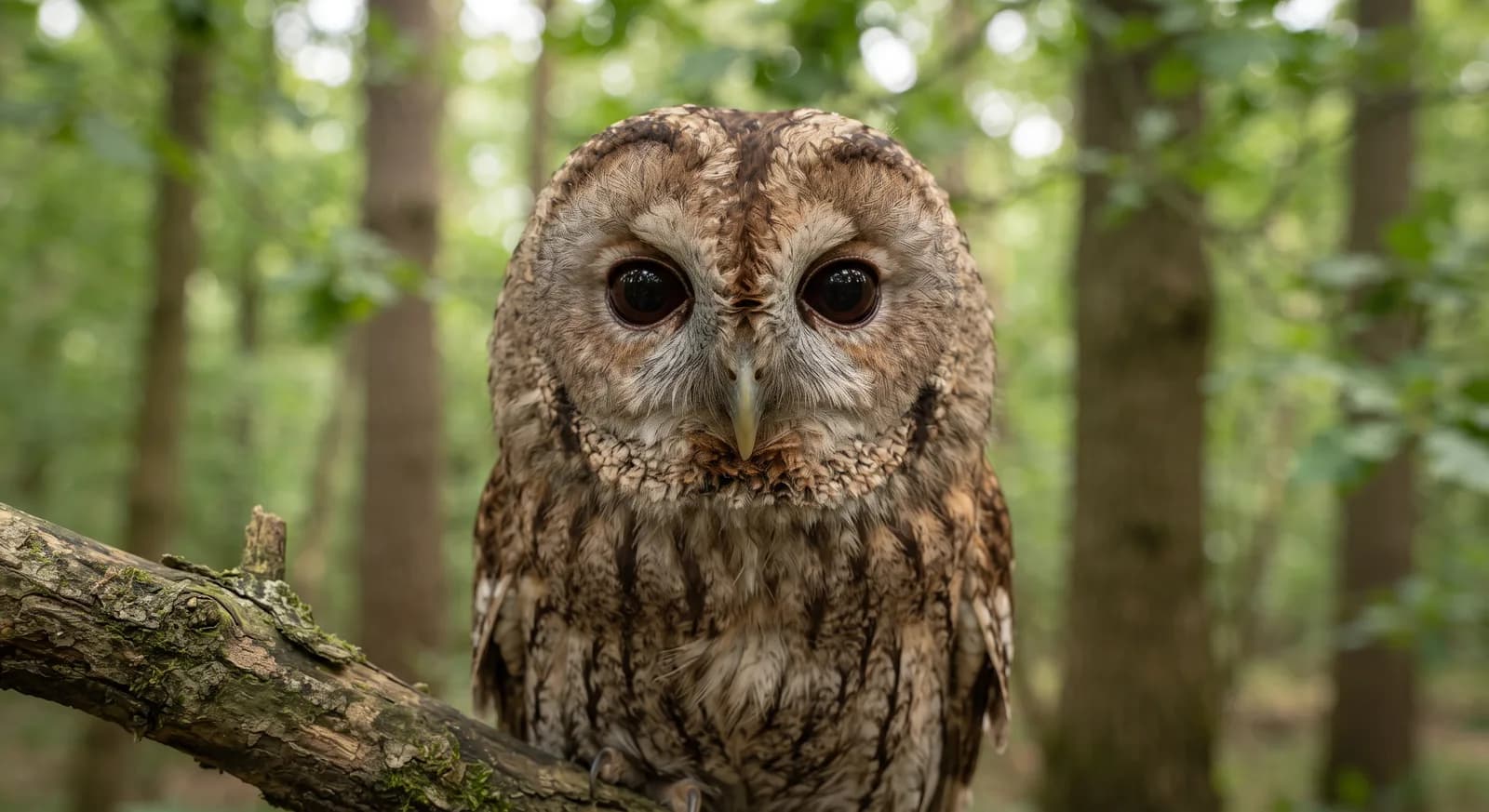
Tawny Owl
Strix aluco
Eurasian Pygmy Owl
Glaucidium passerinum
 Least Concern
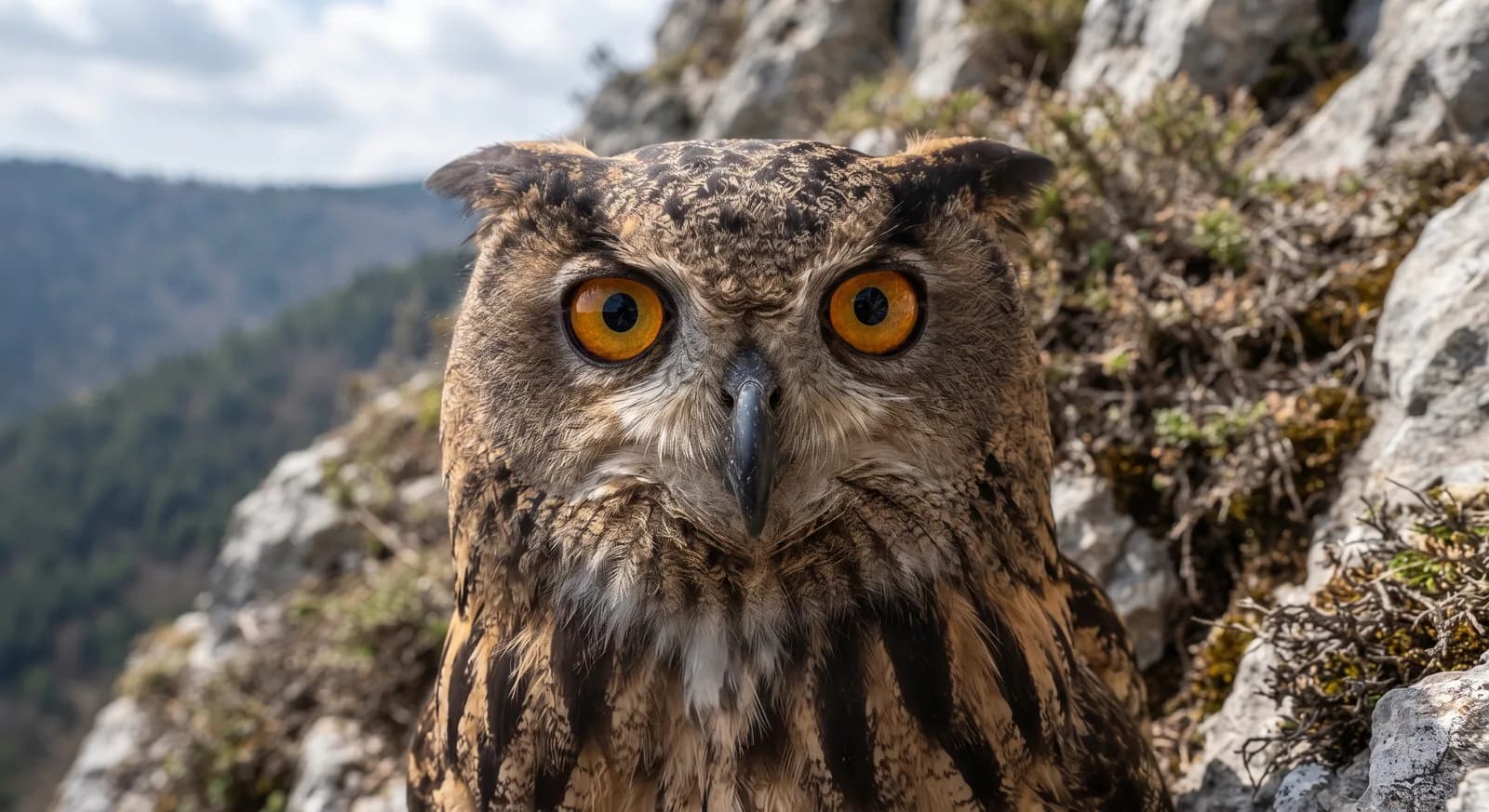
Eurasian Eagle-Owl
Bubo bubo
Little Owl
Athene noctua
Keep exploring
Based on what we already know about eurasian scops owl.
Comments
Share an experience, a fun fact or a tip for seeing the eurasian scops owl.
Be the first to comment.