One of the 4 owlets on WAnimals
Birds · Strigiformes · Strigidae
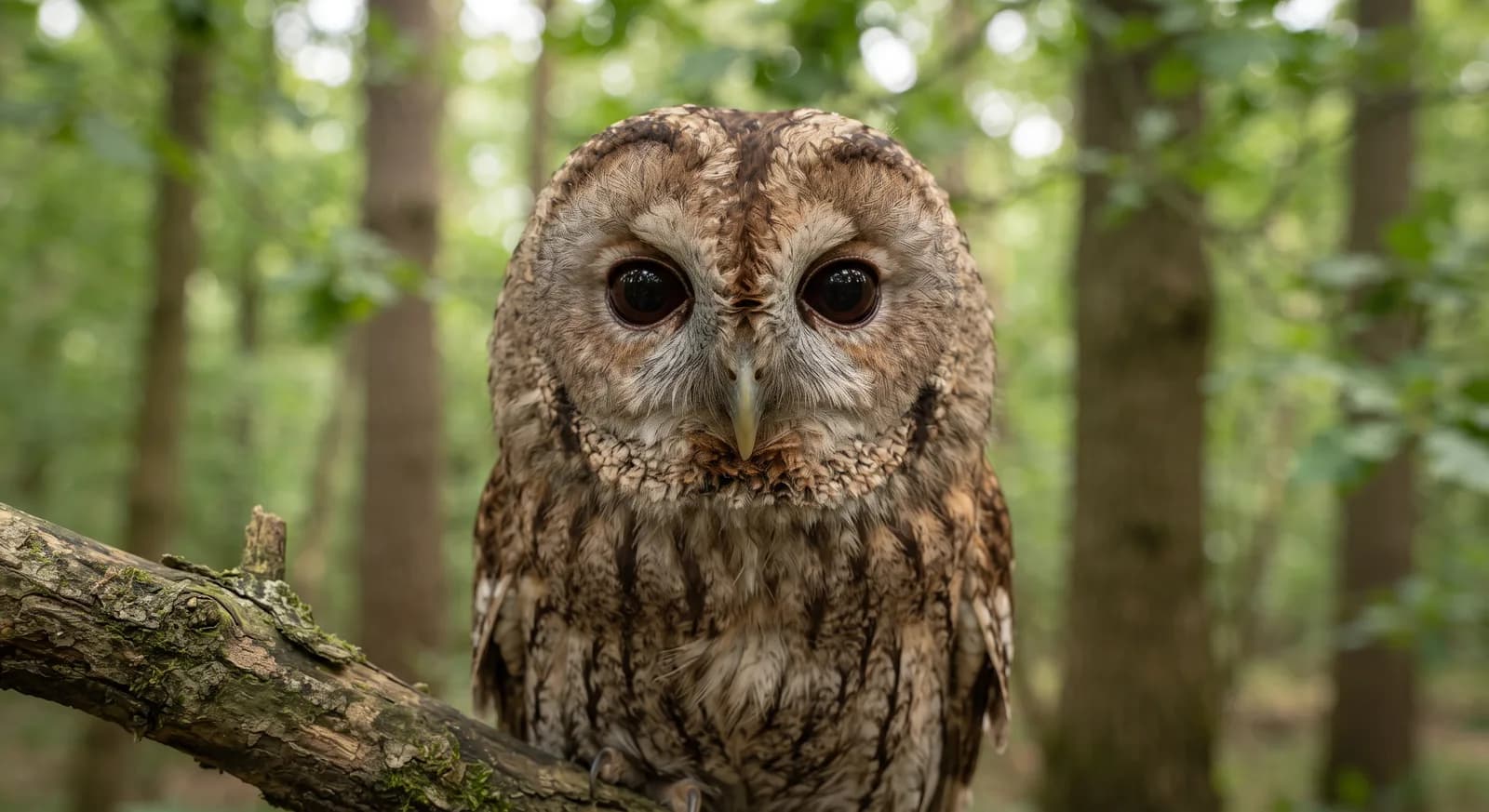
Eurasian Pygmy Owl
Glaucidium passerinum
The species is abundant and widely distributed; it faces no significant short-term risk. See full glossary
It is the smallest owl in all of Europe, barely the size of a large sparrow, and for all that it can take birds almost as big as itself in mid-air.
Weight
50 g – 80 g
Size
16 cm – 19 cm
Lifespan
6 years
Diet
Carnivore
Feeds mainly on other animals.
Activity
Diurnal
Active mainly during the day.
Social structure
Solitary
Lives and hunts alone, joining others only to breed.
Sighting difficulty
Easy
Fun facts
- It is the smallest owl in all of Europe.
- It catches birds almost as large as itself in mid-air.
- It caches food in tree holes in autumn, a habit uncommon among owls.
Life cycle & biology
- Skeleton type
- Vertebrate - pneumatised bony skeleton (bird)
- Habitat & environment
- Spruce-dominated boreal coniferous forest of northern and central Europe as far as Siberia
- Birth weight
- Exact weight at hatching not found as a precise figure
- Size at birth
- Altricial at hatching
- Sexual maturity
- 1 year
- Gestation / incubation
- ~28 days (4 weeks)
- Litter / clutch size
- 3 to 8 eggs per clutch (most commonly 4-7)
Sources consulted: AnAge (genomics.senescence.info); Birda; Animal Diversity Web; Animalia.bio; The Owl Pages; Birds of the World; Wikipedia (Eurasian pygmy owl)
Where to find it
See its range on the interactive mapBest time: From March to May and from September to October, at dawn and dusk, in montane conifer forest, when it answers a call.
Where to watch it
Parques y spots de buceo donde se ha documentado esta especie — se muestran 10 de 113 documentados.
Related species
Other species in the catalogue with the most in common with Eurasian Pygmy Owl — same habitat, park, country, tags or family.
Long-eared Owl
Asio otus
Northern Hawk-Owl
Surnia ulula
Boreal Owl
Aegolius funereus
Great Grey Owl
Strix nebulosa
 Least Concern
Tawny Owl
Strix aluco
Eurasian Scops Owl
Otus scops
Keep exploring
Based on what we already know about eurasian pygmy owl.
Comments
Share an experience, a fun fact or a tip for seeing the eurasian pygmy owl.
Be the first to comment.