One of the 26 spiders on WAnimals
Arachnids · Araneae · Thomisidae
Crested Crab Spider
Xysticus cristatus
It has not yet been assessed against the IUCN criteria. See full glossary
Xysticus cristatus is a crab spider found mainly in Europe.
Size
4 cm – 8 cm
Diet
Carnivore
Feeds mainly on other animals.
Activity
Diurnal
Active mainly during the day.
Social structure
Solitary
Lives and hunts alone, joining others only to breed.
Sighting difficulty
Unknown
Fun facts
- It walks sideways and backwards as readily as forwards, which is where the name crab spider comes from.
- Before mating, the male ties the female to the substrate with a few threads of silk, a bridal veil she breaks through without difficulty afterwards.
- It is the commonest ground-dwelling crab spider in Europe, brown and mottled, camouflaged on soil and leaf litter rather than on flowers like the goldenrod crab spider.
- Before mating, the male ties the female to the substrate with a few strands of silk, the so-called bridal veil. It does not really pin her down — she frees herself easily afterwards — and it seems to work more as a signal than as a restraint.
- It walks sideways, like the rest of the crab spiders, and grips its prey with the first two pairs of legs.
Life cycle & biology
- Habitat & environment
- Meadows, tall grassland and leaf litter of Europe
Sources consulted: https://es.wikipedia.org/wiki/Xysticus_cristatus
Where to find it
See its range on the interactive mapRelated species
Other species in the catalogue with the most in common with Crested Crab Spider — same habitat, park, country, tags or family.
Goldenrod Crab Spider
Misumena vatia
Common Buzzard
Buteo buteo
Eurasian Hoopoe
Upupa epops
 Least Concern
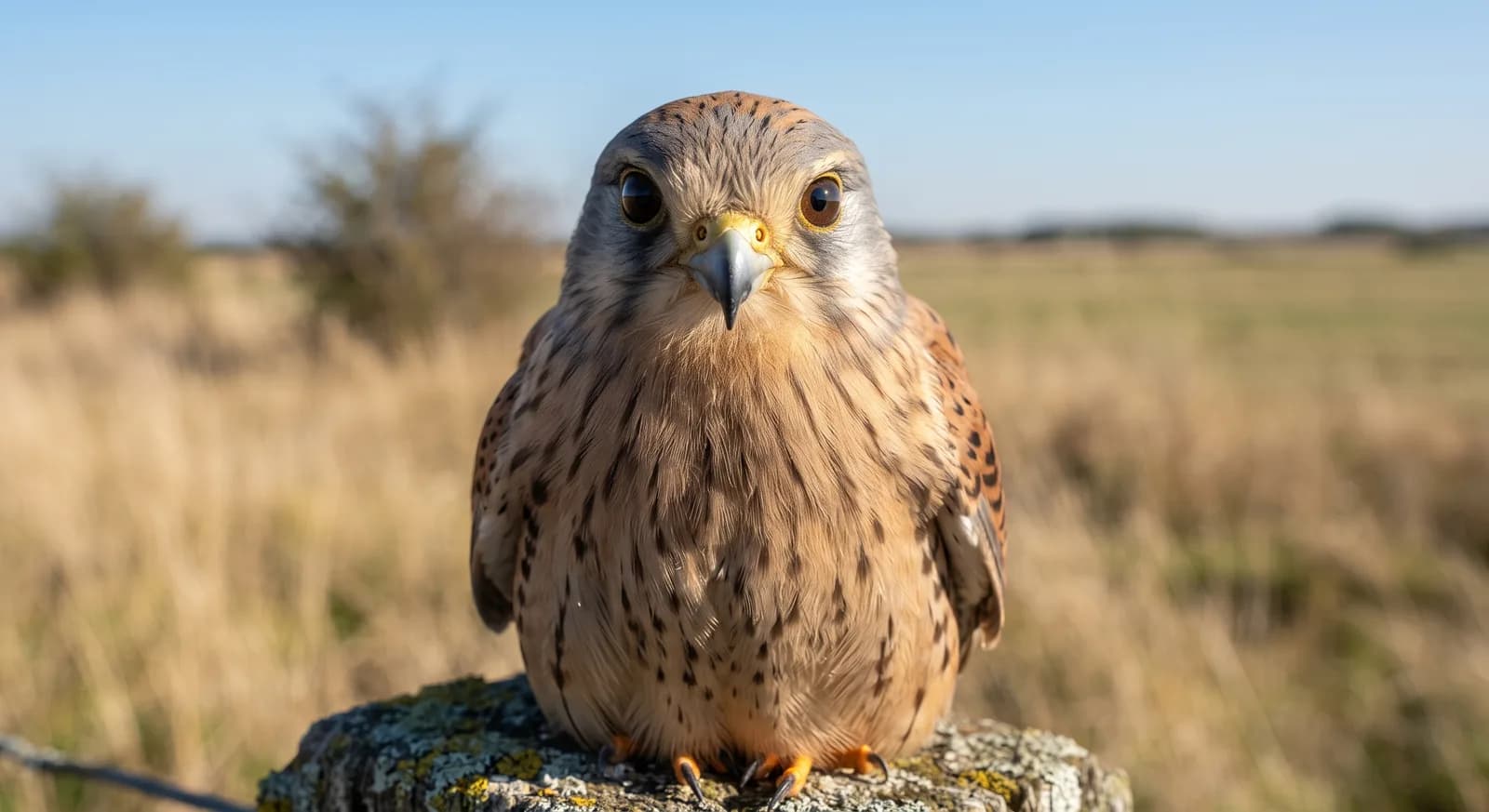
Common Kestrel
Falco tinnunculus
Yellow Fever Mosquito
Aedes aegypti
Keep exploring
Based on what we already know about crested crab spider.
Comments
Share an experience, a fun fact or a tip for seeing the crested crab spider.
Be the first to comment.