One of the 6 kangaroos on WAnimals
Mammals · Diprotodontia · Macropodidae
Antilopine Kangaroo
Osphranter antilopinus
The species is abundant and widely distributed; it faces no significant short-term risk. See full glossary
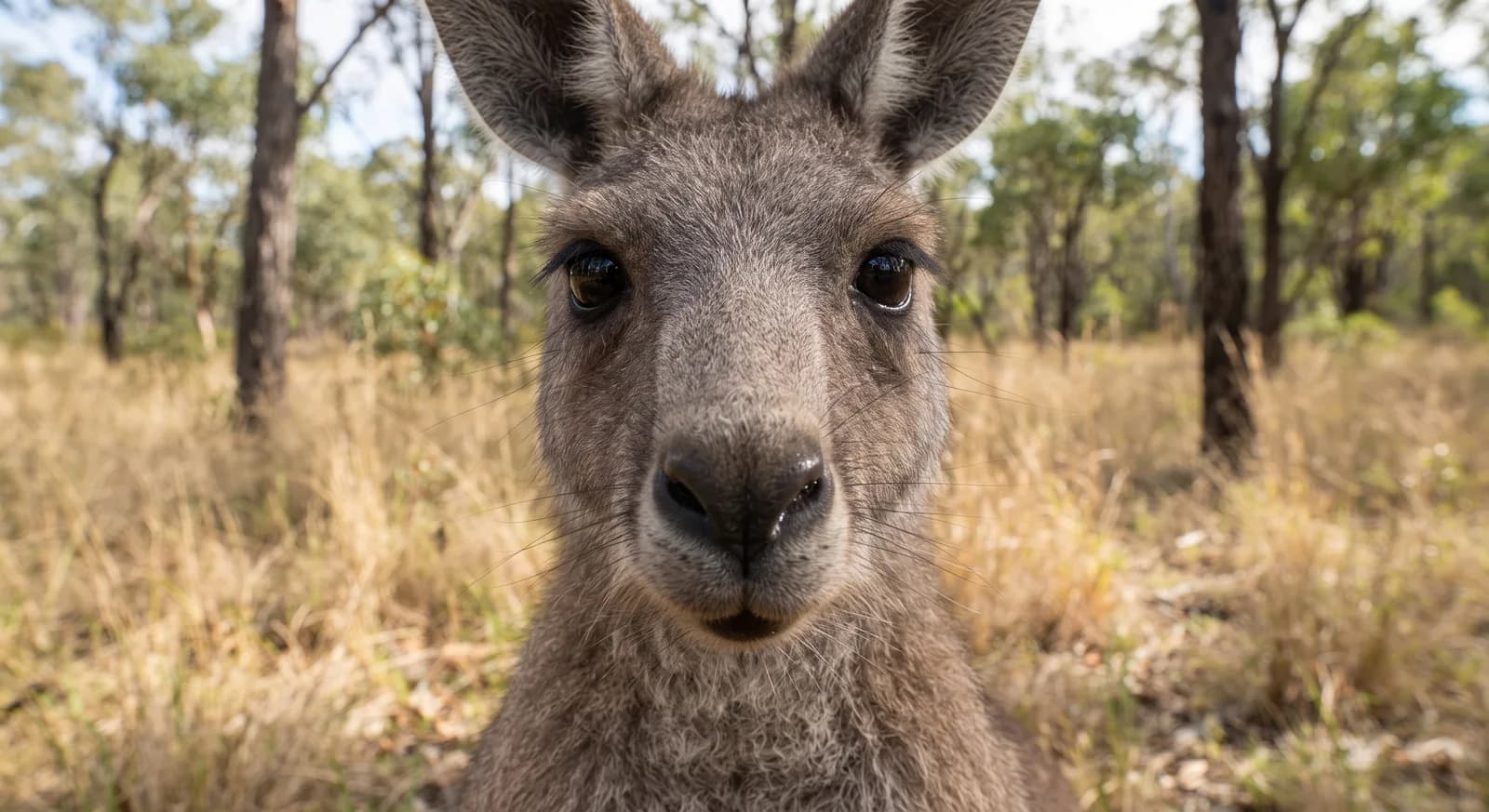
The antilopine kangaroo is the only large kangaroo that lives in the monsoonal tropical savannah of northern Australia. It is slender with a reddish coat, the males clearly larger than the females. It grazes in the cool hours of dawn and dusk, and during the day seeks the shade of the eucalypts. It lives in groups that scatter and regroup through the day. Its breeding cycle is closely tied to the monsoon: most births coincide with the wet season, when grazing is plentiful.
Weight
16 kg – 49 kg
Size
80 cm – 1.2 m
Lifespan
16 years
Diet
Herbivore
Feeds mainly on plants.
Activity
Crepuscular
Active above all at dawn and dusk.
Sighting difficulty
Easy
Fun facts
- GeneralThe kangaroo of the tropics; it licks its forearms to cool down.
- It is named for the reddish coat and the musky smell of the male, which reminded the first European naturalists of an African antelope.
- It is the only large kangaroo living in the tropical savannah of the north and the one that best tolerates the humid heat of the Australian monsoon.
Life cycle & biology
- Skeleton type
- Vertebrate - internal bony skeleton (mammal)
- Habitat & environment
- Tropical savannah and open eucalypt woodland
- Sexual maturity
- 16 months
- Gestation / incubation
- 34 days
- Litter / clutch size
- 1
Sources consulted: https://es.wikipedia.org/wiki/Osphranter_antilopinus
Where to watch it
Parks and dive sites where this species has been documented.
Related species
Other species in the catalogue with the most in common with Antilopine Kangaroo — same habitat, park, country, tags or family.
Agile Wallaby
Notamacropus agilis
Red Kangaroo
Osphranter rufus
 Least Concern
Eastern Grey Kangaroo
Macropus giganteus
Bridled Nailtail Wallaby
Onychogalea fraenata
Red-necked Wallaby
Notamacropus rufogriseus
Western Gray Kangaroo
Macropus fuliginosus
Keep exploring
Based on what we already know about antilopine kangaroo.
Comments
Share an experience, a fun fact or a tip for seeing the antilopine kangaroo.
Be the first to comment.