One of the 6 wallabies on WAnimals
Mammals · Diprotodontia · Macropodidae
Red-necked Wallaby
Notamacropus rufogriseus
The species is abundant and widely distributed; it faces no significant short-term risk. See full glossary
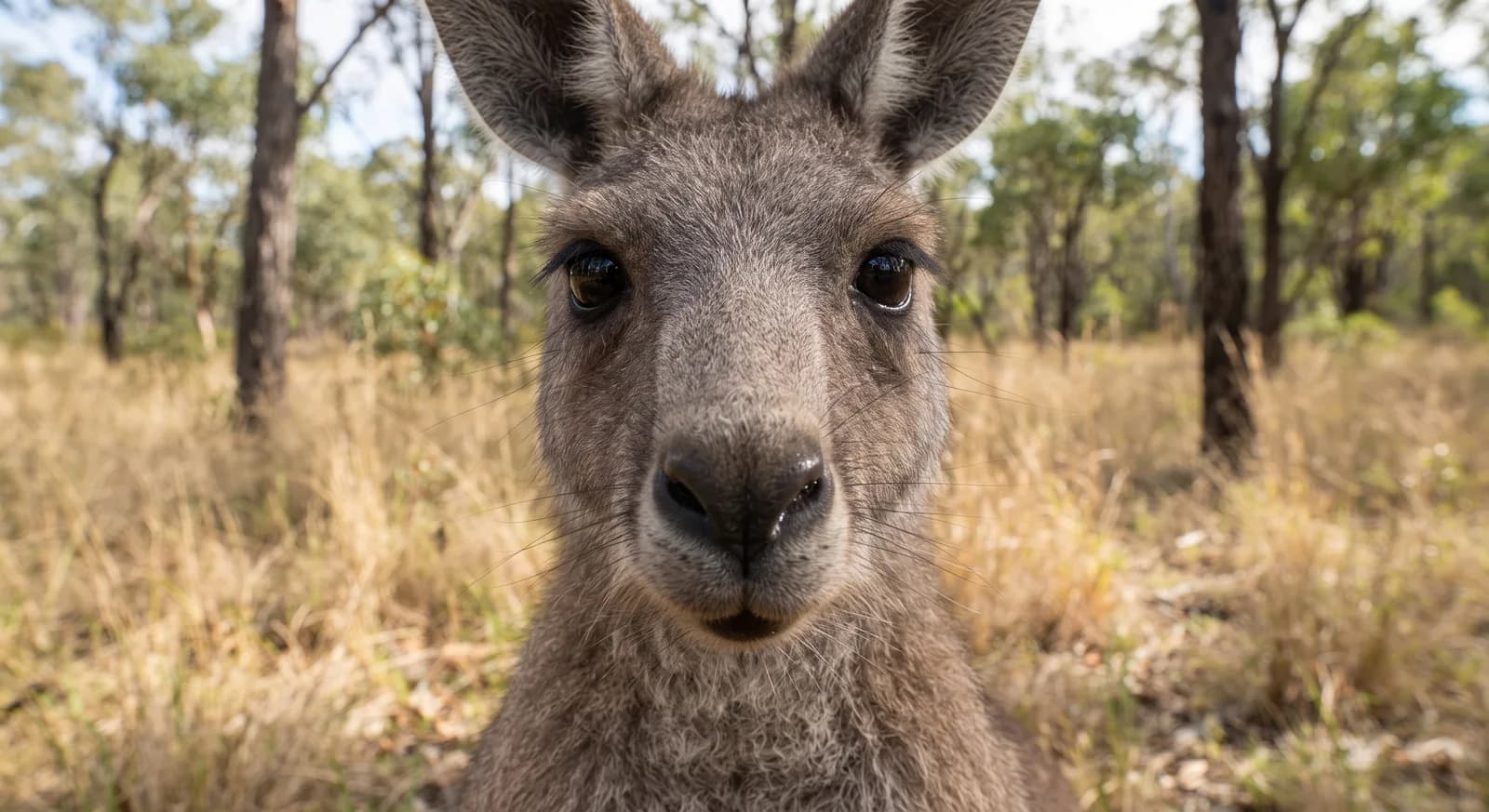
The red-necked wallaby, or Bennett's wallaby, is a medium-sized macropod recognisable by the reddish tone of its nape and shoulders. It spends the day hidden in thick cover and comes out at dusk to graze in clearings and meadows. It is the kangaroo species that has best colonised cold climates: the Tasmanian subspecies withstands snowfall. Outside Australia there are established feral populations at several points in Europe and in New Zealand, descended from escapes from private collections.
Weight
11 kg – 27 kg
Size
70 cm – 90 cm
Lifespan
9 years
Diet
Herbivore
Feeds mainly on plants.
Activity
Nocturnal
Active mainly at night.
Social structure
Solitary
Lives and hunts alone, joining others only to breed.
Sighting difficulty
Easy
Fun facts
- There is a stable feral population in the forest of Rambouillet, near Paris, descended from animals that escaped from a zoological park in the 1970s.
- The female can hold an embryo suspended in diapause for months and restart its development just as the previous joey leaves the pouch.
Life cycle & biology
- Skeleton type
- Vertebrate - internal bony skeleton (mammal)
- Habitat & environment
- Sclerophyll woodland, dense scrub and forest margins of eastern and southern Australia
- Sexual maturity
- 14 months
- Gestation / incubation
- 30 days
- Litter / clutch size
- 1
Sources consulted: https://www.iucnredlist.org/ | https://animaldiversity.org/ | https://es.wikipedia.org/
Where to find it
See its range on the interactive mapWhere to watch it
Parques y spots de buceo donde se ha documentado esta especie — se muestran 10 de 27 documentados.
Related species
Other species in the catalogue with the most in common with Red-necked Wallaby — same habitat, park, country, tags or family.
Rufous-bellied Pademelon
Thylogale billardierii
Red-legged Pademelon
Thylogale stigmatica
Western Gray Kangaroo
Macropus fuliginosus
 Least Concern
Eastern Grey Kangaroo
Macropus giganteus
Swamp Wallaby
Wallabia bicolor
Brush-tailed Rock Wallaby
Petrogale penicillata
Keep exploring
Based on what we already know about red-necked wallaby.
Comments
Share an experience, a fun fact or a tip for seeing the red-necked wallaby.
Be the first to comment.