Mammals · Diprotodontia · Macropodidae
Red-legged Pademelon
Thylogale stigmatica
The species is abundant and widely distributed; it faces no significant short-term risk. See full glossary
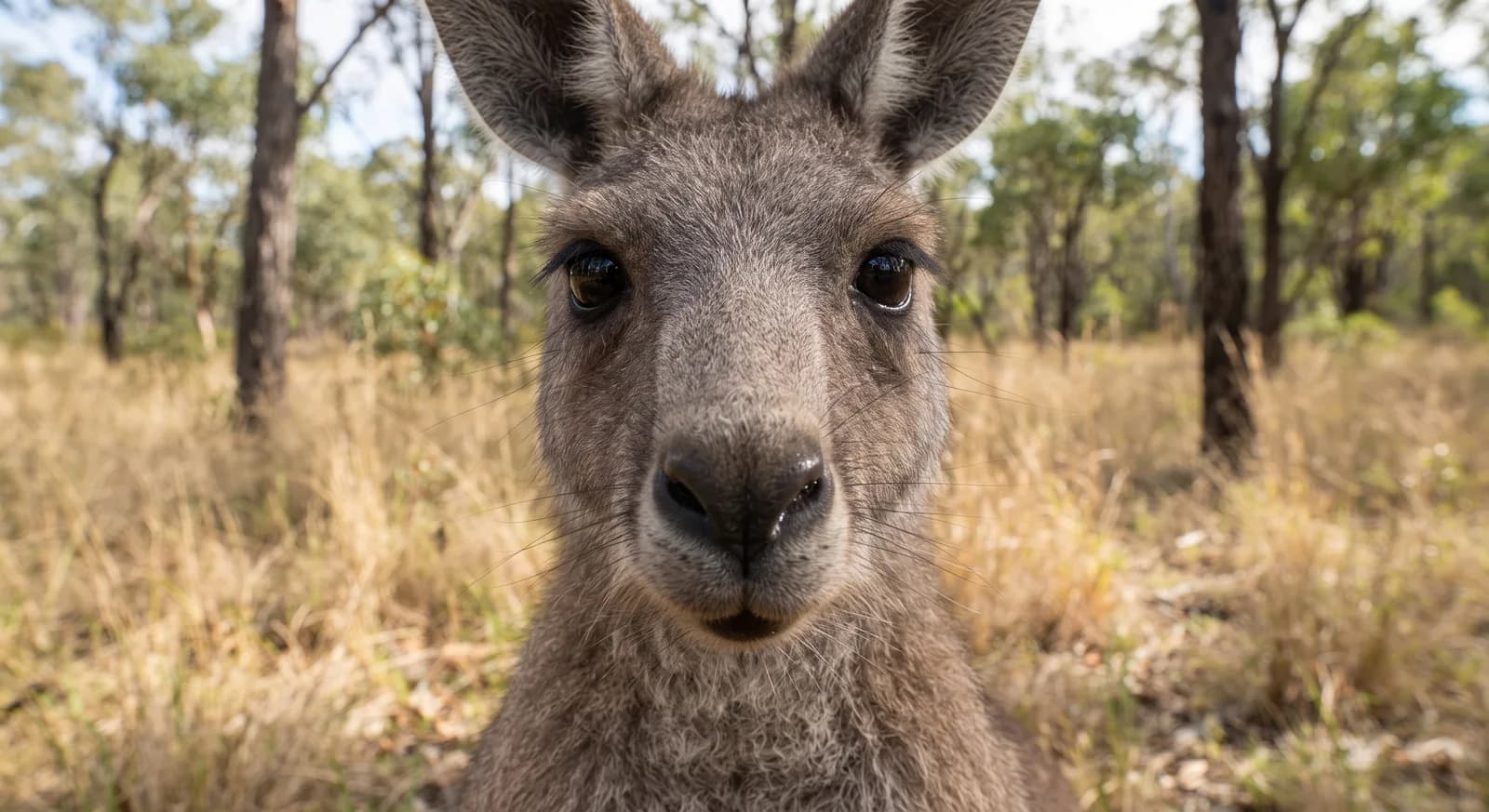
The red-legged pademelon is a small, stocky macropod of north-eastern Australia and southern New Guinea. It lives in dense forest understorey, where it opens and maintains a network of tunnels through the undergrowth along which it moves at speed. It comes out at dusk to graze in clearings and along forest edges and returns to cover at dawn. Its name comes from the reddish tone of its legs and flanks.
Weight
2.5 kg – 7 kg
Size
38 cm – 58 cm
Lifespan
9 years
Diet
Herbivore
Feeds mainly on plants.
Activity
Nocturnal
Active mainly at night.
Social structure
Solitary
Lives and hunts alone, joining others only to breed.
Sighting difficulty
Easy
Fun facts
- It thumps the ground with its hind feet as an alarm signal, a dull thump that alerts the other pademelons in the area and that guides in the Australian rainforest recognise at once.
- It maintains its own tunnels through the thickest undergrowth: corridors worn open by constant use, along which it can flee at full speed while a dog or a dingo gets stuck in the tangle.
Life cycle & biology
- Skeleton type
- Vertebrate - internal bony skeleton (mammal)
- Habitat & environment
- Dense understorey of tropical rainforest and wet sclerophyll forest in north-eastern Australia and New Guinea
- Sexual maturity
- 11.1 months
- Gestation / incubation
- 29 days
- Litter / clutch size
- 1
Sources consulted: https://www.iucnredlist.org/ | https://animaldiversity.org/ | https://es.wikipedia.org/
Where to watch it
Parks and dive sites where this species has been documented.
Related species
Other species in the catalogue with the most in common with Red-legged Pademelon — same habitat, park, country, tags or family.
Red-necked Wallaby
Notamacropus rufogriseus
Swamp Wallaby
Wallabia bicolor
Brush-tailed Rock Wallaby
Petrogale penicillata
 Least Concern
Eastern Grey Kangaroo
Macropus giganteus
Rufous-bellied Pademelon
Thylogale billardierii
Western Gray Kangaroo
Macropus fuliginosus
Keep exploring
Based on what we already know about red-legged pademelon.
Comments
Share an experience, a fun fact or a tip for seeing the red-legged pademelon.
Be the first to comment.