One of the 6 wallabies on WAnimals
Mammals · Diprotodontia · Macropodidae
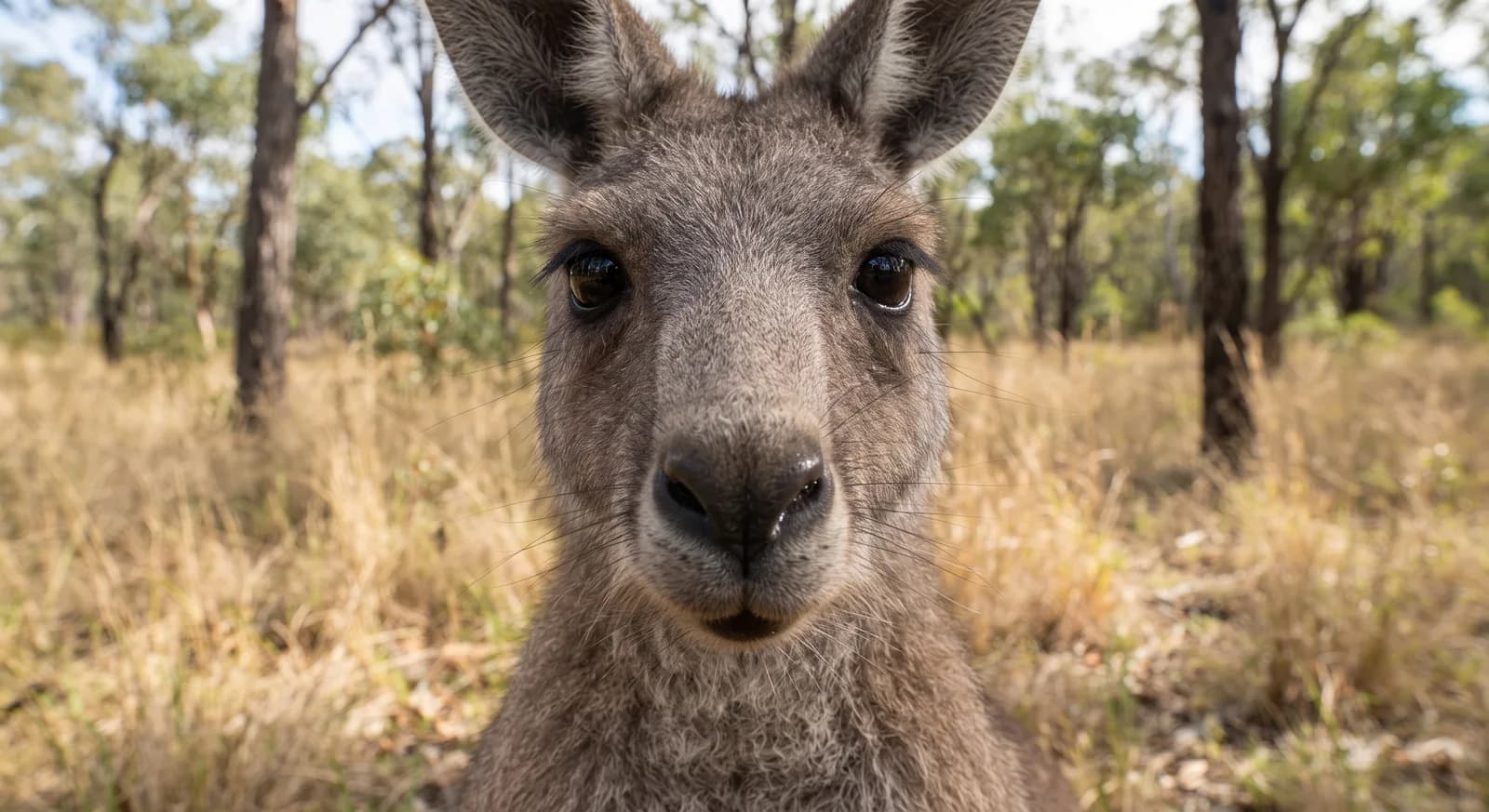
Swamp Wallaby
Wallabia bicolor
The species is abundant and widely distributed; it faces no significant short-term risk. See full glossary
It is the only marsupial known whose gestation outlasts its own oestrous cycle, which lets it conceive in the last days of a pregnancy already under way, so females are effectively pregnant without a break.
Weight
10 kg – 20 kg
Size
66 cm – 85 cm
Lifespan
15 years
Diet
Herbivore
Feeds mainly on plants.
Activity
Crepuscular
Active above all at dawn and dusk.
Social structure
Solitary
Lives and hunts alone, joining others only to breed.
Sighting difficulty
Easy
Fun facts
- It is the only marsupial whose gestation outlasts its own oestrous cycle.
- Females can be effectively pregnant without a break throughout their breeding lives.
- It eats ferns, shrubs and plants that are toxic to other grazers.
Life cycle & biology
- Skeleton type
- Vertebrate - internal bony skeleton (marsupial mammal)
- Habitat & environment
- Dense forest, scrub and sandy heath of the east coast of Australia
- Birth weight
- 0.61 grams (extremely undeveloped at birth, as all marsupial young are)
- Size at birth
- Tiny and embryonic at birth, it crawls to its mother's pouch to finish developing
- Sexual maturity
- 15-18 months
- Gestation / incubation
- 33-38 days — the only marsupial whose gestation outlasts its own oestrous cycle
- Litter / clutch size
- 1 young per birth (twins exceptional)
- Lifespan in captivity
- Documented record of 16.8 years in captivity
Sources consulted: AnAge; Animal Diversity Web; BioDB; Caversham Wildlife; Animalia.bio; Cougar Mountain Zoo; PubMed; Wikipedia; Grokipedia
Where to find it
See its range on the interactive mapBest time: All year round in eastern Australia, at dusk and at night; it frequents dense understorey and forest edges.
Where to watch it
Parques y spots de buceo donde se ha documentado esta especie — se muestran 10 de 17 documentados.
Related species
Other species in the catalogue with the most in common with Swamp Wallaby — same habitat, park, country, tags or family.
Red-necked Wallaby
Notamacropus rufogriseus
Red-legged Pademelon
Thylogale stigmatica
 Least Concern
Eastern Grey Kangaroo
Macropus giganteus
Western Gray Kangaroo
Macropus fuliginosus
Brush-tailed Rock Wallaby
Petrogale penicillata
Bennett's Tree Kangaroo
Dendrolagus bennettianus
Keep exploring
Based on what we already know about swamp wallaby.
Comments
Share an experience, a fun fact or a tip for seeing the swamp wallaby.
Be the first to comment.