Insects · Coleoptera · Cerambycidae
Greater Capricorn Beetle
Cerambyx cerdo
It faces a high risk of extinction in the wild over the medium term. See full glossary
Its larvae spend as much as five years tunnelling through the wood of century-old oaks, so its survival depends on very old trees being left standing — ever scarcer across Europe.
Size
4.1 cm – 5.5 cm
Lifespan
5 years
Diet
Herbivore
Feeds mainly on plants.
Activity
Nocturnal
Active mainly at night.
Social structure
Solitary
Lives and hunts alone, joining others only to breed.
Sighting difficulty
Moderate
Fun facts
- biologíaIts larvae can take several years to develop inside the wood of old trees before emerging as adults.
- It is one of the largest beetles in Europe, at up to 5.5 cm not counting antennae that in the male exceed the length of the body.
- It depends on old trees, and that is exactly its problem: modern forest management removes the mature, decaying specimens, which are the only ones of use to it.
- Its galleries, however, benefit the forest: they create microhabitats later occupied by dozens of species of insects, birds and bats. It is regarded as an engineer species of mature forests.
- It is listed as Vulnerable and protected under the European Union's Habitats Directive, in Annexes II and IV.
- The larva takes three or four years to develop inside the trunk before pupating.
- In Spain it is tied above all to the holm oak and cork oak dehesas, and its presence is an indicator of well-preserved woodland.
Life cycle & biology
- Skeleton type
- Invertebrate - chitin exoskeleton (insect)
- Habitat & environment
- Old oak woods and mature broadleaf trees of Europe, North Africa and Asia Minor
- Birth weight
- Egg 3.74 mm long on average, laid in crevices in the bark
- Size at birth
- A whitish-bodied larva with reduced legs, growing large over 2-5 years of development
- Sexual maturity
- Reached after complete metamorphosis (no fixed age applies)
- Gestation / incubation
- A full life cycle of 2 to 5 years, most of it spent as a larva
- Litter / clutch size
- 33 to 347 eggs per female (143 on average), with a fertility of 78%
Sources consulted: Cambridge Bulletin of Entomological Research; PubMed (reproductive biology study); Insect Wiki Fandom; Nordens Ark; Natural History Museum; University of Freiburg Forest Entomology; Forest Pests EU; Grokipedia; Wikipedia (Cerambyx cerdo)
Where to find it
See its range on the interactive mapWhere to watch it
Parques y spots de buceo donde se ha documentado esta especie — se muestran 10 de 50 documentados.
Related species
Other species in the catalogue with the most in common with Greater Capricorn Beetle — same habitat, park, country, tags or family.
Rosalia Longicorn
Rosalia alpina
Common Tortoise
Testudo graeca
Golden-striped Salamander
Chioglossa lusitanica
West European Hedgehog
Erinaceus europaeus
Hermann's Tortoise
Testudo hermanni
 Near Threatened
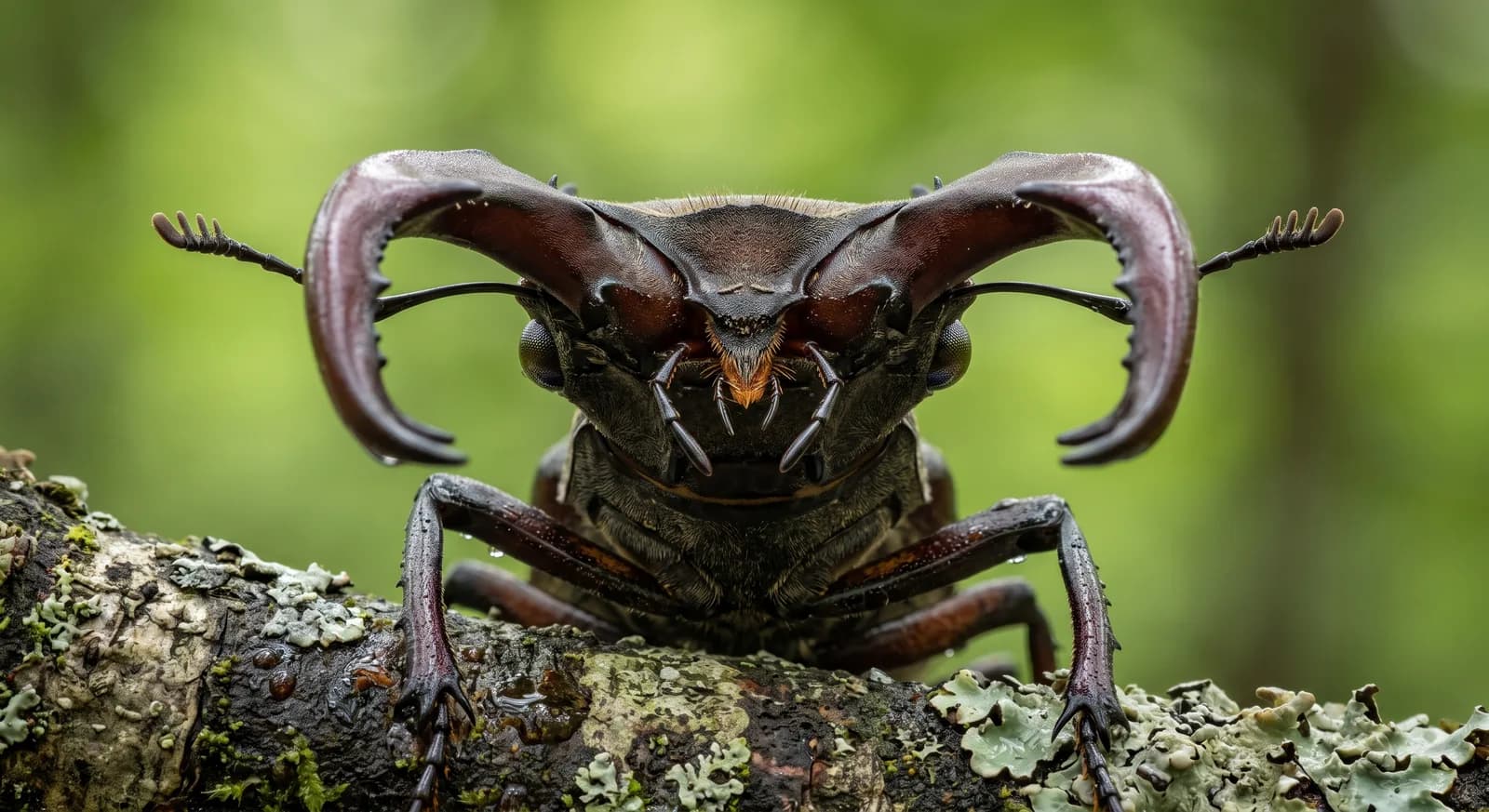
Stag Beetle
Lucanus cervus
How to help
The greater capricorn beetle is classified as vulnerable. Organizations such as UICN, WWF y Wildlife Conservation Society work specifically on its conservation and that of its habitat; looking into their programs is a good starting point if you want to get involved.
It's documented in 10 real protected areas — part of why protecting these places matters for its conservation.
Keep exploring
Based on what we already know about greater capricorn beetle.
Comments
Share an experience, a fun fact or a tip for seeing the greater capricorn beetle.
Be the first to comment.