One of the 14 salamanders on WAnimals
Amphibians · Caudata · Salamandridae
Golden-striped Salamander
Chioglossa lusitanica
It faces a high risk of extinction in the wild over the medium term. See full glossary
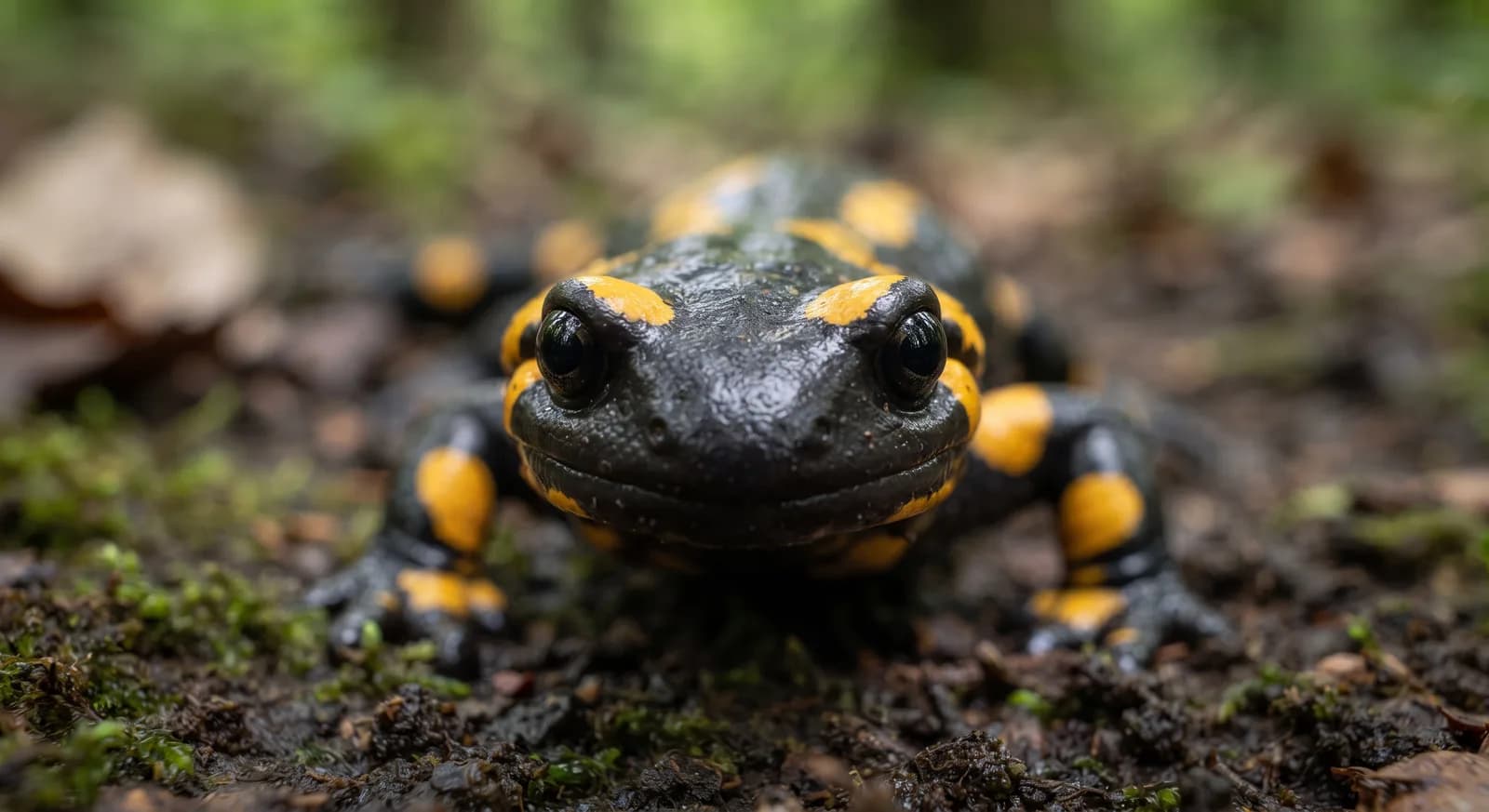
The golden-striped salamander is a urodele amphibian of the family Salamandridae, endemic to the north-west of the Iberian Peninsula and reaching the river Tagus in Portugal. It is a small, elongated, slender salamander with a very long tail that it can shed like a lizard's.
Weight
2 kg – 5 kg
Size
12 cm – 16 cm
Lifespan
10 years
Diet
Insectivore
Feeds mainly on insects and other invertebrates.
Activity
Nocturnal
Active mainly at night.
Social structure
Solitary
Lives and hunts alone, joining others only to breed.
Sighting difficulty
Moderate
Fun facts
- GeneralEndemic to north-western Iberia; its tongue shoots out like a chameleon's.
- It is the only European salamander able to shed its tail: it breaks it off along a fracture plane and the tail goes on moving, distracting the predator, a mechanism typical of lizards and practically unique among the continent's newts and salamanders.
- Its tail can be twice the length of its body, the greatest proportion of any European amphibian, and it uses it to launch itself into a jump and as support when climbing wet rock.
- It catches prey by shooting out its tongue at high speed, which is uncommon among European salamanders, and it is a strict endemic of north-western Iberia.
Life cycle & biology
- Skeleton type
- Vertebrate - internal bony skeleton (amphibian)
- Habitat & environment
- Humid Atlantic woodland and shaded streams
- Size at birth
- An aquatic larva that may take one or two years to complete metamorphosis
- Sexual maturity
- 3 years
- Gestation / incubation
- Larval development in shaded streams
- Litter / clutch size
- 20 eggs
Sources consulted: https://es.wikipedia.org/wiki/Chioglossa_lusitanica
Where to find it
See its range on the interactive mapBest time: From autumn to spring, on rainy nights, beside mountain streams in north-western Iberia; it is very fast and sheds its tail if held.
Where to watch it
Parks and dive sites where this species has been documented.
Related species
Other species in the catalogue with the most in common with Golden-striped Salamander — same habitat, park, country, tags or family.
Marbled Newt
Triturus marmoratus
Palmate Newt
Lissotriton helveticus
Sharp-ribbed Salamander
Pleurodeles waltl
Bosca's Newt
Lissotriton boscai
 Least Concern
Fire Salamander
Salamandra salamandra
Greater Capricorn Beetle
Cerambyx cerdo
How to help
The golden-striped salamander is classified as vulnerable. Organizations such as UICN, WWF y Wildlife Conservation Society work specifically on its conservation and that of its habitat; looking into their programs is a good starting point if you want to get involved.
It's documented in 6 real protected areas — part of why protecting these places matters for its conservation.
Keep exploring
Based on what we already know about golden-striped salamander.
Comments
Share an experience, a fun fact or a tip for seeing the golden-striped salamander.
Be the first to comment.