Flukes · Plagiorchiida · Fasciolidae
Sheep Liver Fluke
Fasciola hepatica
It has not yet been assessed against the IUCN criteria. See full glossary
The liver fluke is a trematode flatworm of the subclass Digenea, characterised by its lance-shaped body, with two suckers, one oral and one ventral, and a life cycle with two generations (hence digenean) in two hosts, an amphibious gastropod mollusc and a mammal. It parasitises the bile ducts and gall bladder of herbivores and omnivores, humans included; it is the causative agent of one of the most widespread parasitic infections of livestock, fascioliasis, which is regarded as one of the most important parasitic diseases of domestic ruminants in the world.
Size
2 cm – 3 cm
Diet
Carnivore
Feeds mainly on other animals.
Social structure
Solitary
Lives and hunts alone, joining others only to breed.
Sighting difficulty
Unknown
Fun facts
- GeneralIt needs a freshwater snail to complete its cycle before it can infect livestock.
- parasitismoIt completes a complex life cycle that needs a freshwater snail as an intermediate host before it can infect its final host, usually a grazing mammal.
- The metacercariae encyst on watercress and other bankside plants, and human infection almost always comes from eating raw wild watercress.
- A single adult parasite can live for years in the bile ducts and lay tens of thousands of eggs a day.
- It is one of the main causes of economic loss in sheep and cattle farming in wet regions.
- Its cycle must pass through a freshwater snail, in which the larvae multiply asexually: a single egg can yield hundreds of infective larvae.
- Those larvae leave the snail, encyst on aquatic vegetation and wait. Infection happens on eating wild watercress or drinking water containing those plants.
- Once swallowed, it passes through the intestinal wall, crosses the abdominal cavity and bores through the liver until it reaches the bile ducts, where it settles.
- In livestock farming it causes enormous losses through condemned livers and reduced production.
- The WHO classes it as a neglected tropical disease; in the highlands of Bolivia and Peru there are foci with very high human prevalence.
Life cycle & biology
- Habitat & environment
- A parasite: the liver of sheep, cattle and people; ponds and damp meadows
Sources consulted: https://es.wikipedia.org/wiki/Fasciola_hepatica
Where to find it
See its range on the interactive mapRelated species
Other species in the catalogue with the most in common with Sheep Liver Fluke — same habitat, park, country, tags or family.
Medicinal Leech
Hirudo medicinalis
Brown Planaria
Dugesia tigrina
 Least Concern
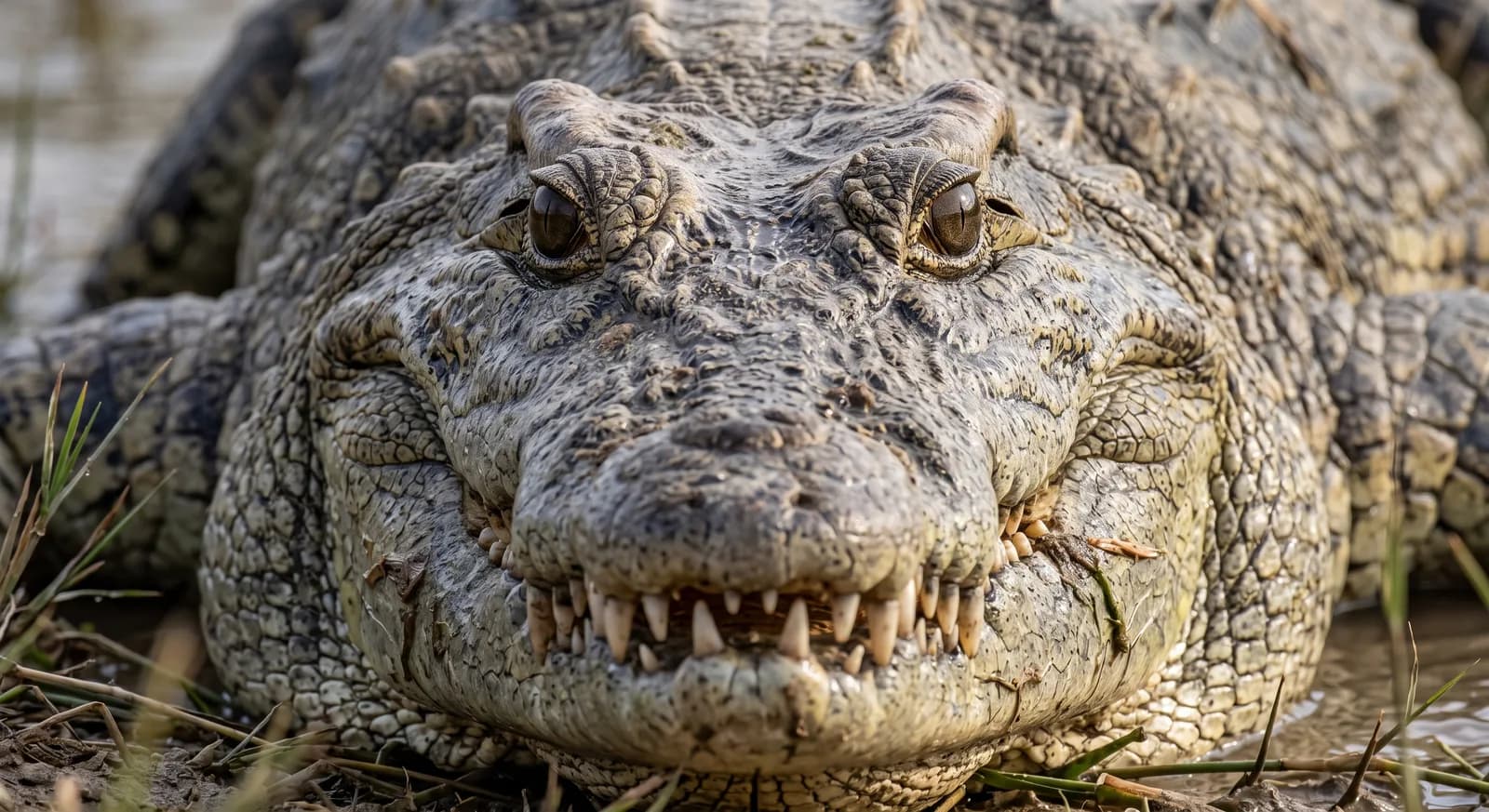
Nile Crocodile
Crocodylus niloticus
Water Opossum
Chironectes minimus
 Near Threatened
European Otter
Lutra lutra
Keep exploring
Based on what we already know about sheep liver fluke.
Comments
Share an experience, a fun fact or a tip for seeing the sheep liver fluke.
Be the first to comment.