One of the 8 otters on WAnimals
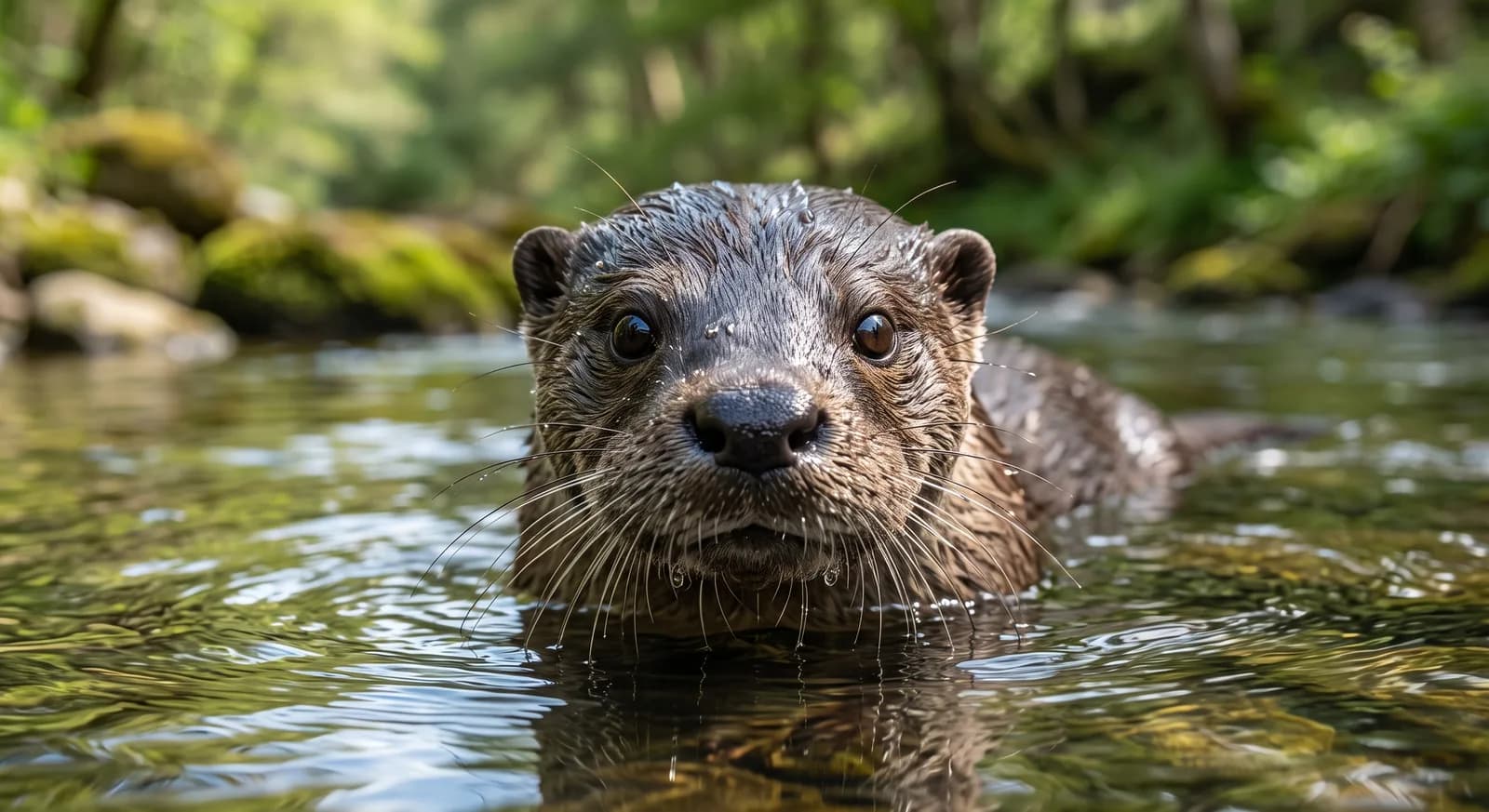
Mammals · Carnivora · Mustelidae
European Otter
Lutra lutra
It could become endangered in the near future if current threats go unchecked. See full glossary
It marks its territory with scented droppings called 'spraints', which it uses to communicate with other otters without ever having to meet them.
Weight
7 kg – 12 kg
Size
57 cm – 95 cm
Lifespan
10 years
Diet
Carnivore
Feeds mainly on other animals.
Activity
Nocturnal
Active mainly at night.
Social structure
Solitary
Lives and hunts alone, joining others only to breed.
Sighting difficulty
Moderate
Fun facts
- It marks its territory with scented droppings called 'spraints'.
- Its populations collapsed across Europe in the twentieth century because of chemical pollution, and have recovered markedly since.
- It starts to swim at around 10 to 16 weeks old.
- comunicaciónIt marks its territory with distinctively scented droppings called spraints, which other otters read for information about the owner's identity and condition.
Life cycle & biology
- Skeleton type
- Vertebrate - internal bony skeleton (mammal)
- Habitat & environment
- Rivers, lakes, wetlands and coasts across much of Eurasia and North Africa
- Birth weight
- Born blind and with fine fur
- Size at birth
- Tiny at birth
- Sexual maturity
- 18-24 months
- Gestation / incubation
- 60-70 days
- Litter / clutch size
- The equivalent of ~10% of the female's body weight in young (usually 2-3 cubs)
- Lifespan in captivity
- Documented record of up to 18.2 years
Sources consulted: Thai National Parks; AnAge (genomics.senescence.info); Animal Diversity Web; Mammal Society; All About Creatures; Animalia.bio; The Animal Facts; Life Apex
Where to find it
See its range on the interactive mapWhere to watch it
Parques y spots de buceo donde se ha documentado esta especie — se muestran 20 de 80 documentados.
Related species
Other species in the catalogue with the most in common with European Otter — same habitat, park, country, tags or family.
Sea Bass
Dicentrarchus labrax
Polecat
Mustela putorius
American Mink
Neovison vison
European Mink
Mustela lutreola
Thornback Ray
Raja clavata
Common Stingray
Dasyatis pastinaca
Keep exploring
Based on what we already know about european otter.
Comments
Share an experience, a fun fact or a tip for seeing the european otter.
Be the first to comment.