Cartilaginous fish · Myliobatiformes · Dasyatidae
Common Stingray
Dasyatis pastinaca
It could become endangered in the near future if current threats go unchecked. See full glossary
Its tail sting, up to 35 cm long, carries venom that can cause serious wounds in people, though it is entirely harmless if left alone, spending most of its time half-buried and motionless on the sea floor.
Weight
up to 14.6 kg
Size
8 cm – 2.5 m
Lifespan
13 years
Diet
Carnivore
Feeds mainly on other animals.
Activity
Nocturnal
Active mainly at night.
Social structure
Solitary
Lives and hunts alone, joining others only to breed.
Sighting difficulty
Moderate
Fun facts
- defensaIt has one or more venomous spines at the base of its tail, used only in defence, since it does not hunt large animals.
Life cycle & biology
- Skeleton type
- Vertebrate - cartilaginous skeleton (chondrichthyan fish)
- Habitat & environment
- Sandy and muddy coastal bottoms of the north-eastern Atlantic, the Mediterranean and the Black Sea, down to 200 m
- Birth weight
- Born live (ovoviviparous), roughly 8-14 cm across the disc
- Size at birth
- 8-14 cm across the disc at birth, its venomous barb already developed
- Sexual maturity
- Male: ~26-31 cm across the disc | Female: ~28-46 cm across the disc (roughly 3-4 years in some populations)
- Gestation / incubation
- ~4 months
- Litter / clutch size
- 3 to 9 young per litter (some sources give 4-7)
- Lifespan in captivity
- Documented record of up to 21 years in captivity
Sources consulted: AnAge; Dimensions.com; ScienceDirect; Marine Biology Research; FishBase; IUCN Red List assessment; Fishi-pedia
Where to find it
See its range on the interactive mapWhere to watch it
Parques y spots de buceo donde se ha documentado esta especie — se muestran 20 de 111 documentados.
Related species
Other species in the catalogue with the most in common with Common Stingray — same habitat, park, country, tags or family.
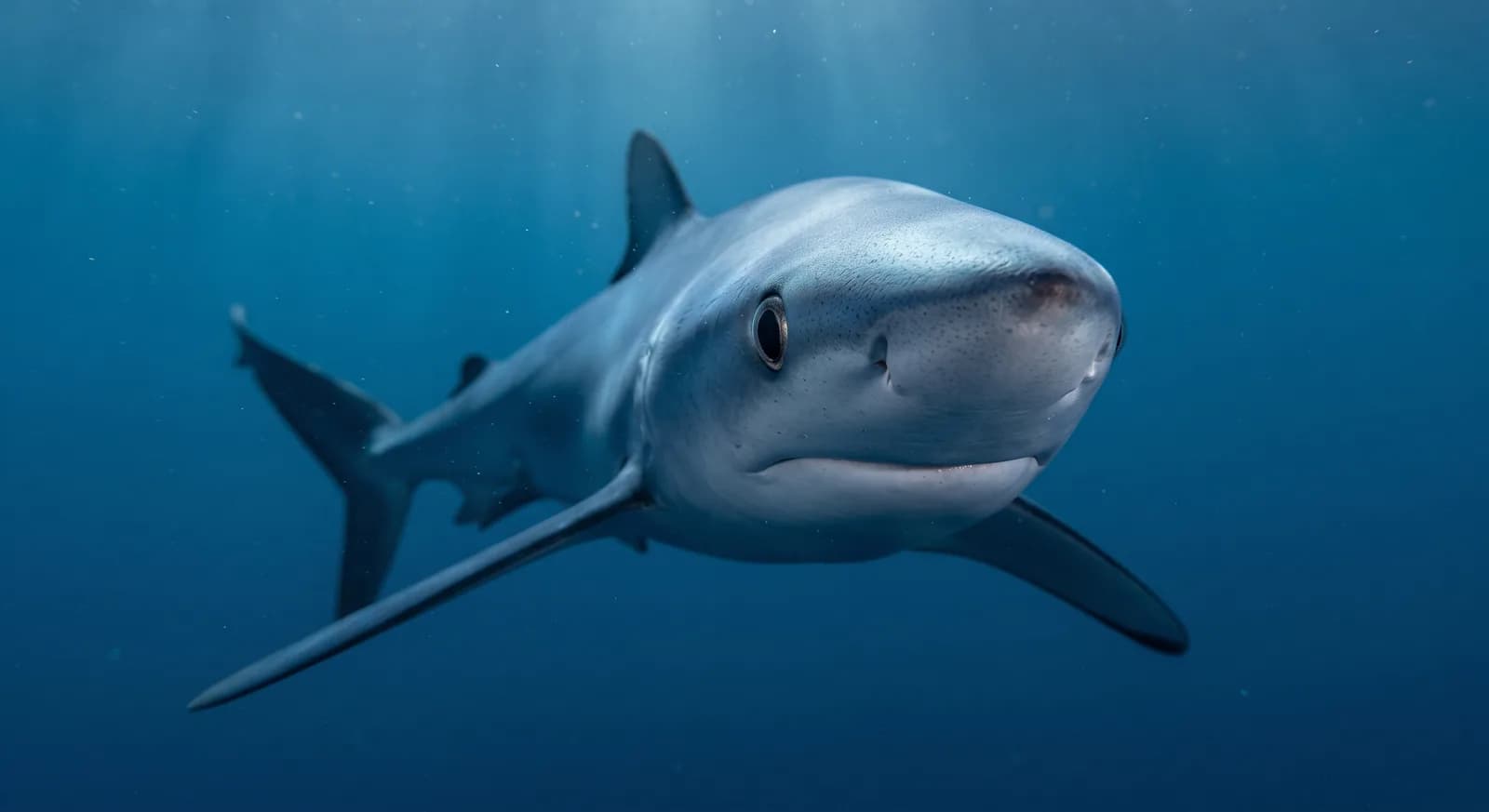 Near Threatened
Blue Shark
Prionace glauca
Bluntnose Sixgill Shark
Hexanchus griseus
Thornback Ray
Raja clavata
Sea Bass
Dicentrarchus labrax
Swordfish
Xiphias gladius
Edible Sea Urchin
Echinus esculentus
Keep exploring
Based on what we already know about common stingray.
Comments
Share an experience, a fun fact or a tip for seeing the common stingray.
Be the first to comment.