One of the 4 urchins on WAnimals
Sea urchins · Camarodonta · Echinidae
Edible Sea Urchin
Echinus esculentus
It could become endangered in the near future if current threats go unchecked. See full glossary
It is the only sea urchin currently listed as Near Threatened on the IUCN Red List. It uses a specialised jaw structure known as Aristotle's lantern to scrape algae off rocks.
Size
5 cm – 17.6 cm
Lifespan
8 years
Diet
Herbivore
Feeds mainly on plants.
Activity
Nocturnal
Active mainly at night.
Social structure
Solitary
Lives and hunts alone, joining others only to breed.
Sighting difficulty
Moderate
Fun facts
- It is the only sea urchin listed as Near Threatened by the IUCN.
- It scrapes algae off rocks with its Aristotle's lantern, made up of five calcareous teeth.
- A large female can release as many as 20 million eggs.
- It is the largest sea urchin on European coasts, with a test that can exceed 17 cm.
- Its grazing is intense: it keeps the rock clear of algae, and where it abounds it prevents kelp forests from establishing. A rise in its population can turn a kelp forest into an urchin barren, the same mechanism documented in the Pacific with the purple sea urchins.
- It scrapes the rock with its Aristotle's lantern, a chewing apparatus of five teeth that grow continuously to offset the wear.
- Its empty test, pink and spherical, is a much-collected object, and fishing for food and for the shell trade has reduced it in accessible areas.
- The IUCN classifies it as Near Threatened, something unusual for a sea urchin, precisely because of that pressure.
- It is protected in the United Kingdom under wildlife legislation in some areas.
Life cycle & biology
- Skeleton type
- Invertebrate - rigid calcareous endoskeleton (echinoderm)
- Habitat & environment
- Rocky coastal bottoms of the north-eastern Atlantic, from Iceland and Norway to Portugal, down to 1,200 m
- Birth weight
- A tiny egg released into the water by external fertilisation
- Size at birth
- A planktonic echinopluteus larva after hatching, developing over 45-60 days in captivity
- Sexual maturity
- Not precisely known (fast growth in the first year, slowing markedly afterwards)
- Gestation / incubation
- 45-60 days of larval development in captivity
- Litter / clutch size
- Up to 20 million eggs in a large female
Sources consulted: SeaLifeBase; Diving Guru; EBSCO Research Starters; Wikipedia (European edible sea urchin); MarLIN; CABI Compendium; Animal Fact
Where to find it
See its range on the interactive mapWhere to watch it
Parques y spots de buceo donde se ha documentado esta especie — se muestran 20 de 118 documentados.
Related species
Other species in the catalogue with the most in common with Edible Sea Urchin — same habitat, park, country, tags or family.
Bluntnose Sixgill Shark
Hexanchus griseus
Thornback Ray
Raja clavata
Common Stingray
Dasyatis pastinaca
Swordfish
Xiphias gladius
Nursehound
Scyliorhinus stellaris
 Near Threatened
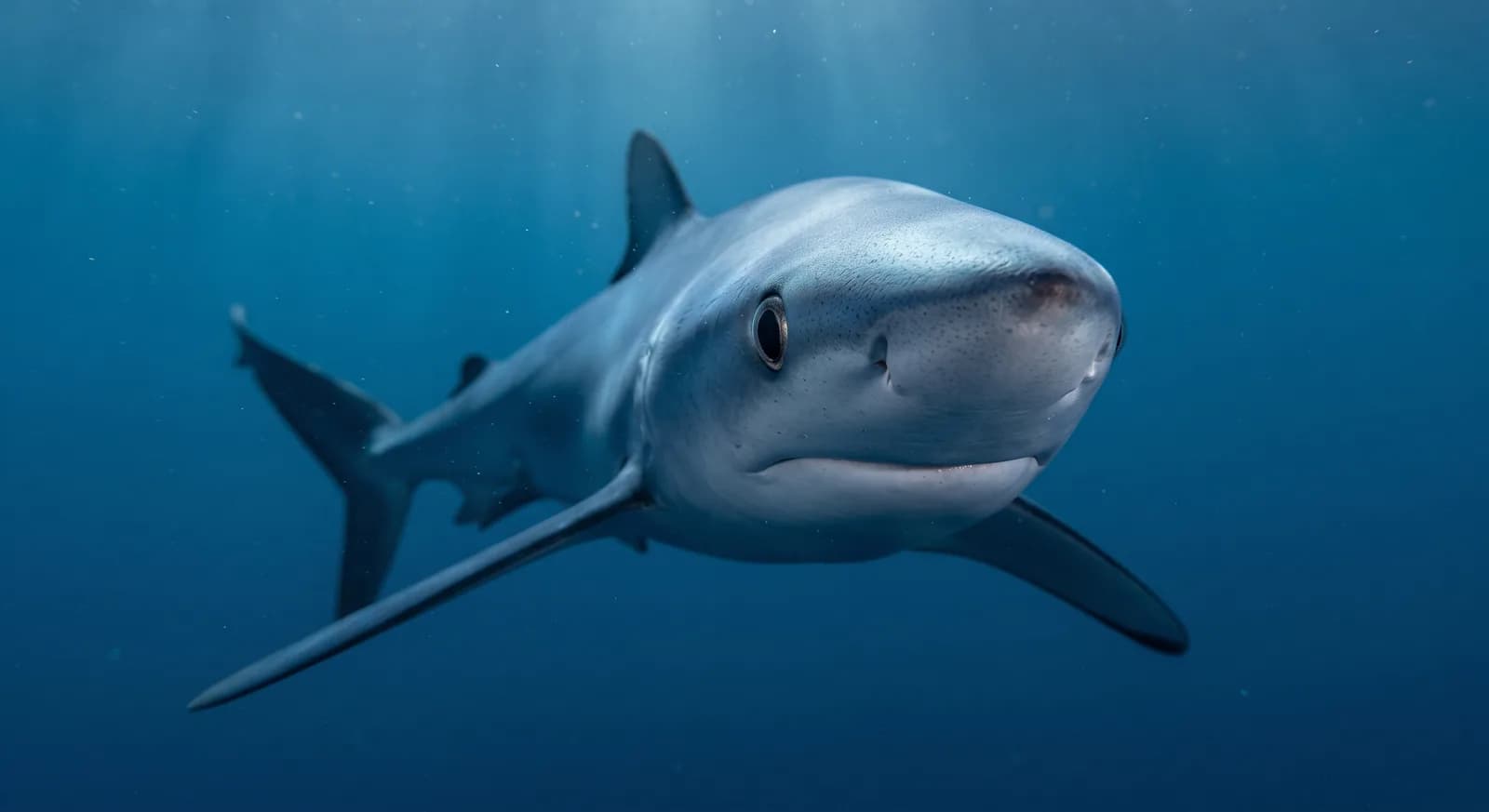
Blue Shark
Prionace glauca
Keep exploring
Based on what we already know about edible sea urchin.
Comments
Share an experience, a fun fact or a tip for seeing the edible sea urchin.
Be the first to comment.