One of the 9 iguanas on WAnimals
Reptiles · Squamata · Iguanidae
Hispaniolan Rhinoceros Iguana
Cyclura cornuta
It faces a very high risk of extinction in the wild in the near future. See full glossary
The Hispaniolan rhinoceros iguana is a large grey lizard with three horny protuberances on the snout, better developed in males. It is endemic to the island shared by Haiti and the Dominican Republic and is threatened by dogs, cats, feral pigs and the conversion of coastal dry forest into tourist development.
Weight
4.5 kg – 9 kg
Size
60 cm – 1.2 m
Lifespan
40 years
Diet
Herbivore
Feeds mainly on plants.
Activity
Diurnal
Active mainly during the day.
Social structure
Solitary
Lives and hunts alone, joining others only to breed.
Sighting difficulty
Hard
Fun facts
- Its nasal horns, larger in males, are modified scales with no clear defensive function: they seem to play a part in dominance displays between males.
- It is an important disperser of seeds in the island's dry forest: several plants germinate better after passing through its gut, and its decline affects the regeneration of that vegetation.
- Feral pigs are its main threat: they dig up and eat whole clutches, and in several parts of Haiti no recent generation has survived.
Life cycle & biology
- Skeleton type
- Vertebrate - internal bony skeleton (reptile)
- Habitat & environment
- Dry forest, thorn scrub and coastal karst areas of Hispaniola
- Sexual maturity
- 6 years
- Gestation / incubation
- 4.5 months
- Litter / clutch size
- 18 eggs
Sources consulted: https://es.wikipedia.org/wiki/Cyclura_cornuta
Where to watch it
Parks and dive sites where this species has been documented.
Related species
Other species in the catalogue with the most in common with Hispaniolan Rhinoceros Iguana — same habitat, park, country, tags or family.
Ricord's Rock Iguana
Cyclura ricordii
Hispaniolan Solenodon
Solenodon paradoxus
Cuvier's Hutia
Plagiodontia aedium
 Endangered
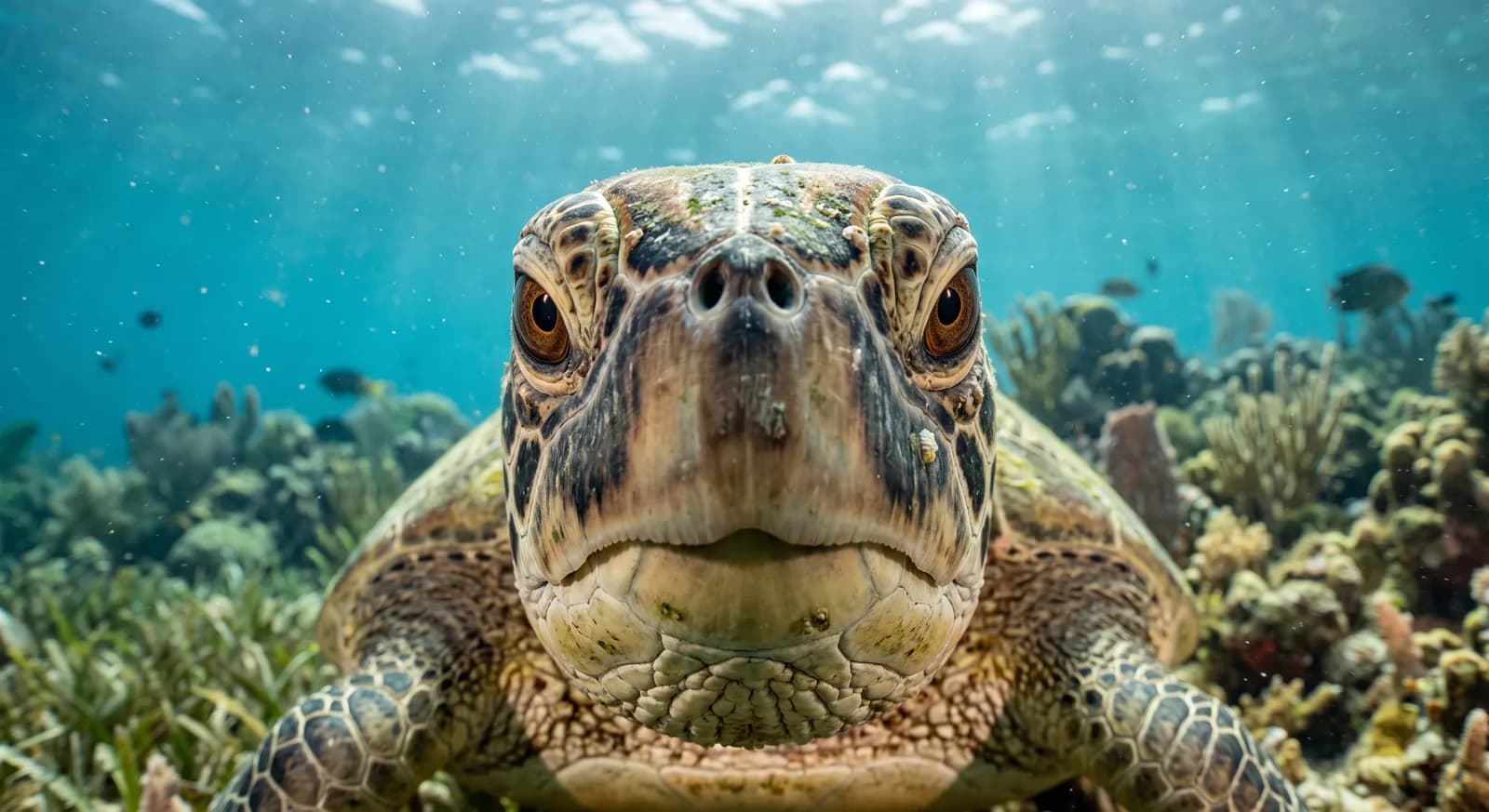
Green Turtle
Chelonia mydas
Green Anole
Anolis carolinensis
Cuban Brown Anole
Anolis sagrei
How to help
The hispaniolan rhinoceros iguana is classified as endangered. Organizations such as UICN, WWF y Wildlife Conservation Society work specifically on its conservation and that of its habitat; looking into their programs is a good starting point if you want to get involved.
It's documented in 2 real protected areas — part of why protecting these places matters for its conservation.
Keep exploring
Based on what we already know about hispaniolan rhinoceros iguana.
Comments
Share an experience, a fun fact or a tip for seeing the hispaniolan rhinoceros iguana.
Be the first to comment.