One of the 9 iguanas on WAnimals
Reptiles · Squamata · Iguanidae
Common Land Iguana
Conolophus subcristatus
It faces a high risk of extinction in the wild over the medium term. See full glossary
The Galápagos land iguana is a large, yellowish lizard that feeds above all on the pads and fruit of prickly pears, spines included. Darwin described it in less than flattering terms during his visit to the archipelago, but its later history includes one of the most ambitious island restoration operations ever carried out.
Weight
5 kg – 13 kg
Size
90 cm – 1.5 m
Lifespan
60 years
Diet
Herbivore
Feeds mainly on plants.
Activity
Diurnal
Active mainly during the day.
Social structure
Solitary
Lives and hunts alone, joining others only to breed.
Sighting difficulty
Moderate
Fun facts
- biologíaOn some islands it lives alongside the marine iguana and occasionally hybridises with it, producing sterile hybrids intermediate between the two.
- It eats prickly pears, spines and all: it knocks them down, tears them off and swallows them with barely any preparation, and on the islands where it is abundant the prickly pears have developed tall, woody trunks to put their pads out of reach, an evolutionary race visible to the naked eye.
- In 2019 it was reintroduced to Santiago Island, from which it had been absent since Darwin's visit in 1835: more than one thousand four hundred individuals were released after pigs and goats had been eradicated from the island.
- It has a cleaning relationship with Darwin's finches: the iguana stands up and stretches out its legs, and the finches pick the ticks from the folds of its skin.
Life cycle & biology
- Skeleton type
- Vertebrate - internal bony skeleton (reptile)
- Habitat & environment
- Arid areas with prickly pears on several islands of the Galápagos archipelago
- Sexual maturity
- 8 years
- Gestation / incubation
- 110 days of incubation
- Litter / clutch size
- 12 eggs
Sources consulted: https://www.iucnredlist.org/ | https://animaldiversity.org/ | https://es.wikipedia.org/
Where to watch it
Parks and dive sites where this species has been documented.
Related species
Other species in the catalogue with the most in common with Common Land Iguana — same habitat, park, country, tags or family.
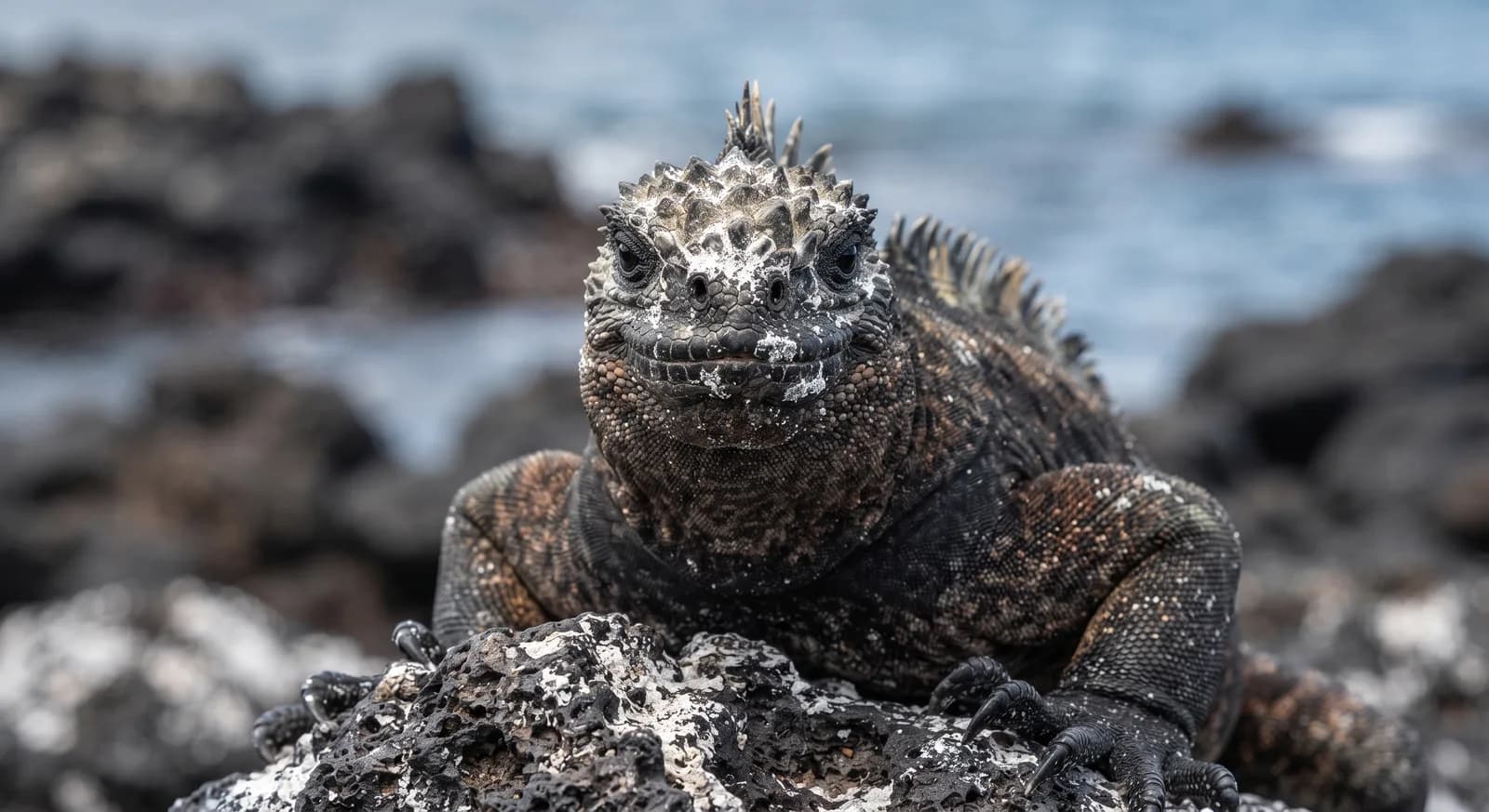 Vulnerable
Marine Iguana
Amblyrhynchus cristatus
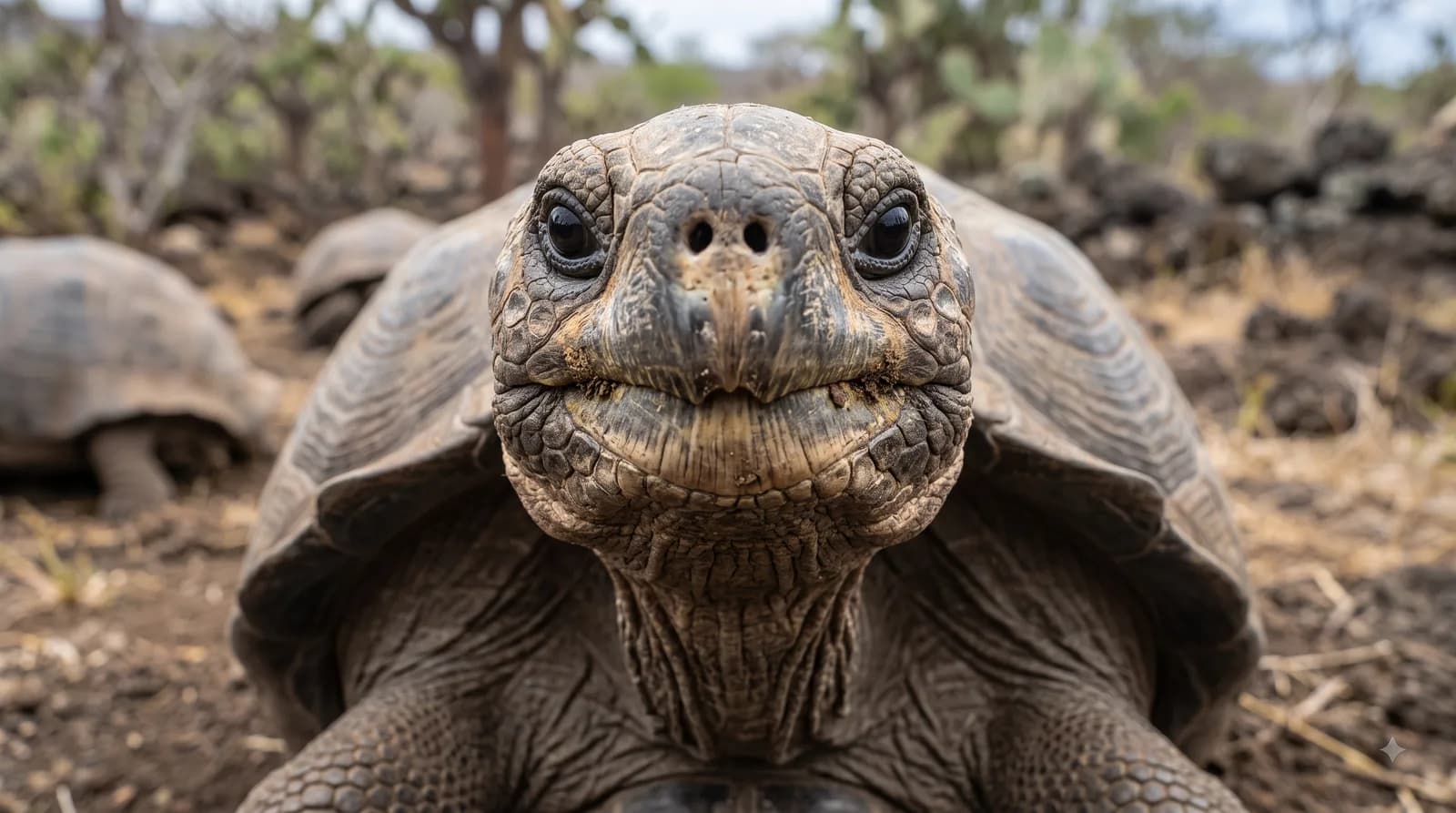 Vulnerable
Floreana Giant Tortoise
Chelonoidis niger
Flightless Cormorant
Nannopterum harrisi
Large Ground-Finch
Geospiza magnirostris
Peruvian Booby
Sula variegata
Common Spiny-tailed Iguana
Ctenosaura similis
How to help
The common land iguana is classified as vulnerable. Organizations such as UICN, WWF y Wildlife Conservation Society work specifically on its conservation and that of its habitat; looking into their programs is a good starting point if you want to get involved.
It's documented in 1 real protected area — part of why protecting these places matters for its conservation.
Keep exploring
Based on what we already know about common land iguana.
Comments
Share an experience, a fun fact or a tip for seeing the common land iguana.
Be the first to comment.