One of the 41 turtles and tortoises on WAnimals
Reptiles · Testudines · Testudinidae
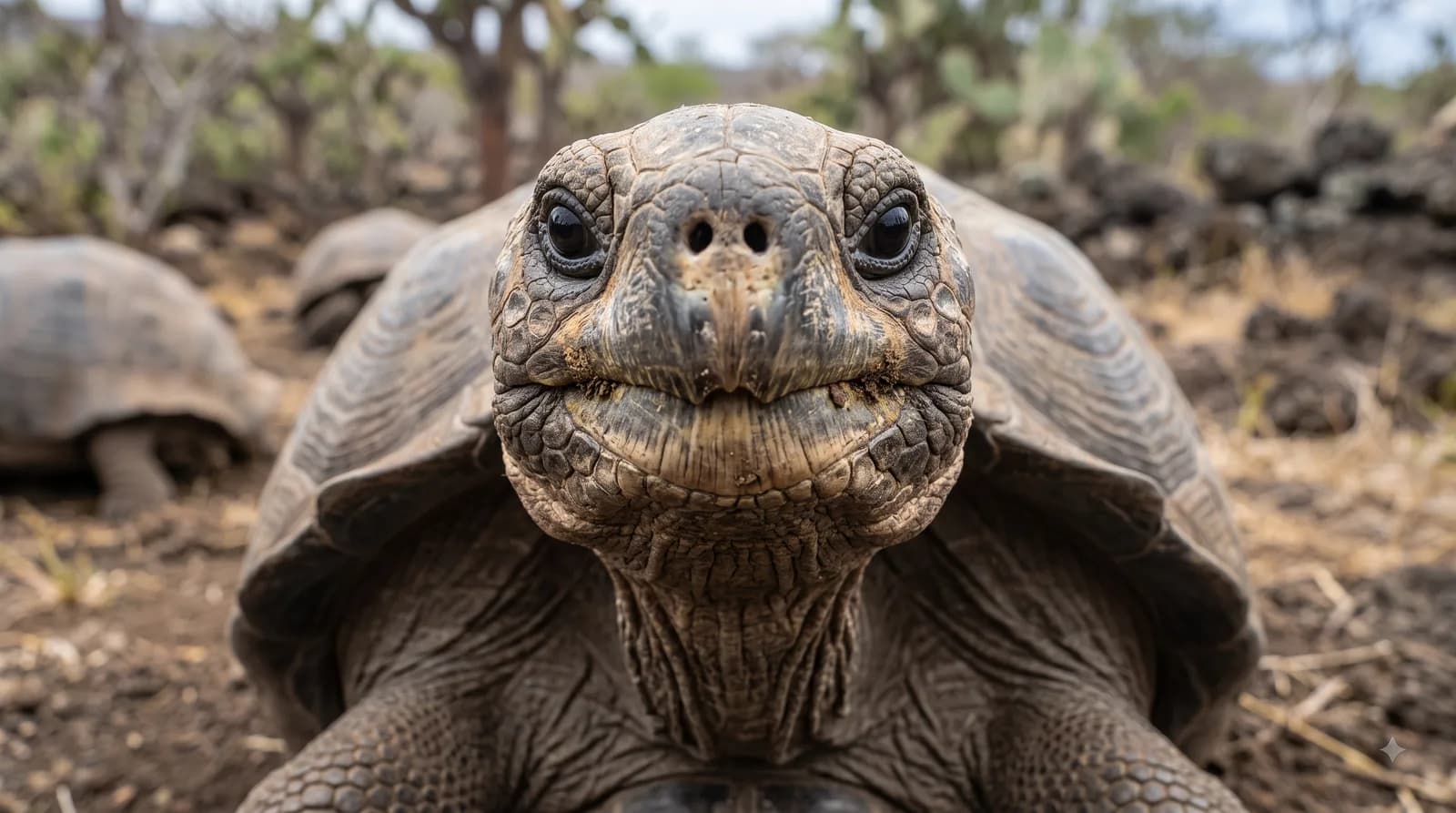
Floreana Giant Tortoise
Chelonoidis niger
It faces a high risk of extinction in the wild over the medium term. See full glossary
The largest tortoise in the world, endemic to the Galápagos archipelago and an emblem of Darwin's theory of evolution.
Weight
250 kg – 400 kg
Size
1.2 m – 1.8 m
Lifespan
100 years
Diet
Herbivore
Feeds mainly on plants.
Activity
Diurnal
Active mainly during the day.
Social structure
Solitary
Lives and hunts alone, joining others only to breed.
Sighting difficulty
Moderate
Fun facts
- fisiologíaIt can survive up to a year without food or water, an ability that historically allowed whaling ships to keep them alive as a store of fresh meat.
- It can live for over 100 years.
- historia naturalIt can live more than 170 years, and the differences in shell shape between islands — domed or saddle-backed — were among the first clues that led Darwin towards natural selection.
- It can go a year without eating or drinking.
- Each island in the archipelago produced its own shell shape.
Life cycle & biology
- Skeleton type
- Vertebrate - bony skeleton with a fused shell (reptile)
- Habitat & environment
- Low, arid, volcanic ground during the cooler hours, moving up to the humid highlands to feed during the day
- Birth weight
- ~80 grams; 6 cm of carapace length at hatching
- Size at birth
- 6 cm of carapace at hatching, about the size of a tennis ball
- Sexual maturity
- 20-25 years in captivity (as long as 40 years to reach full adult size in the wild)
- Gestation / incubation
- 120-200 days (4-8 months)
- Litter / clutch size
- 2 to 16 eggs per clutch
- Lifespan in captivity
- Documented record of 170-177 years (the tortoise Harriet, who died in an Australian zoo in 2006)
Sources consulted: DinoAnimals; A-Z Animals; Nature Table; Animalia.bio; Chelonoidis nigra (Animal Diversity Web); Animal Spot; Tortoise Turtle; Wikipedia (Lonesome George, Diego the tortoise)
Where to watch it
Parks and dive sites where this species has been documented.
Related species
Other species in the catalogue with the most in common with Floreana Giant Tortoise — same habitat, park, country, tags or family.
Common Land Iguana
Conolophus subcristatus
Flightless Cormorant
Nannopterum harrisi
 Vulnerable
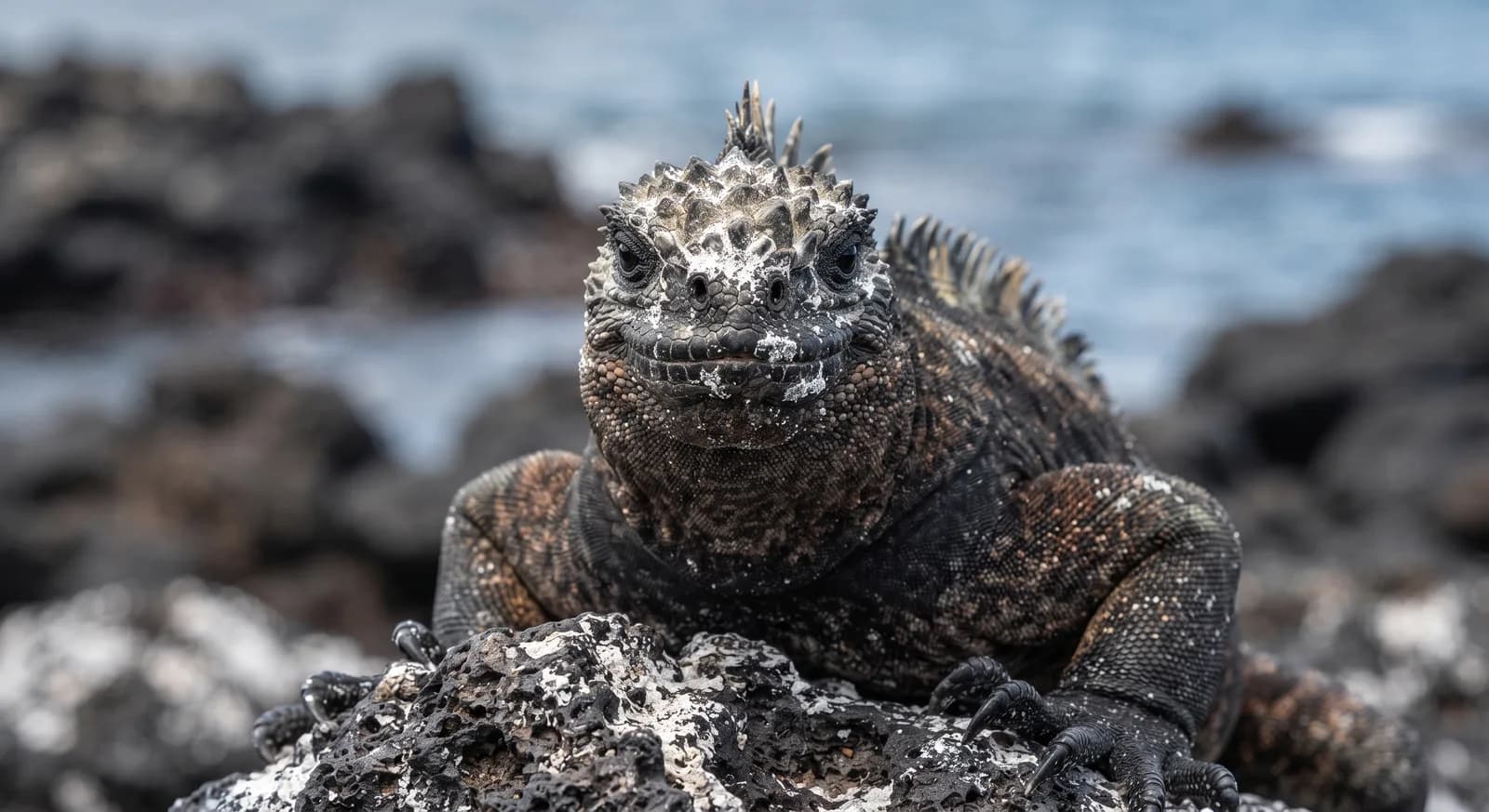
Marine Iguana
Amblyrhynchus cristatus
 Vulnerable
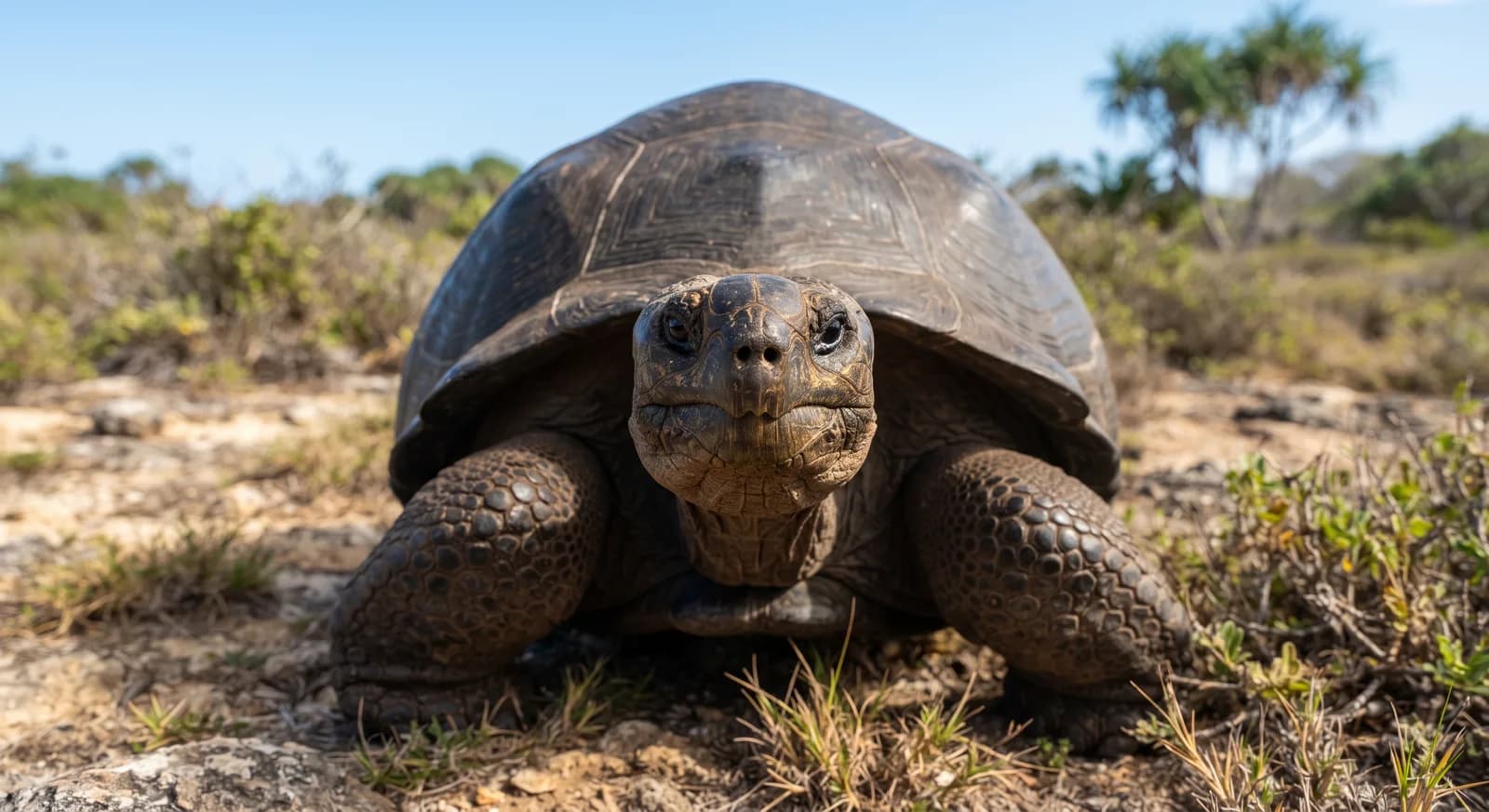
Aldabra Giant Tortoise
Aldabrachelys gigantea
Large Ground-Finch
Geospiza magnirostris
Common Tortoise
Testudo graeca
How to help
The floreana giant tortoise is classified as vulnerable. Organizations such as Galápagos Conservancy work specifically on its conservation and that of its habitat; looking into their programs is a good starting point if you want to get involved.
It's documented in 1 real protected area — part of why protecting these places matters for its conservation.
Keep exploring
Based on what we already know about floreana giant tortoise.
Comments
Share an experience, a fun fact or a tip for seeing the floreana giant tortoise.
Be the first to comment.