One of the 7 boobies on WAnimals
Birds · Suliformes · Sulidae
Peruvian Booby
Sula variegata
The species is abundant and widely distributed; it faces no significant short-term risk. See full glossary
The Peruvian booby is, along with the Guanay cormorant and the Peruvian pelican, one of the three great guano birds of the Humboldt current. It depends almost entirely on the Peruvian anchoveta and forms colonies of hundreds of thousands of birds on the guano islands. Its populations swing brutally with El Niño events, which collapse the anchoveta and cause mass die-offs.
Weight
1.2 kg – 1.6 kg
Size
71 cm – 76 cm
Lifespan
20 years
Diet
Carnivore
Feeds mainly on other animals.
Activity
Diurnal
Active mainly during the day.
Social structure
Colony
Lives in large concentrations, often for breeding reasons.
Sighting difficulty
Easy
Fun facts
- Together with the Guanay cormorant it produced the guano deposits that sustained the Peruvian economy of the 19th century: millions of tonnes of droppings accumulated over centuries on the Pacific islands were exported.
- Its colonies run to hundreds of thousands, and its feeding flocks darken the sky over the Peruvian sea, forming columns that plunge in cascades onto the anchoveta shoals.
Life cycle & biology
- Skeleton type
- Vertebrate - internal bony skeleton (bird)
- Habitat & environment
- The Humboldt current off Peru and Chile; it breeds on guano islands and coastal headlands
- Sexual maturity
- 3 years
- Gestation / incubation
- 42 days of incubation
- Litter / clutch size
- 3 eggs
Sources consulted: https://es.wikipedia.org/wiki/Sula_variegata
Where to watch it
Parks and dive sites where this species has been documented.
Related species
Other species in the catalogue with the most in common with Peruvian Booby — same habitat, park, country, tags or family.
Red-footed Booby
Sula sula
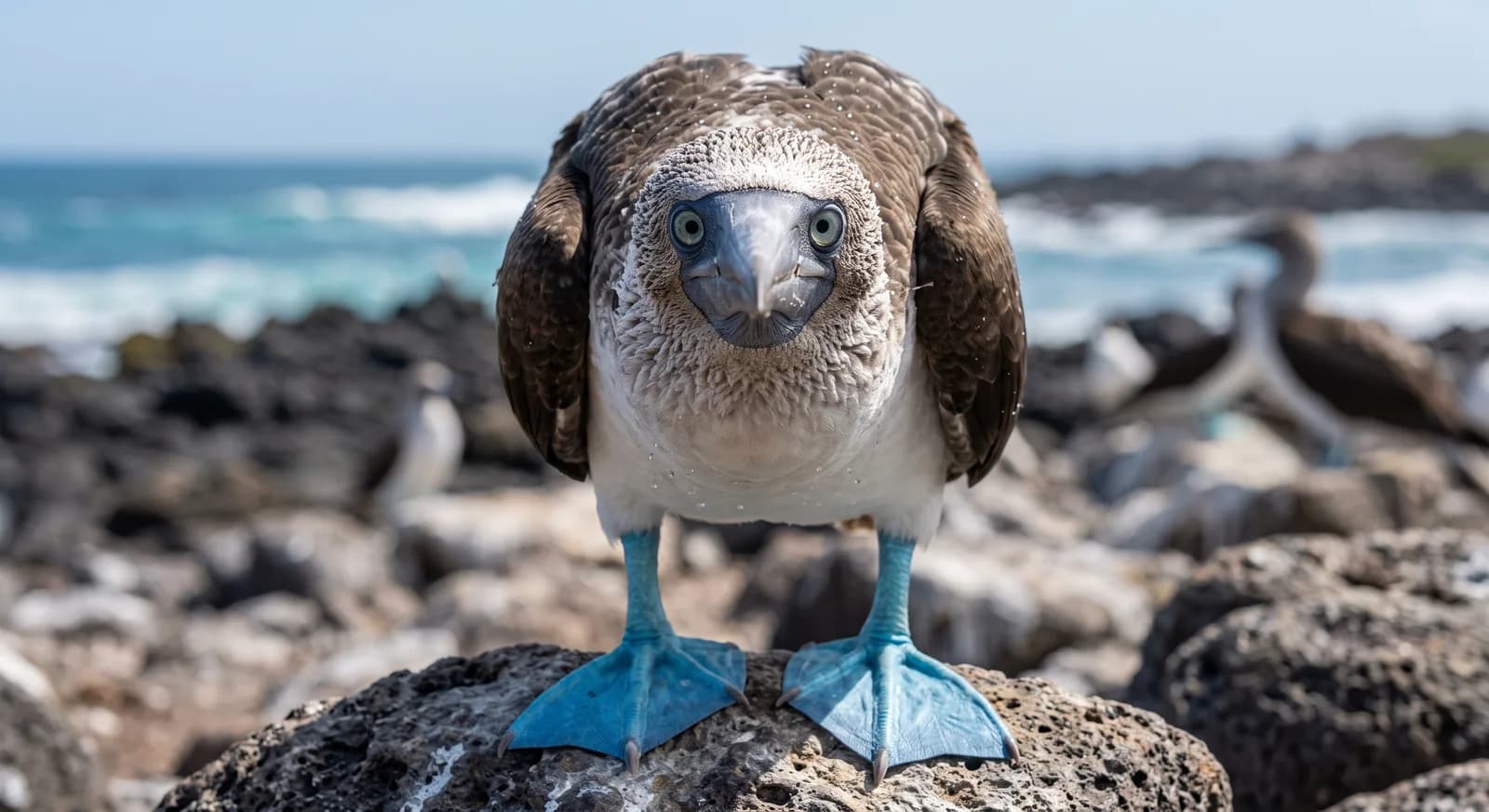 Least Concern
Blue-footed Booby
Sula nebouxii
Nazca Booby
Sula granti
South American Fur Seal
Arctocephalus australis
South American Sea Lion
Otaria flavescens
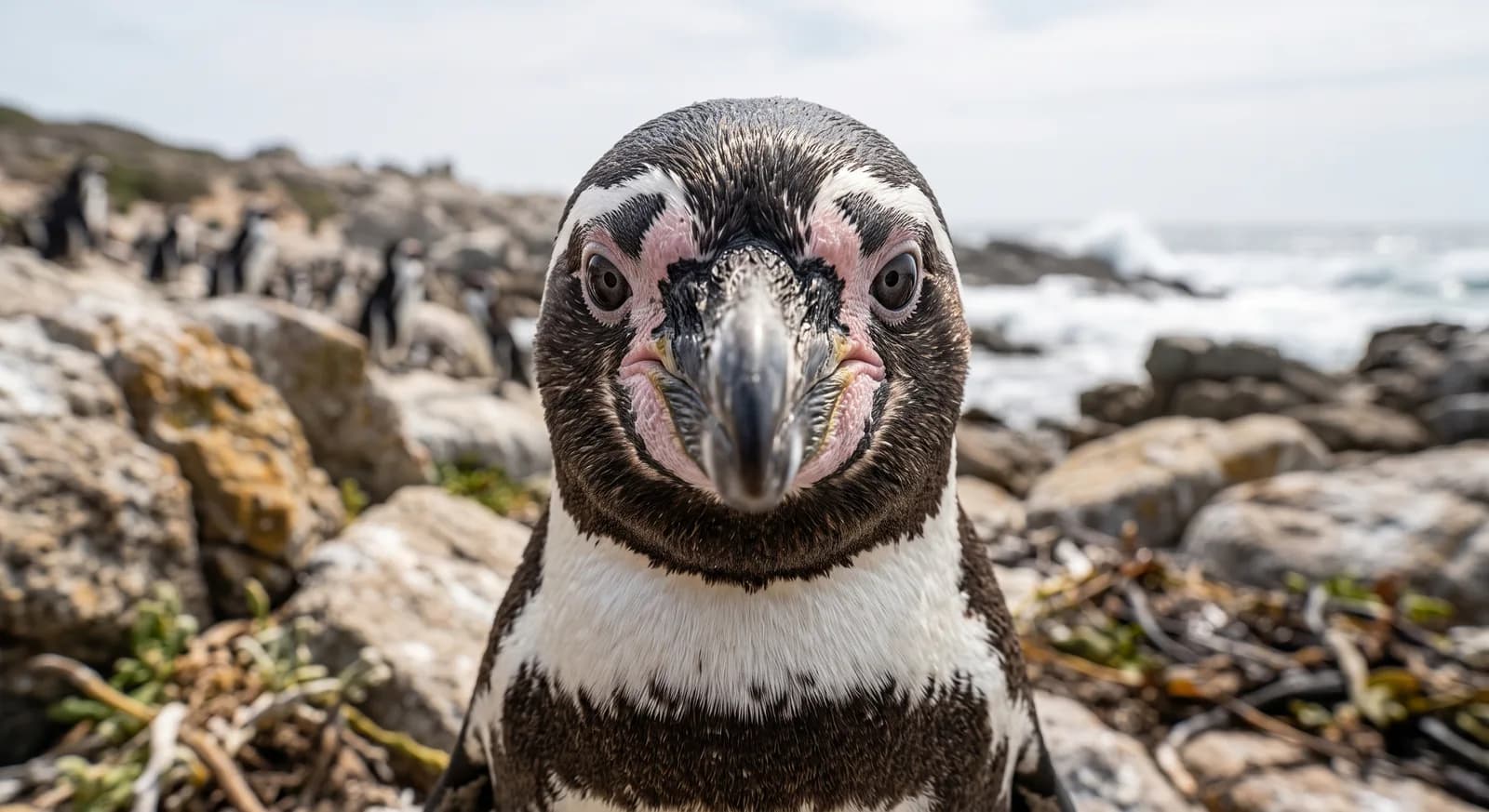 Vulnerable
Humboldt Penguin
Spheniscus humboldti
Keep exploring
Based on what we already know about peruvian booby.
Comments
Share an experience, a fun fact or a tip for seeing the peruvian booby.
Be the first to comment.