One of the 15 penguins on WAnimals
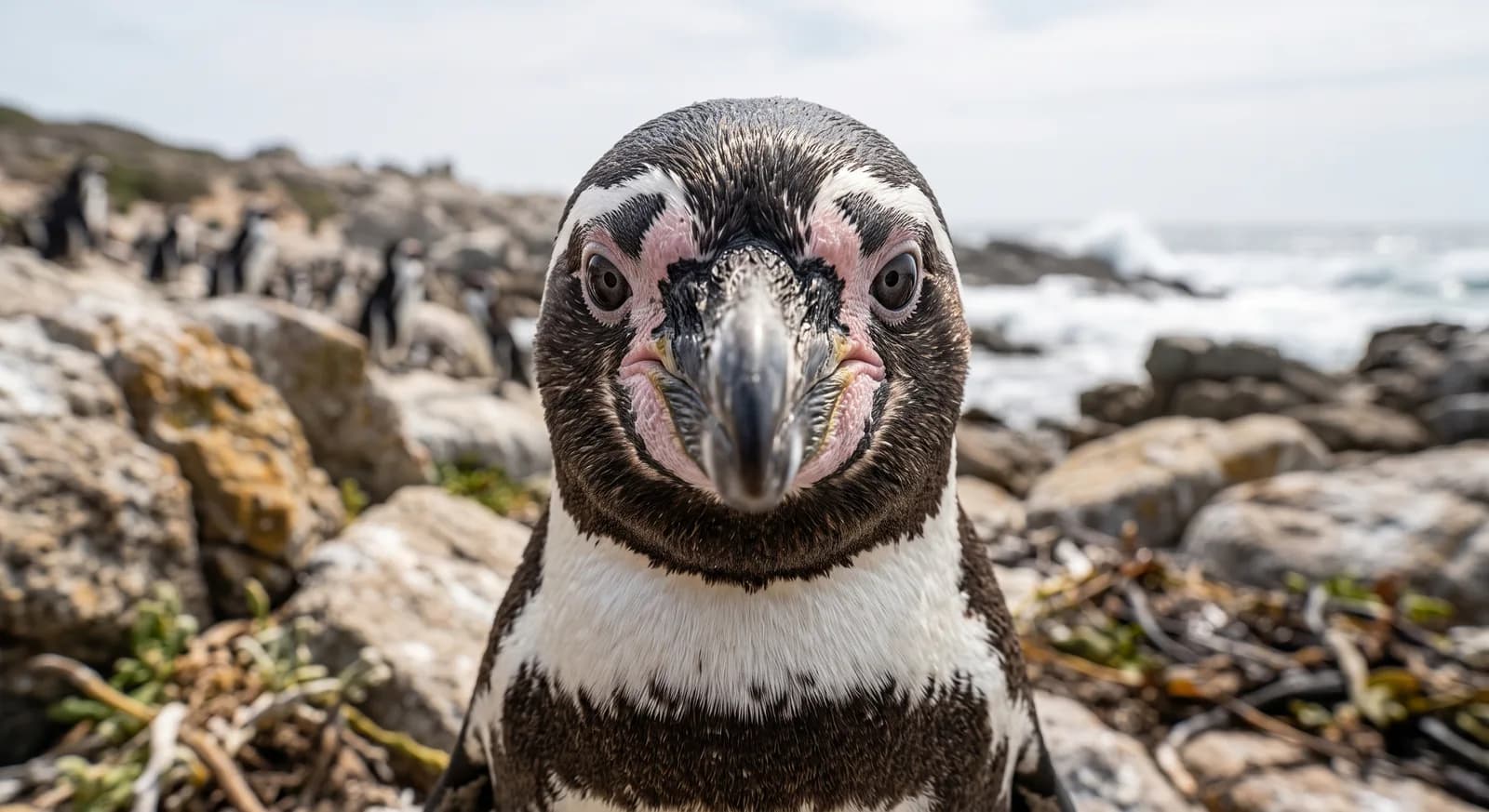
Birds · Sphenisciformes · Spheniscidae
Humboldt Penguin
Spheniscus humboldti
It faces a high risk of extinction in the wild over the medium term. See full glossary
Unlike most penguins, which usually raise only one of their two chicks, this species normally manages to incubate and rear both eggs successfully.
Weight
4 kg – 5 kg
Size
56 cm – 70 cm
Lifespan
20 years
Diet
Piscivore
Feeds mainly on fish.
Activity
Diurnal
Active mainly during the day.
Social structure
Colony
Lives in large concentrations, often for breeding reasons.
Sighting difficulty
Moderate
Fun facts
- It can stay under for 60 to 150 seconds on a hunting dive.
- It feeds mainly on anchoveta and other small shoaling fish.
- It lives on rocky coasts and islands of the Pacific off Peru and Chile, in the cold Humboldt Current.
- conservaciónIt nests in burrows dug into guano deposits built up over centuries on the coasts of Peru and Chile, a habitat reduced by commercial guano extraction.
Life cycle & biology
- Skeleton type
- Vertebrate - pneumatised bony skeleton, flightless bird adapted for diving
- Habitat & environment
- Rocky coasts and islands of the Pacific off Peru and Chile, in the cold Humboldt Current
- Birth weight
- Weight at hatching not found as a precise figure
- Size at birth
- Soft grey down on the breast and pale yellow on the belly at hatching
- Sexual maturity
- 2-7 years (~3 years most commonly given)
- Gestation / incubation
- 39-42 days
- Litter / clutch size
- 2 eggs per clutch, with up to 2 incubation cycles a year
- Lifespan in captivity
- A documented record of at least 20 years in captivity
Sources consulted: Britannica; SeaWorld/Busch Gardens; BioExpedition; Biological Diversity; MarineBio; Animalia.bio; AnAge (genomics.senescence.info); Animal Diversity Web; PMC (foot darkening age study)
Where to watch it
Parks and dive sites where this species has been documented.
Related species
Other species in the catalogue with the most in common with Humboldt Penguin — same habitat, park, country, tags or family.
 Least Concern
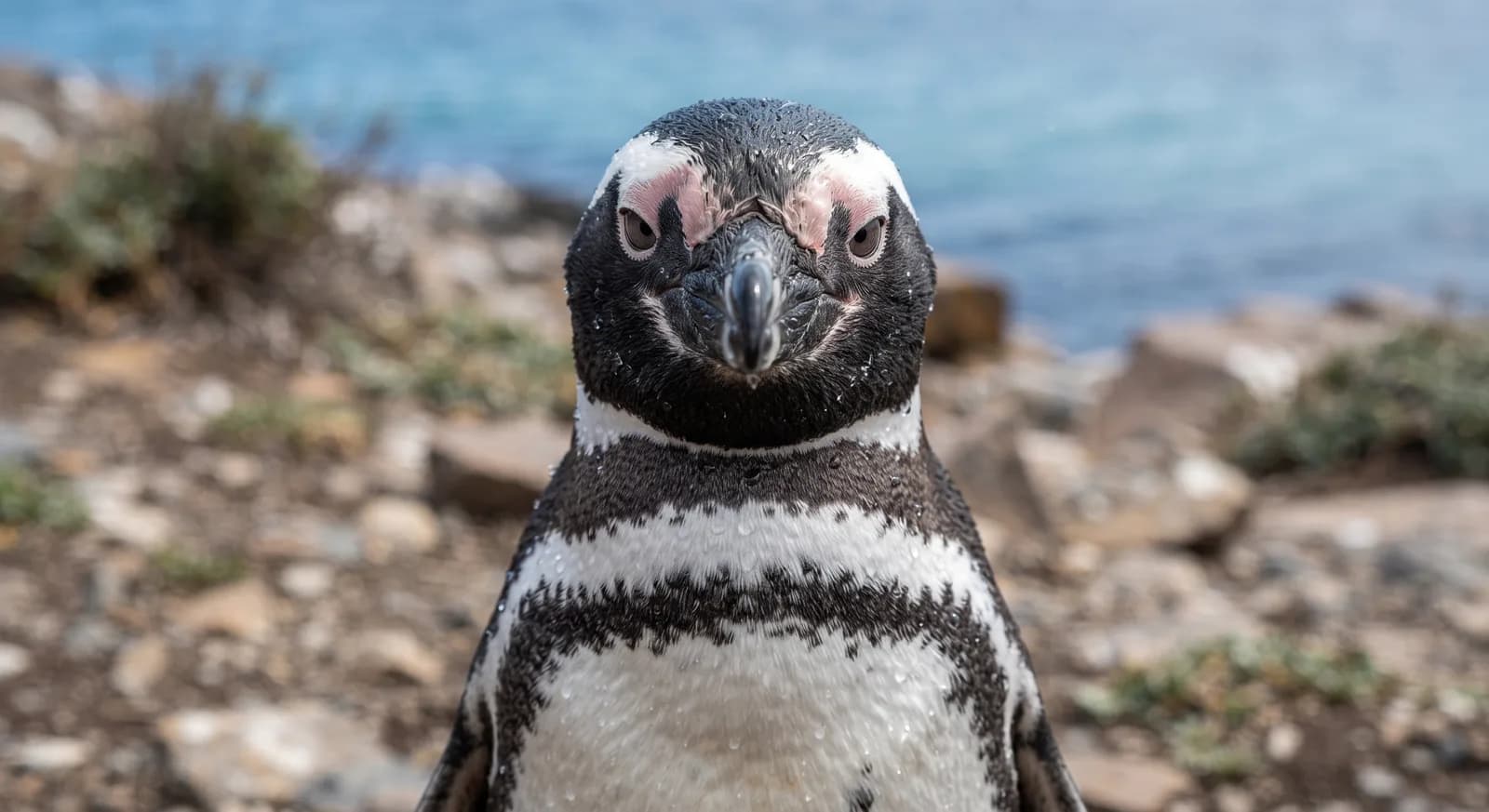
Magellanic Penguin
Spheniscus magellanicus
Guanay Cormorant
Leucocarbo bougainvilliorum
Peruvian Pelican
Pelecanus thagus
Peruvian Booby
Sula variegata
South American Fur Seal
Arctocephalus australis
South American Sea Lion
Otaria flavescens
How to help
The humboldt penguin is classified as vulnerable. Organizations such as UICN, WWF y Wildlife Conservation Society work specifically on its conservation and that of its habitat; looking into their programs is a good starting point if you want to get involved.
It's documented in 6 real protected areas — part of why protecting these places matters for its conservation.
Keep exploring
Based on what we already know about humboldt penguin.
Comments
Share an experience, a fun fact or a tip for seeing the humboldt penguin.
Be the first to comment.