One of the 8 pelicans on WAnimals
Birds · Pelecaniformes · Pelecanidae
Peruvian Pelican
Pelecanus thagus
It could become endangered in the near future if current threats go unchecked. See full glossary
A large, dark seabird with a white stripe running from the top of the bill over the crown and down the sides of the neck. It sports long tufted plumes on the head. Compared with the brown pelican it has a proportionally longer crest and a different colour on the gular pouch, the bill, the scapulars and the greater wing coverts.
Weight
5 kg – 7 kg
Size
1.4 m – 1.5 m
Lifespan
15 years
Diet
Piscivore
Feeds mainly on fish.
Activity
Diurnal
Active mainly during the day.
Social structure
Colony
Lives in large concentrations, often for breeding reasons.
Sighting difficulty
Moderate
Fun facts
- It split from the brown pelican only 0.64-1.54 million years ago, through partial oceanographic barriers (the Humboldt and Equatorial currents) combined with different selective regimes.
- Although its range overlaps widely with that of the brown pelican, the two do not hybridise: one of the arguments that led to it being recognised as a species of its own.
- Fledglings have been documented attacking and eating unrelated younger birds of their own species.
Life cycle & biology
- Skeleton type
- Vertebrate - internal bony skeleton (bird)
- Habitat & environment
- The Pacific coast of South America, breeding in loose colonies from central Chile to Piura, in northern Peru. It reaches the Beagle Channel in the south and occurs as a vagrant in Argentina, mainly on Andean lakes
- Birth weight
- Altricial: born blind, naked or with sparse down and entirely dependent
- Size at birth
- Altricial: born blind, naked or with sparse down and entirely dependent
- Sexual maturity
- 3-4 years
- Gestation / incubation
- ~30 days of incubation
- Litter / clutch size
- 2-3 eggs per clutch
Sources consulted: IUCN Red List; BirdLife DataZone; Ministerio del Medio Ambiente de Chile (RCE, 15.º proceso); Jaramillo 2007; Kennedy et al. 2013, Journal of Avian Biology 44(3); Daigre, Arce y Simeone 2012, Wilson Journal of Ornithology 124(3); Molina 1782
Where to find it
See its range on the interactive mapBest time: All year round on the Pacific coasts of Peru and Chile
Where to watch it
Parks and dive sites where this species has been documented.
Related species
Other species in the catalogue with the most in common with Peruvian Pelican — same habitat, park, country, tags or family.
Guanay Cormorant
Leucocarbo bougainvilliorum
 Vulnerable
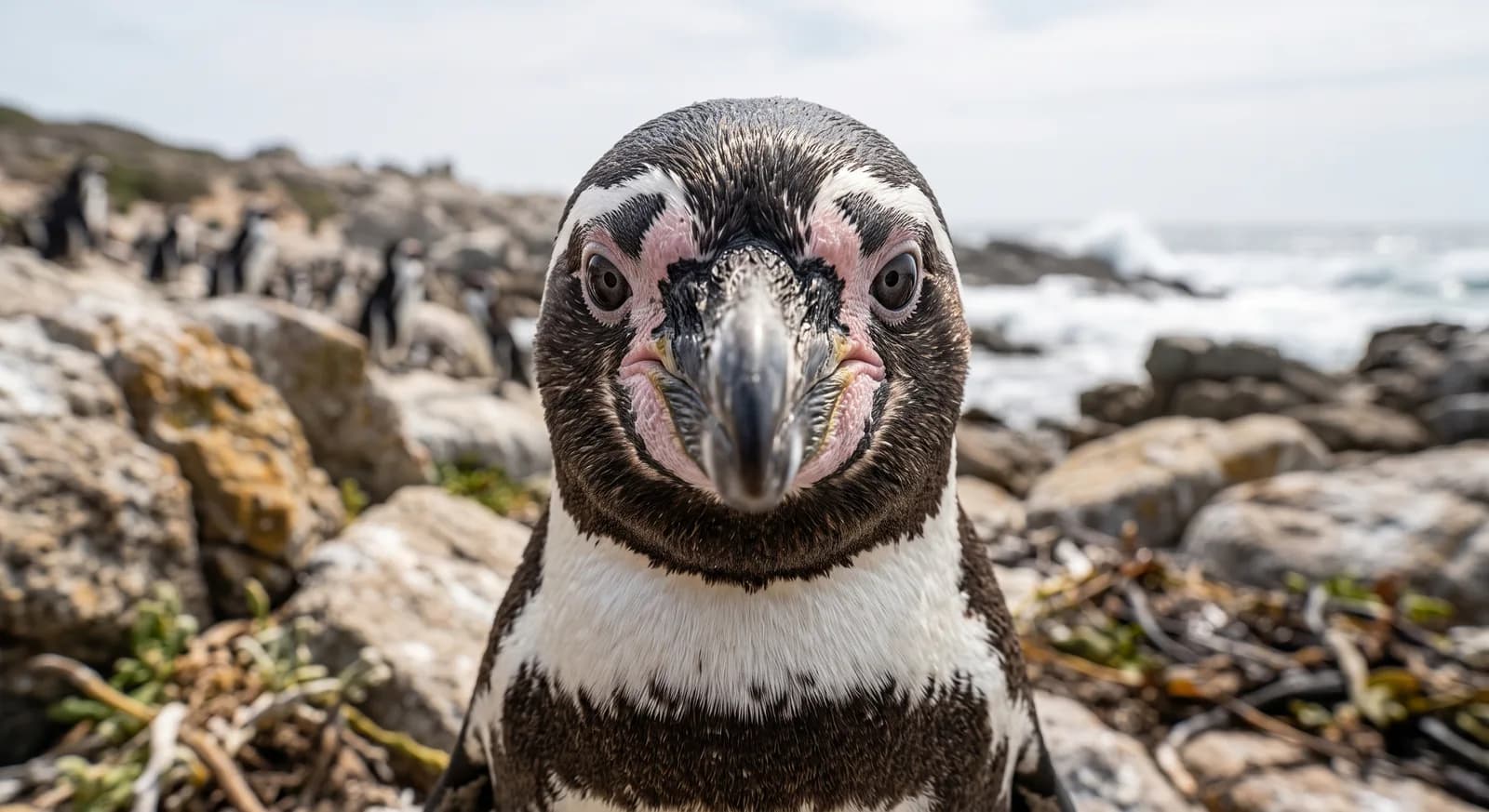
Humboldt Penguin
Spheniscus humboldti
Peruvian Booby
Sula variegata
South American Sea Lion
Otaria flavescens
South American Fur Seal
Arctocephalus australis
Sally Lightfoot Crab
Grapsus grapsus
Keep exploring
Based on what we already know about peruvian pelican.
Comments
Share an experience, a fun fact or a tip for seeing the peruvian pelican.
Be the first to comment.