One of the 7 fur seals on WAnimals
Mammals · Carnivora · Otariidae
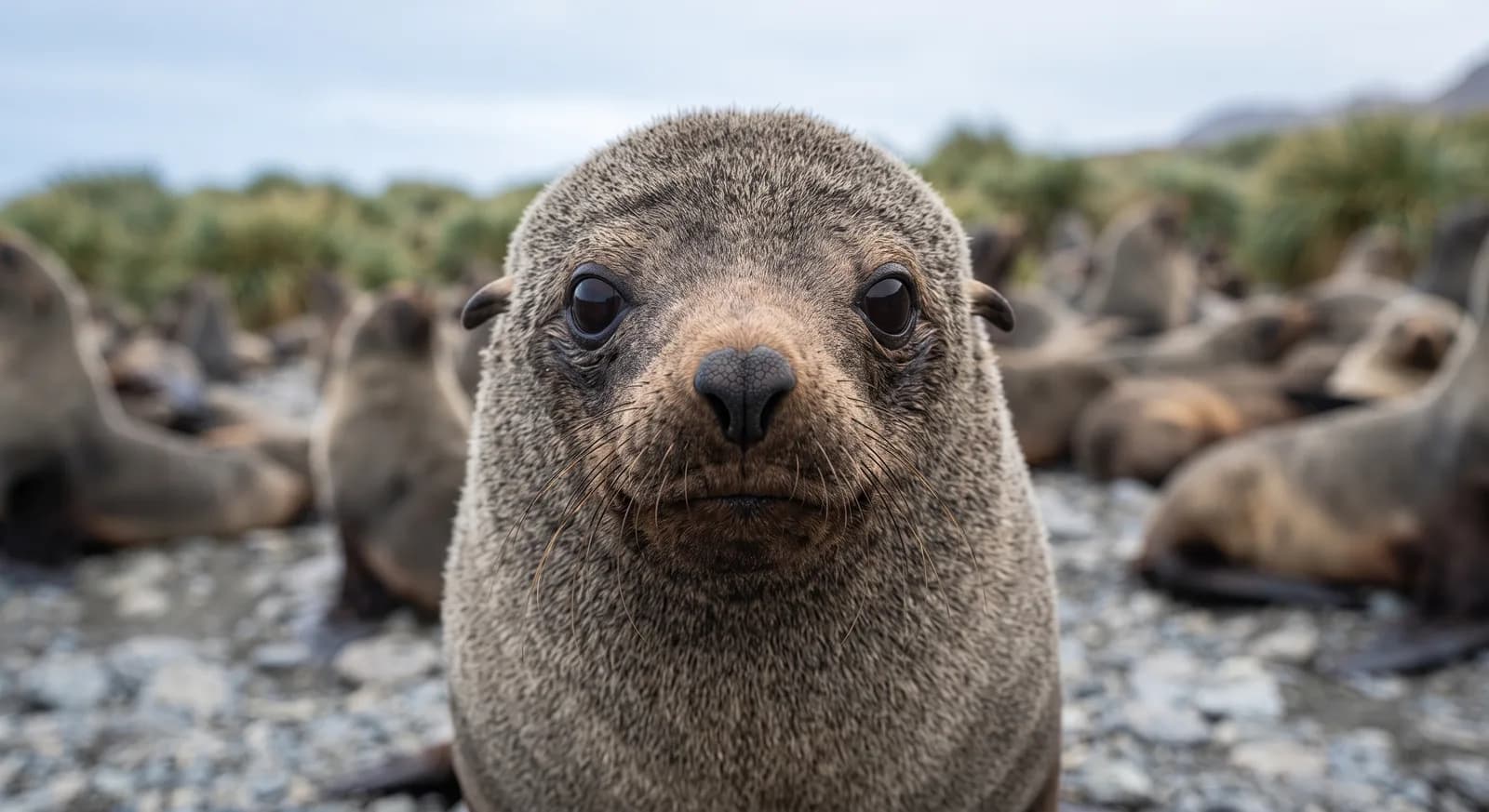
Antarctic Fur Seal
Arctocephalus gazella
It faces a very high risk of extinction in the wild in the near future. See full glossary
The Antarctic fur seal is a pinniped mammal of the family Otariidae, one of the seven species in the genus Arctocephalus. It lives in Antarctic waters, and was first seen in the Kerguelen Islands.
Weight
84.5 kg on average
Size
1.2 m – 2 m
Lifespan
20 years
Diet
Carnivore
Feeds mainly on other animals.
Activity
Nocturnal
Active mainly at night.
Social structure
Colony
Lives in large concentrations, often for breeding reasons.
Sighting difficulty
Hard
Estimated population
944,000 mature individuals in 2025, against the 2,187,000 estimated in 1999: a fall of more than 50%
Fun facts
- GeneralAlmost wiped out by hunting in the 19th century, it recovered to several million animals; since then it has fallen again, and in 2025 an estimated 944,000 breeding adults remained.
Life cycle & biology
- Skeleton type
- Vertebrate - internal bony skeleton (marine mammal)
- Habitat & environment
- Rocky coasts and cold waters of the Southern Ocean
- Birth weight
- 6 - 7 kg
- Size at birth
- About 65 cm; born with a black coat and suckles for about four months
- Sexual maturity
- 3.5 years
- Gestation / incubation
- 8.4 months
- Litter / clutch size
- 1
Sources consulted: https://es.wikipedia.org/wiki/Arctocephalus_gazella; IUCN, comunicado de 9 de abril de 2026: pasa de Preocupación menor a En peligro || IUCN, comunicado de 9 de abril de 2026
Where to find it
See its range on the interactive mapBest time: From November to February on South Georgia and other subantarctic islands, during the breeding season, when the beaches fill with territorial males and pups.
Where to watch it
Parques y spots de buceo donde se ha documentado esta especie — se muestran 13 de 23 documentados.
Related species
Other species in the catalogue with the most in common with Antarctic Fur Seal — same habitat, park, country, tags or family.
 Endangered
Killer Whale
Orcinus orca
Sei Whale
Balaenoptera borealis
South American Fur Seal
Arctocephalus australis
South American Sea Lion
Otaria flavescens
 Least Concern
Weddell Seal
Leptonychotes weddellii
 Vulnerable
Southern Elephant Seal
Mirounga leonina
How to help
The antarctic fur seal is classified as endangered. Organizations such as UICN, WWF y Wildlife Conservation Society work specifically on its conservation and that of its habitat; looking into their programs is a good starting point if you want to get involved.
It's documented in 2 real protected areas — part of why protecting these places matters for its conservation.
Keep exploring
Based on what we already know about antarctic fur seal.
Comments
Share an experience, a fun fact or a tip for seeing the antarctic fur seal.
Be the first to comment.