One of the 26 snakes on WAnimals
Reptiles · Squamata · Elapidae
Common Death Adder
Acanthophis antarcticus
The species is abundant and widely distributed; it faces no significant short-term risk. See full glossary
Acanthophis antarcticus, the common death adder, is a snake of the family Elapidae, native to Australia. It is one of the most venomous land snakes in Australia and in the world. Although its distribution remains widespread, it faces a growing threat from the ongoing invasion of the cane toad across Australia.
Weight
384 g on average
Size
70 cm – 1 m
Lifespan
9 years
Diet
Carnivore
Feeds mainly on other animals.
Activity
Nocturnal
Active mainly at night.
Social structure
Solitary
Lives and hunts alone, joining others only to breed.
Sighting difficulty
Easy
Fun facts
- It fishes with its tail: the tip is slender and contrastingly coloured, and it wriggles it like a worm while the rest of the body stays buried in the leaf litter, drawing frogs, lizards and birds within reach.
- It has the fastest strike of any Australian snake: it can bite and return to its starting position in little more than a tenth of a second.
- It is the only dangerous Australian snake that does not flee: it stays motionless, trusting to its camouflage, which means people tread on it without seeing it and accounts for a share of the accidents.
Life cycle & biology
- Skeleton type
- Vertebrate - internal bony skeleton (reptile)
- Habitat & environment
- Sclerophyll woodland, heathland and scrub with leaf litter in eastern and southern Australia
- Sexual maturity
- 3 years
- Gestation / incubation
- 4 months of gestation
- Litter / clutch size
- 15 live young
Sources consulted: https://es.wikipedia.org/wiki/Acanthophis_antarcticus
Where to watch it
Parques y spots de buceo donde se ha documentado esta especie — se muestran 10 de 29 documentados.
Related species
Other species in the catalogue with the most in common with Common Death Adder — same habitat, park, country, tags or family.
Mainland Island Snake
Notechis scutatus
Eastern Brown Snake
Pseudonaja textilis
Fierce Snake
Oxyuranus microlepidotus
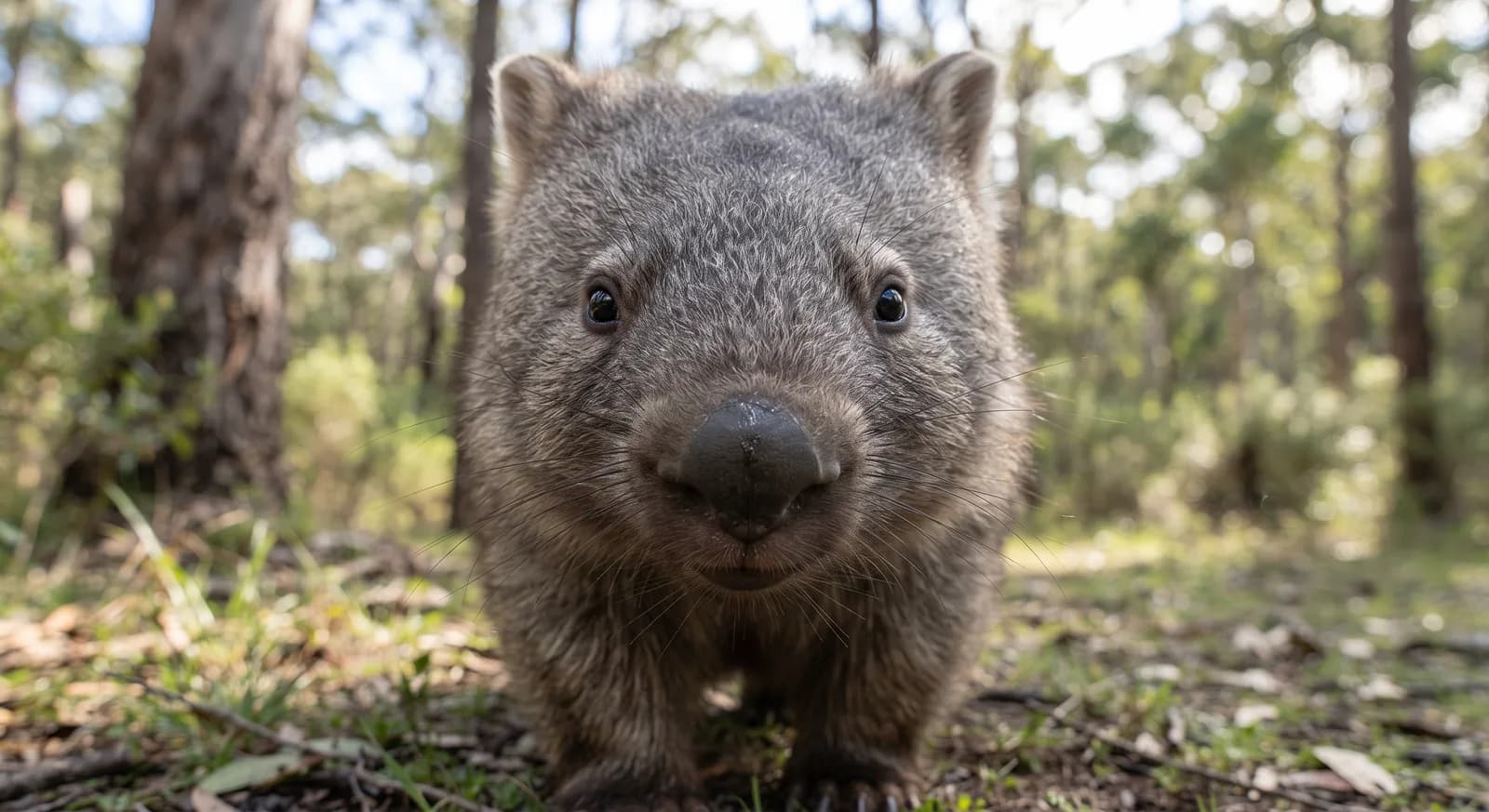 Least Concern
Bare-nosed Wombat
Vombatus ursinus
Common Bluetongue
Tiliqua scincoides
Keep exploring
Based on what we already know about common death adder.
Comments
Share an experience, a fun fact or a tip for seeing the common death adder.
Be the first to comment.