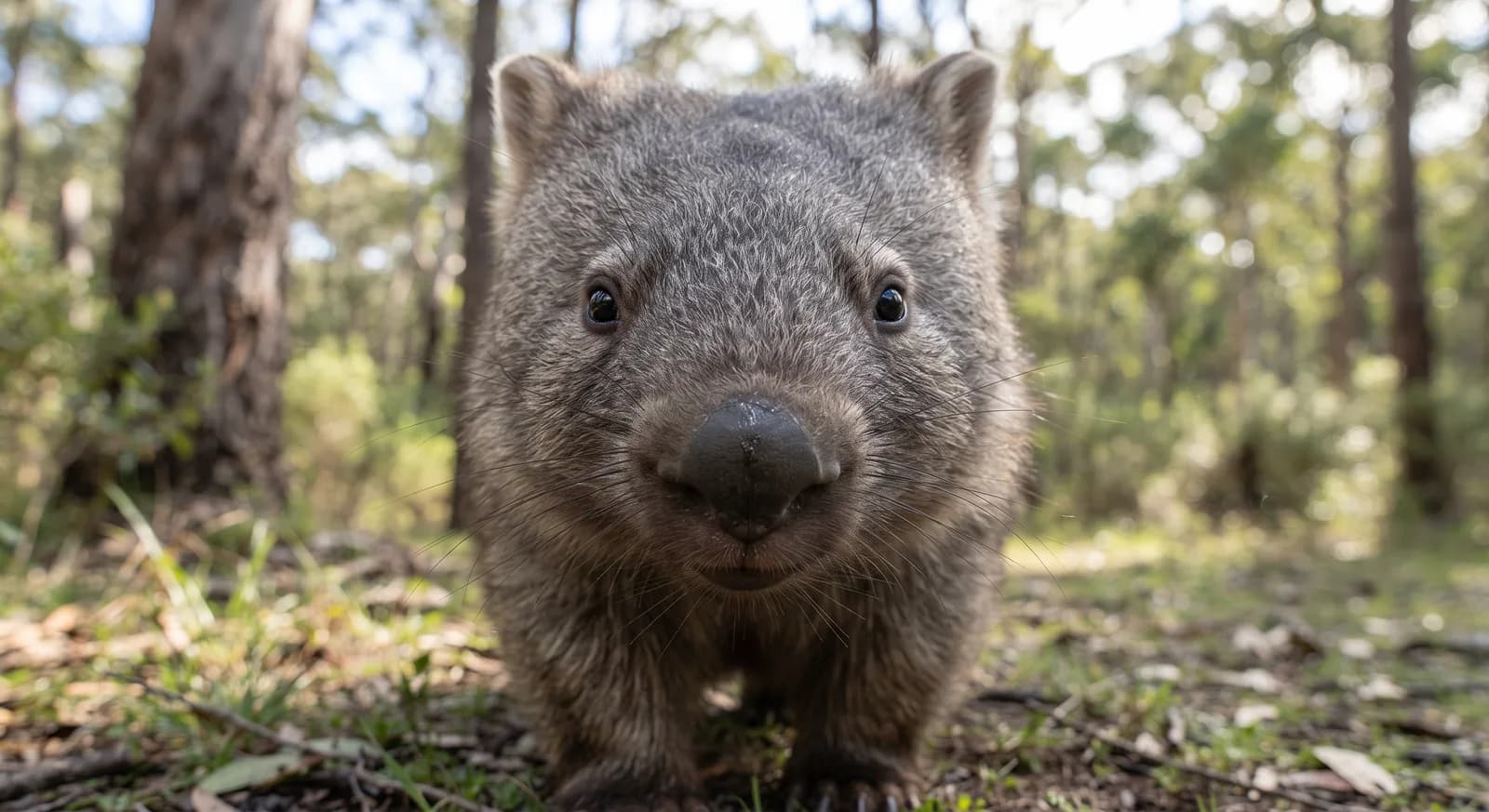
One of the 3 hairy-nosed wombats on WAnimals
Mammals · Diprotodontia · Vombatidae
Bare-nosed Wombat
Vombatus ursinus
The species is abundant and widely distributed; it faces no significant short-term risk. See full glossary
It is the largest burrowing herbivorous mammal in the world, able to dig burrow systems up to 20 metres long and more than 2 metres deep.
Weight
20 kg – 35 kg
Size
90 cm – 1.2 m
Lifespan
15 years
Diet
Herbivore
Feeds mainly on plants.
Activity
Nocturnal
Active mainly at night.
Social structure
Solitary
Lives and hunts alone, joining others only to breed.
Sighting difficulty
Easy
Fun facts
- Its pouch opens backwards, an unusual adaptation that keeps soil out while it digs.
- It eats grasses, roots and herbs, mostly at night.
- It lives in forest, alpine grassland, coast and woodland of south-eastern Australia and Tasmania.
- anatomíaIt produces cube-shaped droppings, which it can stack on sloping ground to mark territory without them rolling away.
- locomociónIt can run at over 40 km/h in short bursts despite its stocky build and generally slow, unhurried manner.
Life cycle & biology
- Skeleton type
- Vertebrate - internal bony skeleton (marsupial mammal)
- Habitat & environment
- Forest, alpine grassland, coast and woodland of south-eastern Australia and Tasmania
- Birth weight
- ~0.5 grams
- Size at birth
- The size of a jelly bean at birth
- Sexual maturity
- ~2 years
- Gestation / incubation
- 20-30 days
- Litter / clutch size
- 1 young, with an interval between births of approximately 2 years
- Lifespan in captivity
- Documented record of up to 30-34 years in captivity
Sources consulted: Zoogalaxy; AnAge (genomics.senescence.info); Natural History on the Net; Animal Diversity Web; Animalia.bio; Chloe Likes Wombats; Altina Wildlife Park; Wikipedia (Common wombat); MSU Brain Museum
Where to watch it
Parques y spots de buceo donde se ha documentado esta especie — se muestran 10 de 16 documentados.
Related species
Other species in the catalogue with the most in common with Bare-nosed Wombat — same habitat, park, country, tags or family.
Brown Antechinus
Antechinus stuartii
Long-nosed Bandicoot
Perameles nasuta
Southern Brown Bandicoot
Isoodon obesulus
 Least Concern
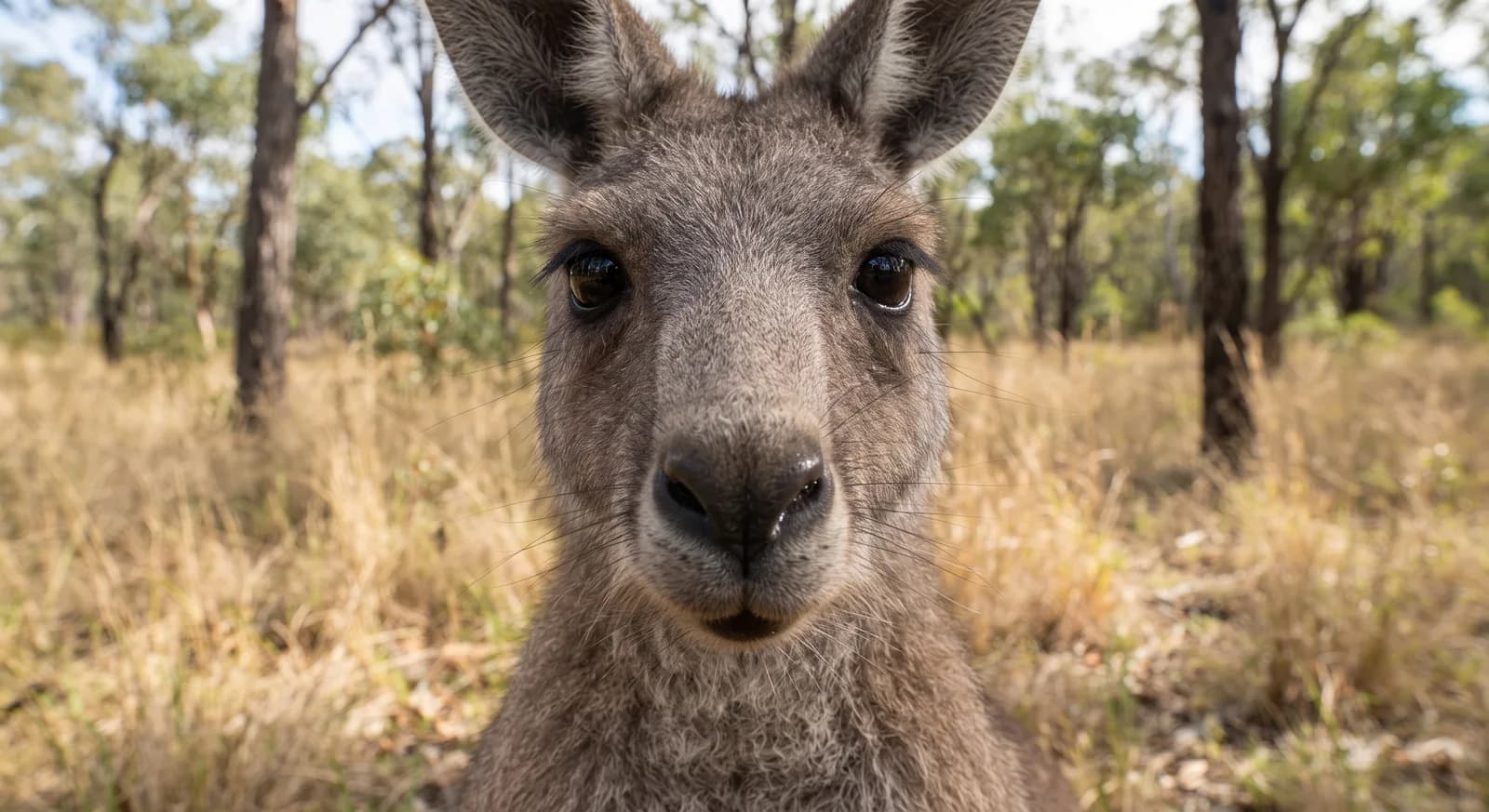
Eastern Grey Kangaroo
Macropus giganteus
Western Gray Kangaroo
Macropus fuliginosus
Swamp Wallaby
Wallabia bicolor
Keep exploring
Based on what we already know about bare-nosed wombat.
Comments
Share an experience, a fun fact or a tip for seeing the bare-nosed wombat.
Be the first to comment.