Mammals · Dasyuromorphia · Thylacinidae
Thylacine
Thylacinus cynocephalus
No living individual remains anywhere in the world. See full glossary
The thylacine was the largest carnivorous marsupial of modern times. It looked like a medium-sized dog with some fifteen dark bands across its back, a stiff tail and a jaw that could open almost 90 degrees. It disappeared from mainland Australia some 3,000 years ago, probably through competition with the dingo, and was left confined to Tasmania. There it was exterminated by stock farmers with the help of official bounties per head. The last known individual died in Hobart zoo in 1936.
Weight
15 kg – 30 kg
Size
1 m – 1.3 m
Lifespan
7 years
Diet
Carnivore
Feeds mainly on other animals.
Activity
Nocturnal
Active mainly at night.
Social structure
Solitary
Lives and hunts alone, joining others only to breed.
Sighting difficulty
Impossible (extinct)
Fun facts
- GeneralA striped carnivorous marsupial; the last known animal died in Hobart Zoo in 1936.
- historia naturalIt was officially declared extinct in 1936 with the death of the last captive animal; it was a marsupial that had evolved, by convergence, a body shape very like a dog's.
- Its resemblance to a dog is resemblance and nothing more: it was a marsupial, and its likeness to the canids is one of the most frequently cited examples of evolutionary convergence in biology.
- Both female and male had a pouch: hers opened backwards to carry the young and his served to protect the genitals while running through the scrub.
- The government of Tasmania paid bounties on more than 2,000 thylacines killed between 1888 and 1909, and declared the species protected in July 1936, fifty-nine days before the last captive animal died.
Life cycle & biology
- Skeleton type
- Vertebrate - internal bony skeleton (mammal)
- Habitat & environment
- Open forest, grassland and scrub of Tasmania; formerly mainland Australia and New Guinea too
- Gestation / incubation
- 30 days
- Litter / clutch size
- 3
Sources consulted: https://es.wikipedia.org/wiki/Thylacinus_cynocephalus
Related species
Other species in the catalogue with the most in common with Thylacine — same habitat, park, country, tags or family.
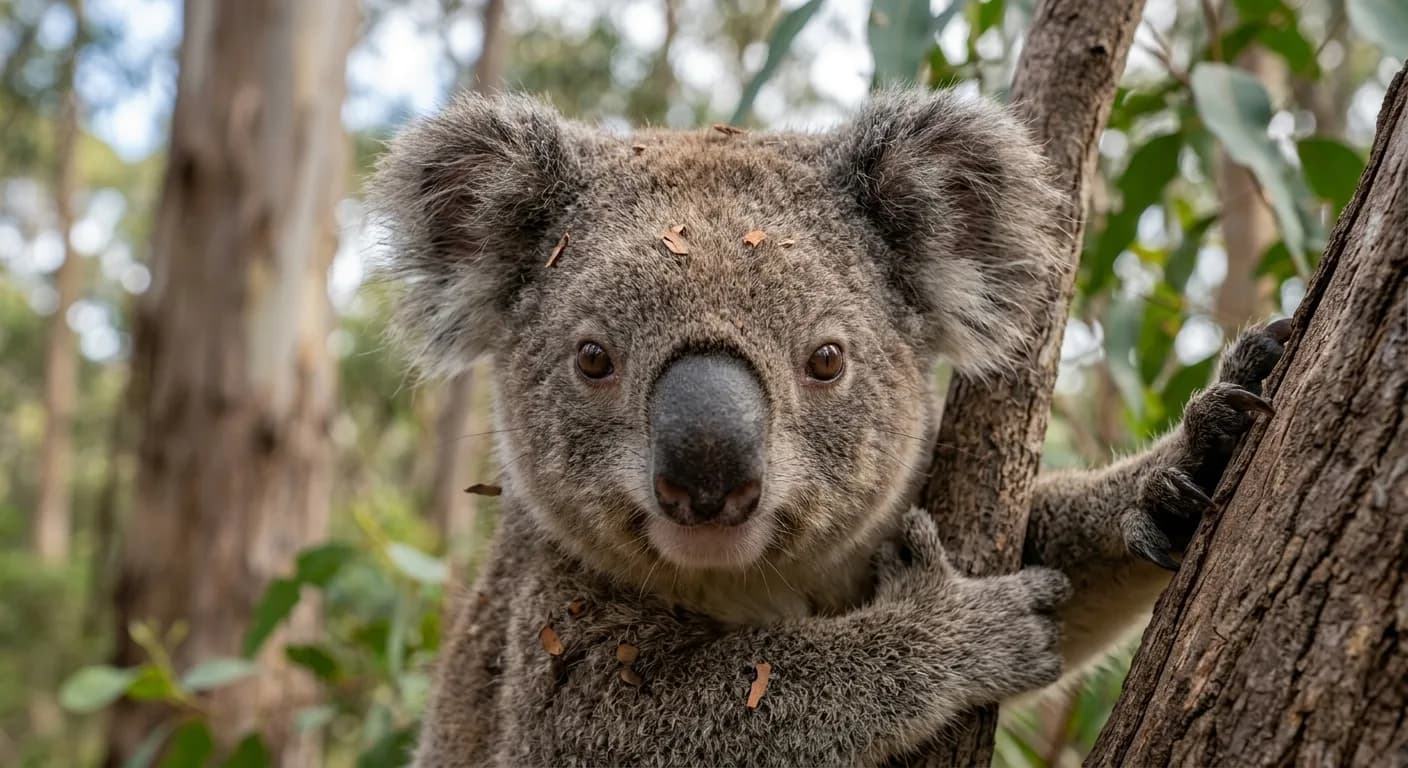 Vulnerable
Koala
Phascolarctos cinereus
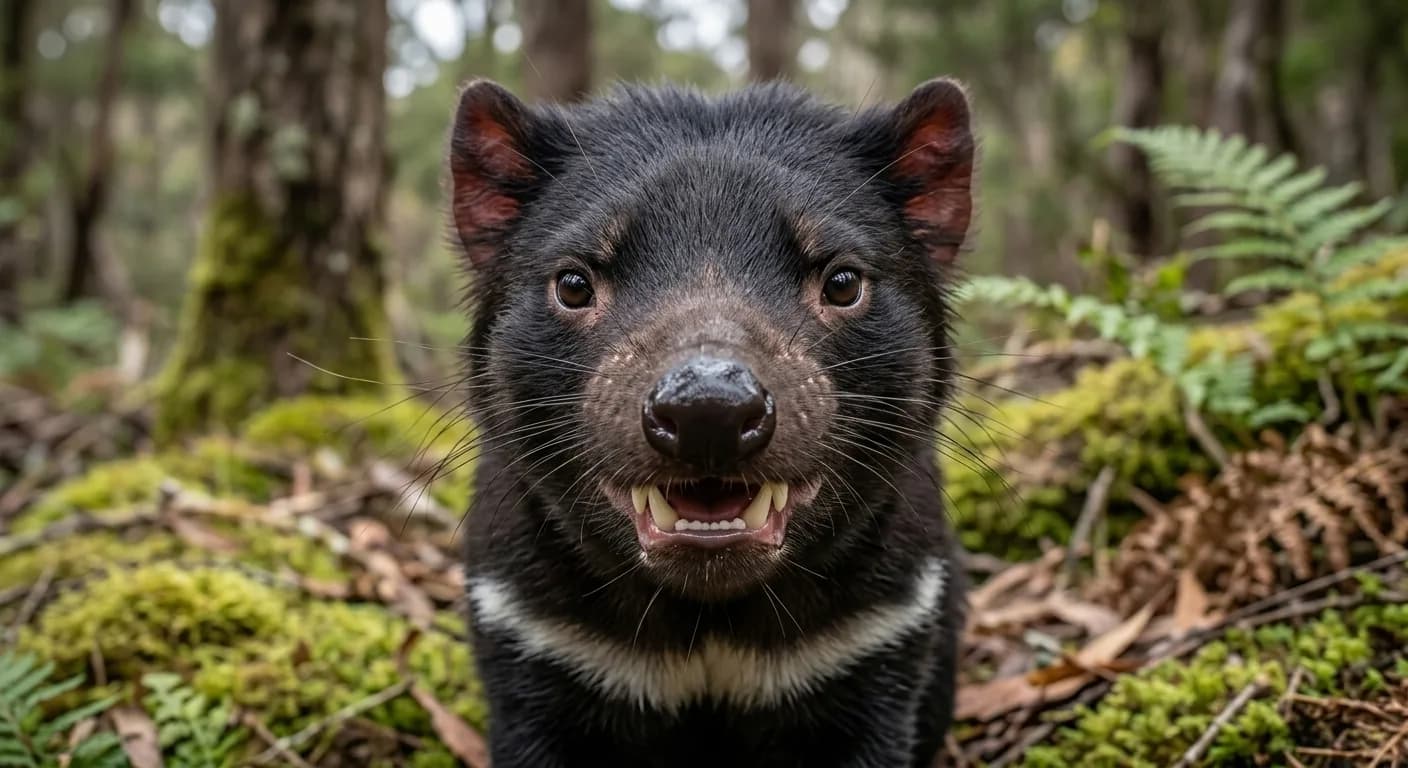 Endangered
Tasmanian Devil
Sarcophilus harrisii
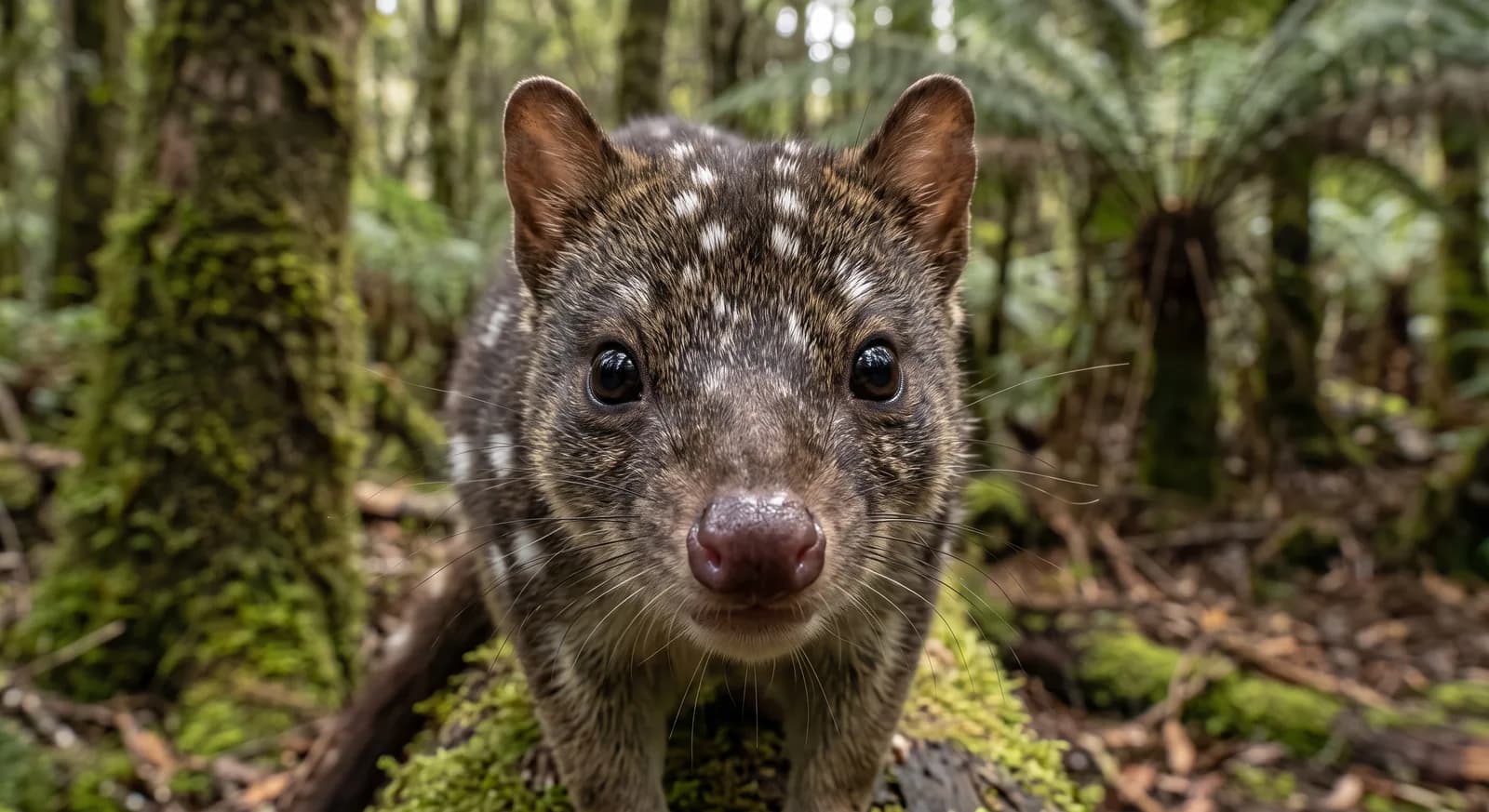 Near Threatened
Spotted-tailed Quoll
Dasyurus maculatus
Brown Antechinus
Antechinus stuartii
Brush-tailed Phascogale
Phascogale tapoatafa
Long-nosed Bandicoot
Perameles nasuta
Keep exploring
Based on what we already know about thylacine.
Comments
Share an experience, a fun fact or a tip for seeing the thylacine.
Be the first to comment.