Mammals · Diprotodontia · Phascolarctidae
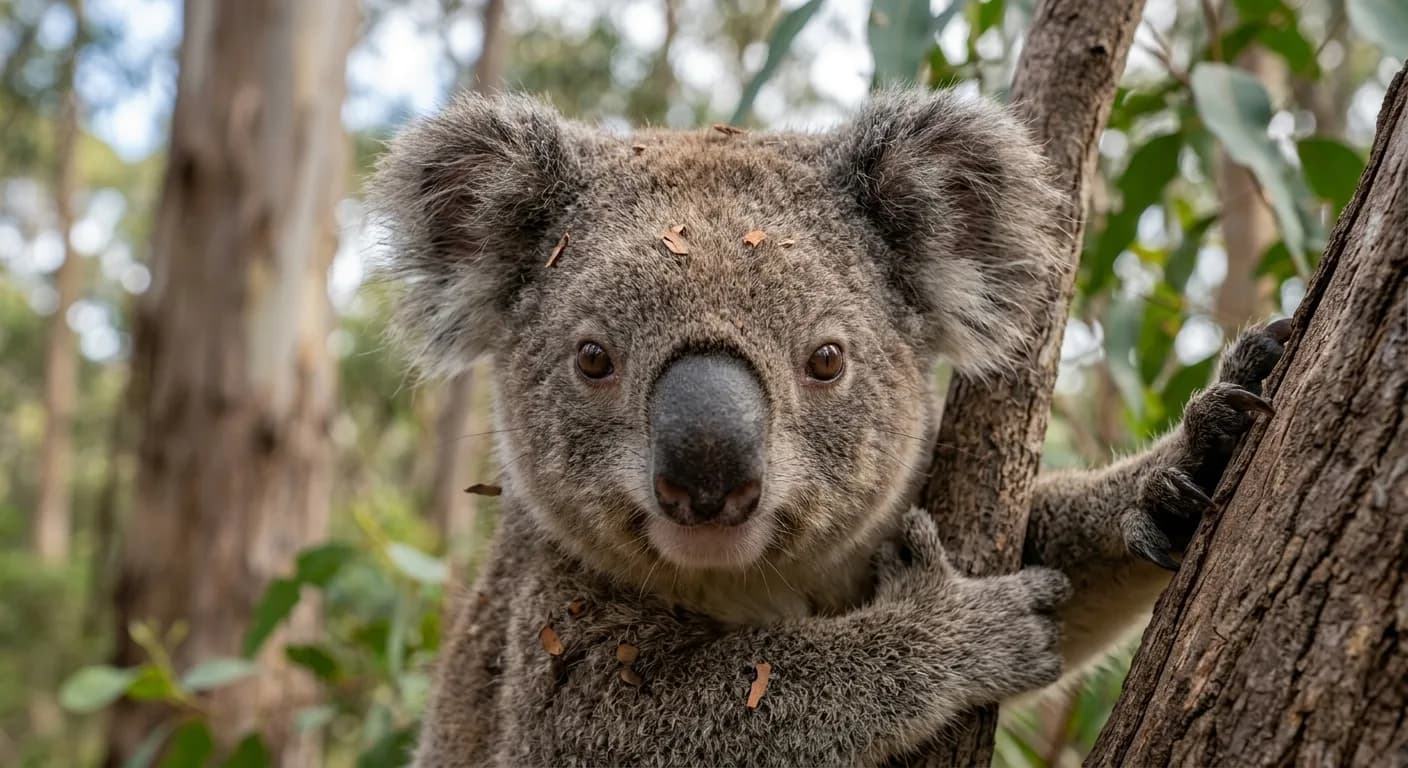
Koala
Phascolarctos cinereus
It faces a high risk of extinction in the wild over the medium term. See full glossary
An arboreal marsupial that feeds almost entirely on eucalyptus leaves, which also provide most of the water it needs.
Weight
4 kg – 15 kg
Size
60 cm – 85 cm
Lifespan
15 years
Diet
Herbivore
Feeds mainly on plants.
Activity
Nocturnal
Active mainly at night.
Social structure
Solitary
Lives and hunts alone, joining others only to breed.
Sighting difficulty
Moderate
Estimated population
There is no reliable national census: the state estimates compiled by the IUCN add up to somewhere between 100,000 and 500,000 animals, with a range contraction of around 30% since European colonisation
Fun facts
- It sleeps for 18 to 20 hours a day.
- Its fingerprints are almost identical to human ones.
- It can eat up to a kilo of eucalyptus leaves a day.
Life cycle & biology
- Skeleton type
- Vertebrate - internal bony skeleton (mammal)
- Habitat & environment
- Eucalyptus woodland of eastern Australia
- Birth weight
- Under 1 g at birth, blind, hairless and the size of a bean
- Size at birth
- Under 1 g at birth
- Sexual maturity
- Female: ~2 years | Male: 3-4 years
- Gestation / incubation
- 25-35 days
- Litter / clutch size
- 1 young per birth (twins rare)
- Lifespan in captivity
- Documented record of up to 22.1 years
Sources consulted: Lone Pine Koala Sanctuary; AnAge (genomics.senescence.info); ResearchGate (gestational length study); National Geographic Kids; Animal Diversity Web; SeaWorld/United Parks; PBS Nature; Australian Koala Foundation; SDZWA Fact Sheet; IUCN Red List, evaluación de 2020 (e.T16892A166496779): descenso del 28,6 % del tamaño poblacional en tres generaciones || IUCN Red List, evaluación de Phascolarctos cinereus de 2020; Threatened Species Scientific Committee (Australia)
Where to watch it
Parks and dive sites where this species has been documented.
Related species
Other species in the catalogue with the most in common with Koala — same habitat, park, country, tags or family.
Brush-tailed Rock Wallaby
Petrogale penicillata
Grey-headed Flying Fox
Pteropus poliocephalus
 Near Threatened
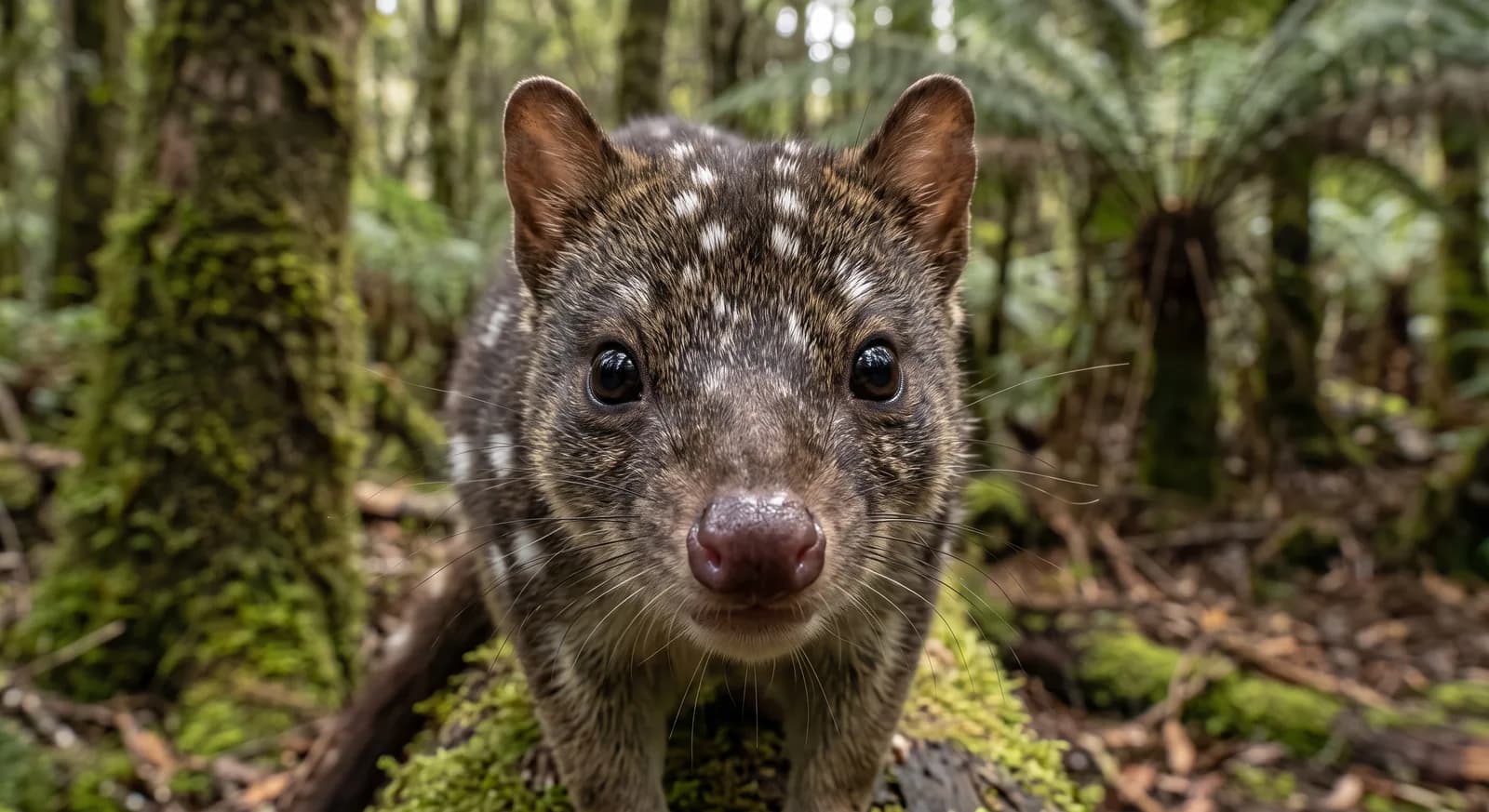
Spotted-tailed Quoll
Dasyurus maculatus
Brown Antechinus
Antechinus stuartii
Long-nosed Bandicoot
Perameles nasuta
Southern Brown Bandicoot
Isoodon obesulus
How to help
The koala is classified as vulnerable. Organizations such as Australian Koala Foundation work specifically on its conservation and that of its habitat; looking into their programs is a good starting point if you want to get involved.
It's documented in 7 real protected areas — part of why protecting these places matters for its conservation.
Keep exploring
Based on what we already know about koala.
Comments
Share an experience, a fun fact or a tip for seeing the koala.
Be the first to comment.