One of the 8 flying foxes on WAnimals
Mammals · Chiroptera · Pteropodidae
Golden-capped Fruit Bat
Acerodon jubatus
It faces a very high risk of extinction in the wild in the near future. See full glossary
The golden-crowned flying fox is one of the largest bats in the world, with a wingspan that can top a metre and a half. It is endemic to the Philippines and owes its name to the golden fur of its head and nape, which contrasts with its dark body. It feeds almost exclusively on figs and depends on primary rainforest, so the massive deforestation of the archipelago has cut its numbers drastically. It shares day roosts with the Philippine giant flying fox.
Weight
700 g – 1.4 kg
Size
18 cm – 29 cm
Lifespan
20 years
Diet
Herbivore
Feeds mainly on plants.
Activity
Nocturnal
Active mainly at night.
Social structure
Colony
Lives in large concentrations, often for breeding reasons.
Sighting difficulty
Hard
Fun facts
- récordIt is one of the largest bats in the world, with a wingspan that can top 1.5 metres, and eats nothing but fruit, nectar and leaves.
- With a wingspan of more than a metre and a half it is one of the largest bats on the planet, although its body does not reach a kilo and a half: it is almost all wing.
- It eats almost nothing but figs, and its role in dispersing those seeds is so important that it is regarded as a keystone species for the regeneration of the Philippine rainforests.
Life cycle & biology
- Skeleton type
- Vertebrate - internal bony skeleton (mammal)
- Habitat & environment
- Primary lowland rainforest and riverine forest of the Philippine islands
- Sexual maturity
- 2 years
- Gestation / incubation
- 6 months
- Litter / clutch size
- 1
Sources consulted: https://es.wikipedia.org/wiki/Acerodon_jubatus
Where to watch it
Parks and dive sites where this species has been documented.
Related species
Other species in the catalogue with the most in common with Golden-capped Fruit Bat — same habitat, park, country, tags or family.
Large Flying-fox
Pteropus vampyrus
Philippine Flying Lemur
Cynocephalus volans
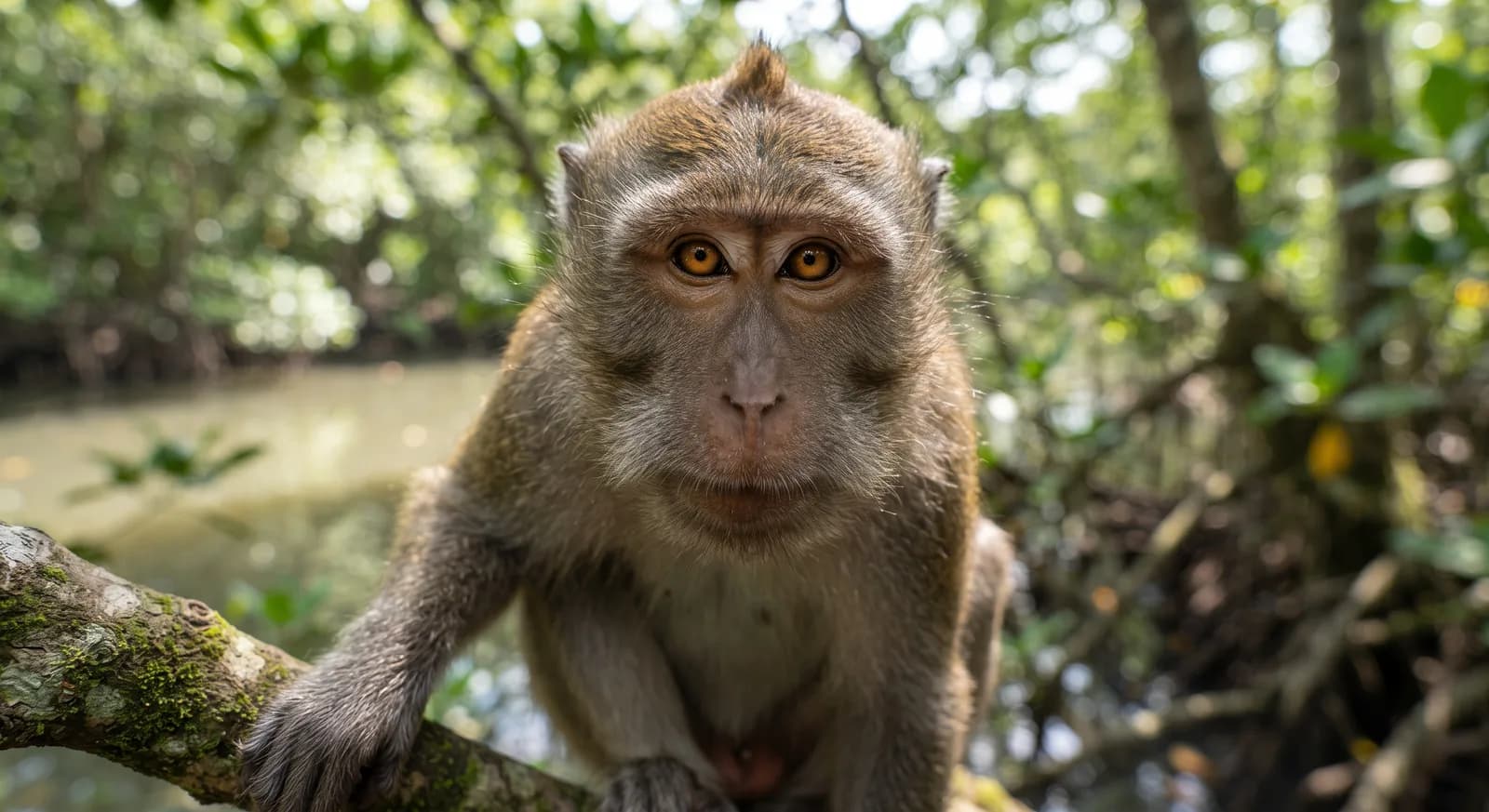 Endangered
Long-tailed Macaque
Macaca fascicularis
Philippine Pangolin
Manis culionensis
Aldabra Flying-fox
Pteropus aldabrensis
Spectacled Flying Fox
Pteropus conspicillatus
How to help
The golden-capped fruit bat is classified as endangered. Organizations such as UICN, WWF y Wildlife Conservation Society work specifically on its conservation and that of its habitat; looking into their programs is a good starting point if you want to get involved.
It's documented in 2 real protected areas — part of why protecting these places matters for its conservation.
Keep exploring
Based on what we already know about golden-capped fruit bat.
Comments
Share an experience, a fun fact or a tip for seeing the golden-capped fruit bat.
Be the first to comment.