One of the 8 flying foxes on WAnimals
Mammals · Chiroptera · Pteropodidae
Large Flying-fox
Pteropus vampyrus
It faces a very high risk of extinction in the wild in the near future. See full glossary
It is one of the largest bats in the world, with a wingspan of up to 1.5 metres, and plays a crucial ecological role as a pollinator and seed disperser.
Weight
600 g – 1.1 kg
Lifespan
15 years
Diet
Frugivore
Feeds mainly on fruit.
Activity
Nocturnal
Active mainly at night.
Social structure
Colony
Lives in large concentrations, often for breeding reasons.
Sighting difficulty
Hard
Fun facts
- It cannot echolocate, and makes up for it with very good eyesight.
- It eats fruit, nectar and flowers.
- Males guard small harems of up to ten females through the breeding season.
- ecologíaIt can cover as much as 90 kilometres in a single night in search of fruiting trees, playing a key part in dispersing seeds and regenerating tropical forest.
Life cycle & biology
- Skeleton type
- Vertebrate - internal bony skeleton (mammal)
- Habitat & environment
- Rainforest, mangrove and coastal country of South East Asia
- Birth weight
- ~133 grams at birth (20-30% of the mother's body weight)
- Size at birth
- Forearm ~79.5-80 mm at birth, eyes open and already furred
- Sexual maturity
- 2 years
- Gestation / incubation
- 140-192 days (~150-190 days most often given)
- Litter / clutch size
- 1 young per litter (occasionally 2)
- Lifespan in captivity
- Documented record of up to 20.9-30 years in captivity
Sources consulted: AnAge (genomics.senescence.info); Animal Diversity Web; Animal Spot; Animalia.bio; Facts and Details; AnimalHub; U.S. Fish and Wildlife Service
Where to find it
See its range on the interactive mapWhere to watch it
Parques y spots de buceo donde se ha documentado esta especie — se muestran 10 de 15 documentados.
Related species
Other species in the catalogue with the most in common with Large Flying-fox — same habitat, park, country, tags or family.
Golden-capped Fruit Bat
Acerodon jubatus
Spectacled Flying Fox
Pteropus conspicillatus
Greater Slow Loris
Nycticebus coucang
 Endangered
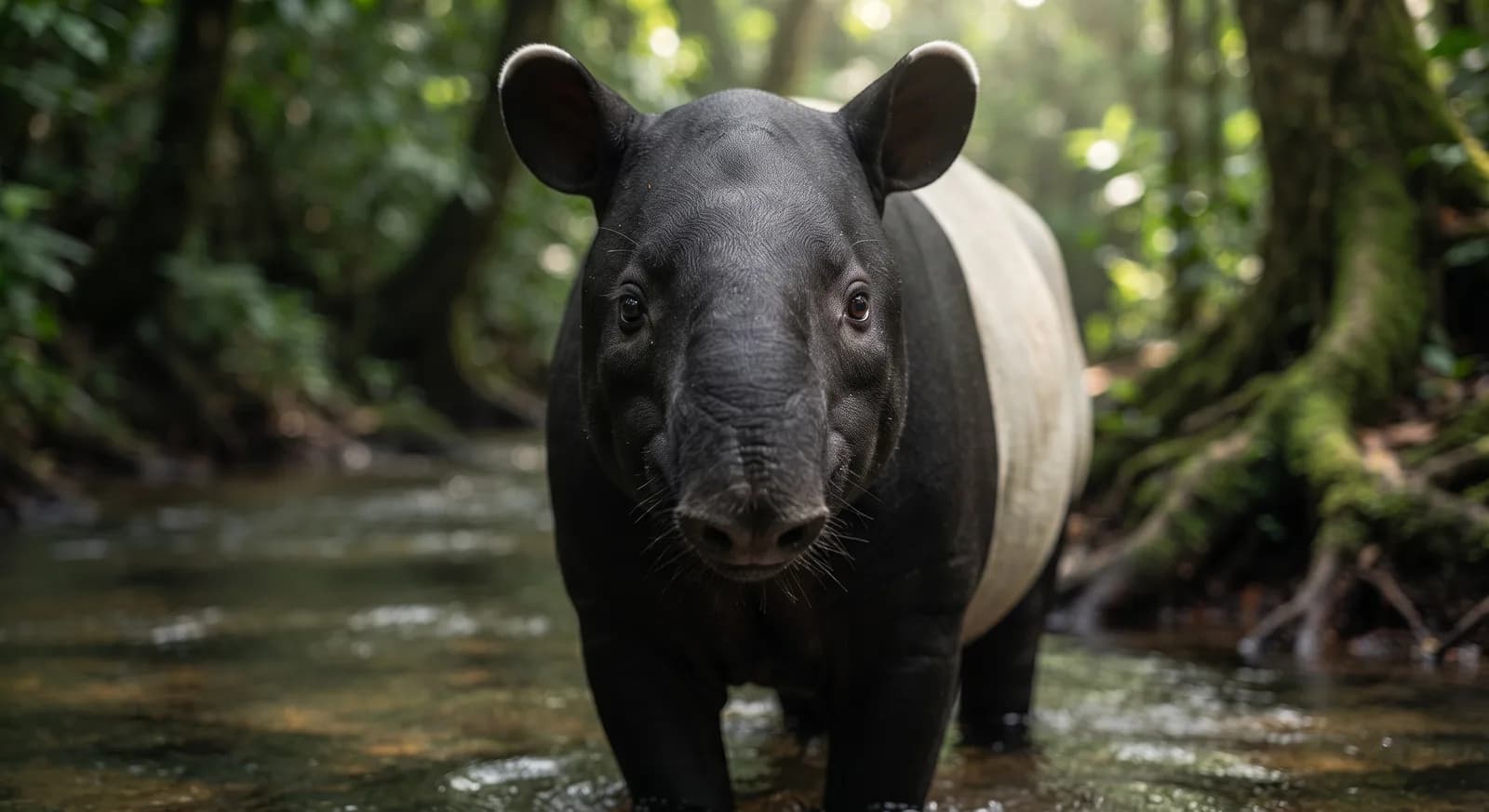
Malayan Tapir
Tapirus indicus
Banteng
Bos javanicus
Large Flying-fox
Pteropus giganteus
How to help
The large flying-fox is classified as endangered. Organizations such as UICN, WWF y Wildlife Conservation Society work specifically on its conservation and that of its habitat; looking into their programs is a good starting point if you want to get involved.
It's documented in 9 real protected areas — part of why protecting these places matters for its conservation.
Keep exploring
Based on what we already know about large flying-fox.
Comments
Share an experience, a fun fact or a tip for seeing the large flying-fox.
Be the first to comment.