 Least Concern
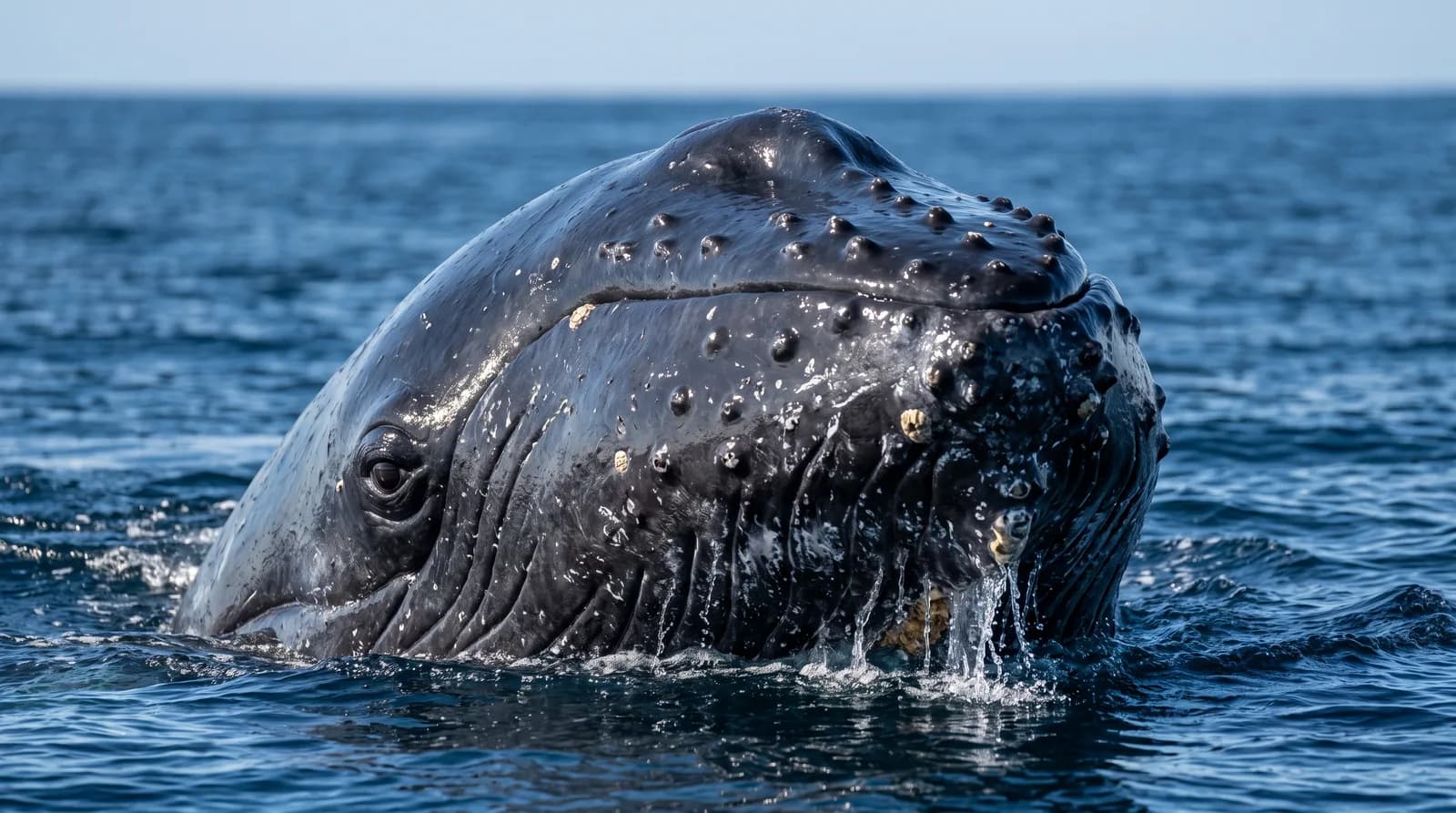
Humpback Whale
Megaptera novaeangliae
Wilpena Pound, a natural quartzite amphitheatre in the arid interior of South Australia, with Ediacaran rocks.
Area
950 km²
Designated in
1945
Region
Australia
The Ikara amphitheatre (Wilpena Pound) and Ediacaran strata
Ikara-Flinders Ranges National Park was declared in 1945 in the arid interior of South Australia, some 400 kilometres north of Adelaide, and protects the central sector of the Flinders Ranges. It is a landscape of folded red quartzite ridges, dry gorges and scrub plains, with vegetation of acacias, casuarinas and river red gums.
Its most recognisable feature is Wilpena Pound, in the Adnyamathanha language Ikara, "meeting place": an elliptical depression some seventeen by eight kilometres entirely ringed by mountain crests, with a single natural exit. Despite its appearance, it is neither a crater nor a caldera but the eroded remains of an enormous synclinal fold whose harder rims have resisted while the interior wore away. For the Adnyamathanha people, traditional owners and today co-managers of the park, the crests are the bodies of two akurra serpents from the creation story.
The region also has geological significance of the first order: the Ediacaran, the last period of the Precambrian and the first new geological period ratified in more than a century, was defined in the Flinders strata, on the basis of the soft-bodied organism fossils found in the area. The wildlife includes the yellow-footed rock-wallaby, recovered after the control of foxes and feral goats, emus, red and grey kangaroos and wedge-tailed eagles.
Ecosystems found in Australia, where Flinders Ranges lies.
What is worth looking out for this month in Australia?
Now is a good time: The Humpback Highway on Australia's east coast (May to November (northbound May to August, southbound return August to November))
Now is a good time: Red crab migration on Christmas Island (October to January (spawning Nov-Dec))
Which other parks are like this one?
Same country: Australia
Same country: Australia
Same country: Australia
Same country: Australia
Based on what we already know about this park.
Climate
Tropical, Arid / desert, Temperate, Mediterranean
Best season
March to May

 Australia