The Aso caldera, one of the largest in the world, with an active crater and grasslands maintained by centuries of burning.
Area
727 km²
Declared in
1934
Region
East Asia
Climate
Tropical, Templado, Polar / frío
Best time
March to May
Highlight
The Aso caldera and the Kujū volcanic massif
Aso-Kuju National Park was declared in 1934, in the first group of Japanese national parks, and occupies the centre of the island of Kyushu, mainly in Kumamoto prefecture and part of Oita. Its defining feature is the caldera of Mount Aso, one of the largest in the world, some 25 kilometres from north to south, formed by a series of colossal eruptions between 300,000 and 90,000 years ago.
What is exceptional about Aso is not only the size of the caldera but that it is inhabited: tens of thousands of people live inside it, there are towns, rice paddies, roads and a railway line, and at the centre rise the five peaks of the central group, among them Nakadake, whose crater remains active and gives off gases continuously, with eruptive episodes that periodically force access to be closed. To the north-east, the Kuju massif completes the park with a group of volcanoes, high-altitude wetlands and the hot springs of Beppu and Yufuin nearby.
The slopes of the caldera are covered by extensive grasslands, a landscape that is not natural but cultural: it has been maintained for centuries by annual controlled burning, the noyaki, and by grazing, without which the area would return to forest. That thousand-year-old agro-pastoral system supports a grassland plant and bird community uncommon in Japan and is today one of the park's main conservation challenges, because of rural depopulation and the ageing of the herders who carry out the burns.
Location
See on the interactive map10 species documented in Aso-Kuju
At conservation risk:Salamandra gigante japonesa
Endemic to Japan:Macaco japonés,Salamandra gigante japonesa,Serow japonés
Águila azor montañesa
Nisaetus nipalensis
Anteojitos japonés
Zosterops japonicus
 Least Concern
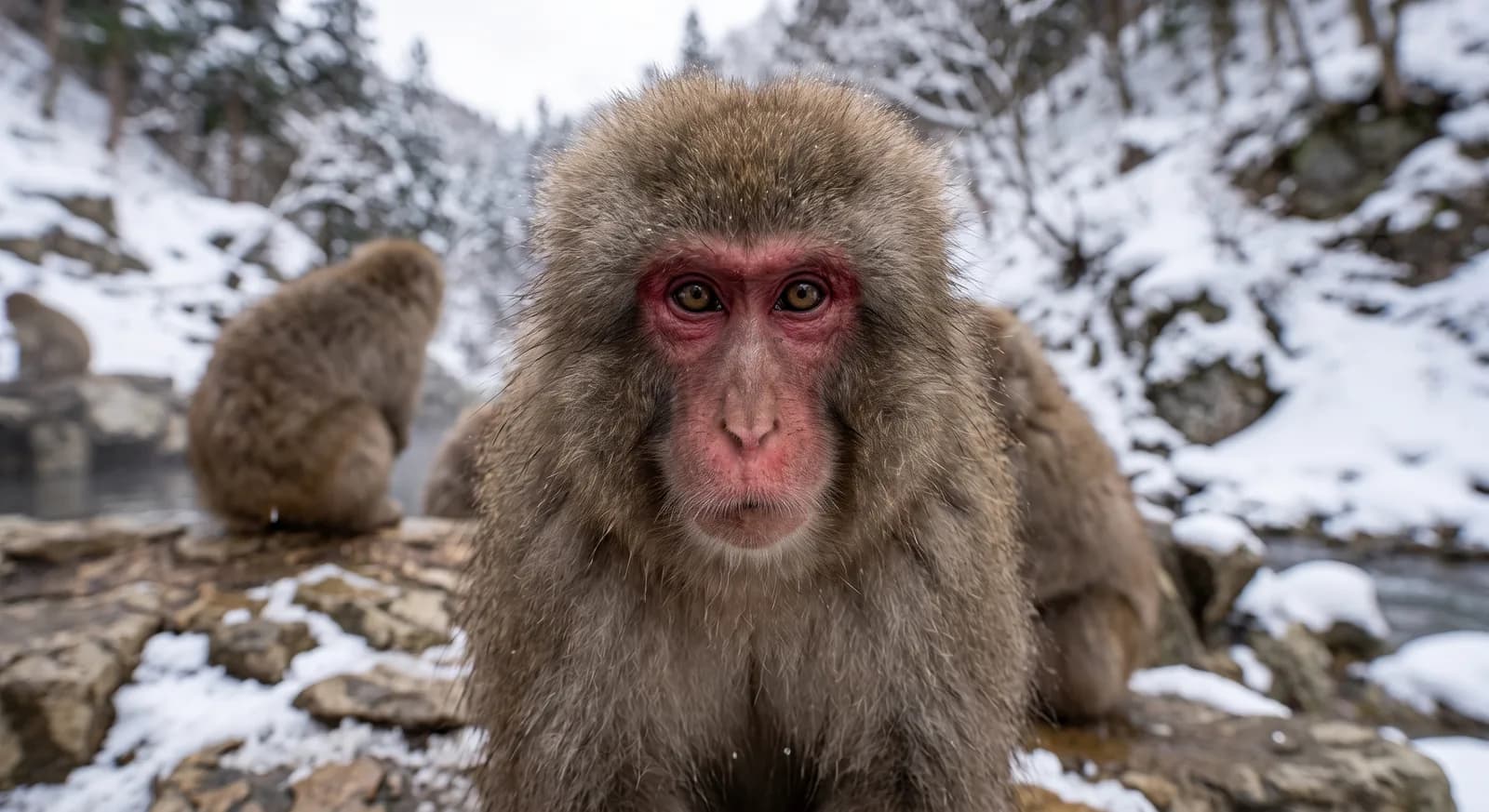
Macaco japonés
Macaca fuscata
Perro mapache
Nyctereutes procyonoides
Ruiseñor japonés
Larvivora akahige
Salamandra de bosque japonesa
Hynobius nigrescens
Salamandra gigante japonesa
Andrias japonicus
Serow japonés
Capricornis crispus
Tejón japonés
Meles anakuma
Tritón de vientre de fuego japonés
Cynops pyrrhogaster
Flora and ecosystems
Ecosystems found in Japan, where Aso-Kuju lies.
Experiences in this park
Similar parks
Which other parks are like this one?
Keep exploring
Based on what we already know about Aso-Kuju.
Your rating
How many stars would you give Aso-Kuju?
Comments
Share your experience visiting Aso-Kuju, or a tip for other travellers.
Be the first to comment.