 Least Concern
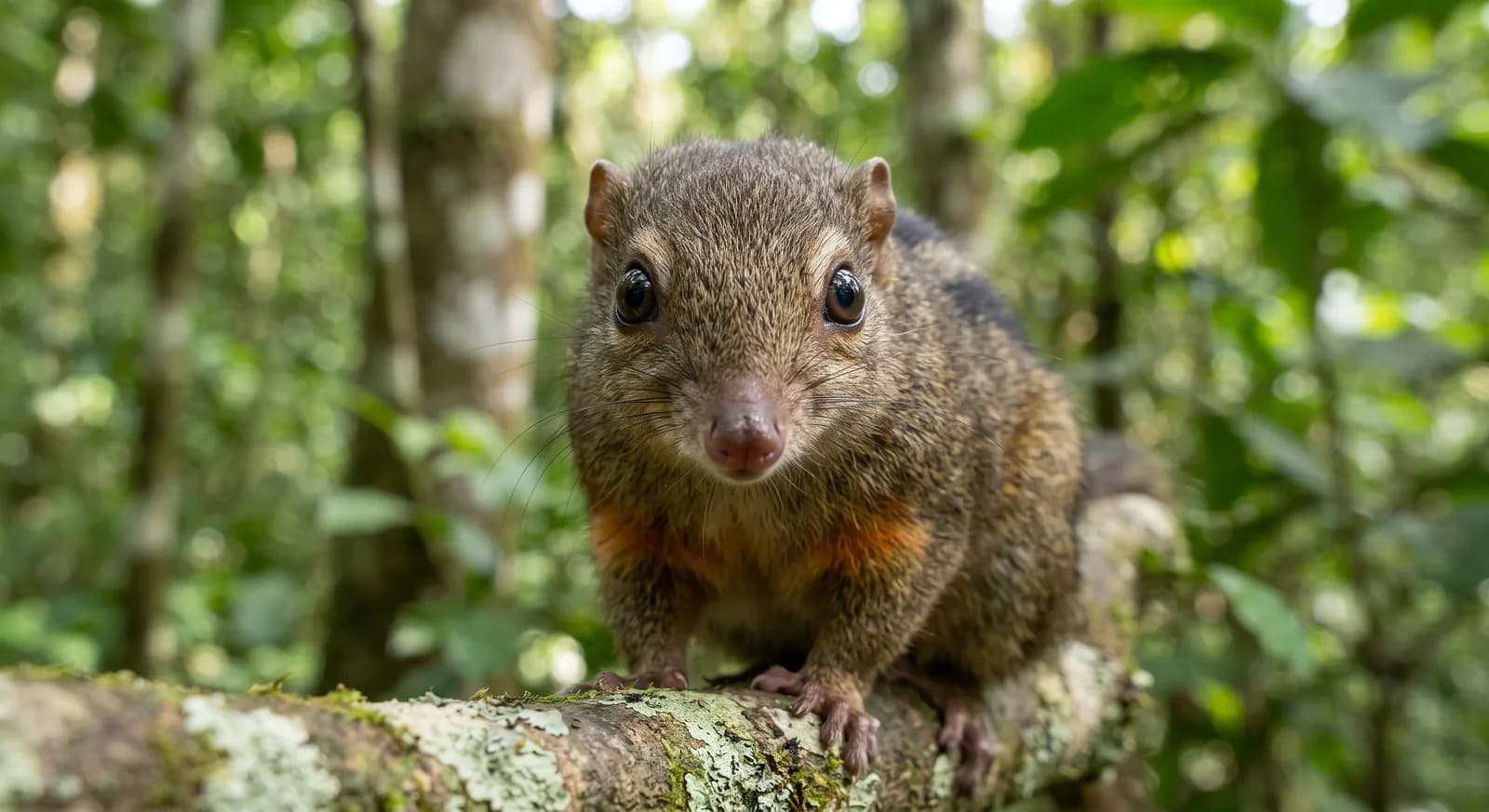
Mountain Treeshrew
Tupaia montana
One of the 10 shrews on WAnimals
Mammals · Scandentia · Tupaiidae
Tupaia glis
The species is abundant and widely distributed; it faces no significant short-term risk.
Its parental care is extraordinarily distant for a mammal: it feeds its young only once every 48 hours and recognises them by scent from glands on its chest and belly.
Weight
142 g – 200 g
Size
16 cm – 21 cm
Life expectancy
3 years
Diet
Omnivore
Combines animal and plant food depending on availability.
Activity
Diurnal
Active mainly during the day.
Social structure
Solitary
Lives and hunts alone, joining others only to breed.
Sources consulted: World Species · Thai National Parks · Reko Forest · AnAge (genomics.senescence.info) · AnimalHub · Wikipedia (Common treeshrew) · Animal Diversity Web
Best time: All year round in the forests of Malaysia, Thailand and Indonesia, by day; it moves restlessly across the ground and over low trunks.
The pins mark the parks where its presence is documented.
Parks and dive sites where this species has been documented — showing 10 of 14.
Other species in the catalogue with the most in common with Common Treeshrew — same habitat, park, country, tags or family.
Based on what we already know about common treeshrew.