One of the 8 flying foxes on WAnimals
Mammals · Chiroptera · Pteropodidae
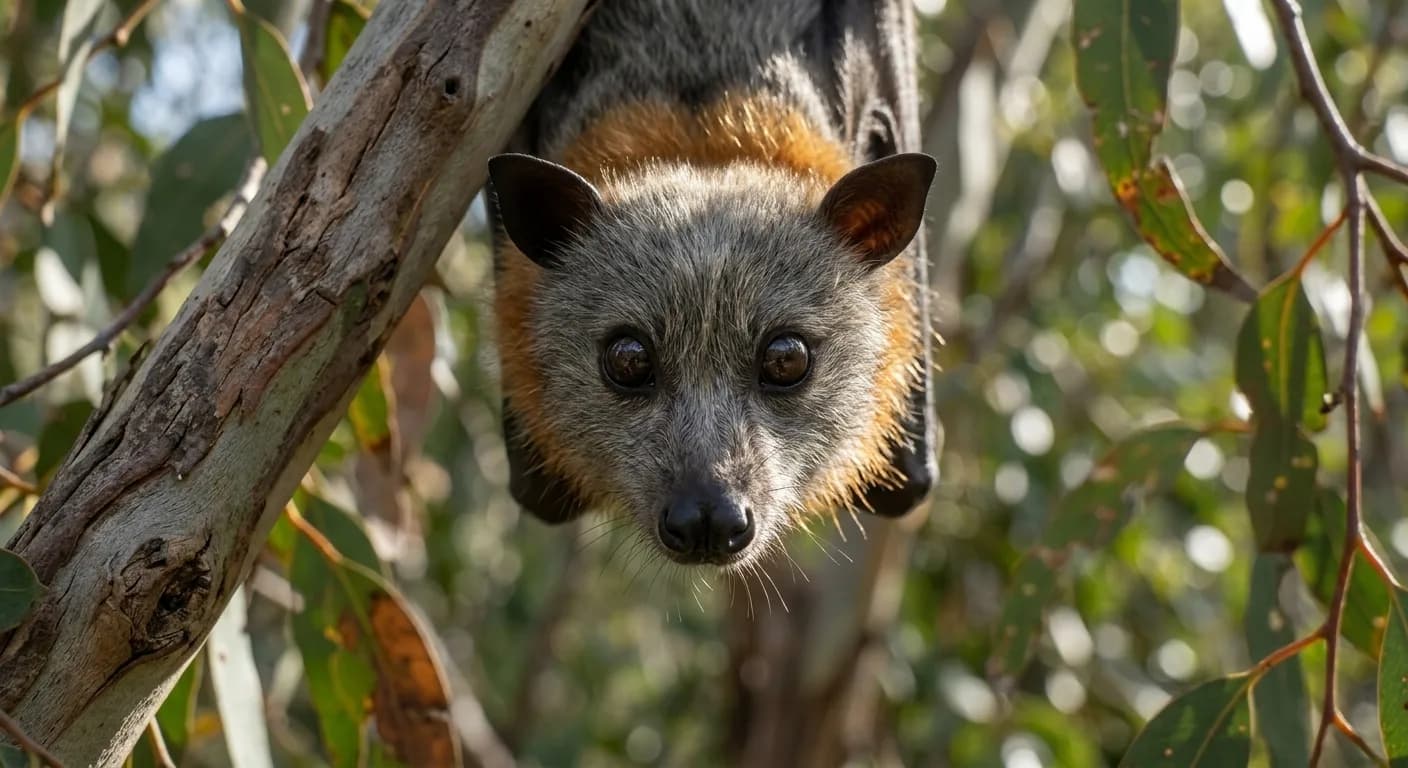
Pteropus poliocephalus
At high risk of extinction in the wild over the medium term.
The grey-headed flying fox is the largest bat in Australia, with a wingspan of more than a metre. It is endemic to the eastern strip of the continent and forms daytime colonies of thousands of individuals in trees, increasingly often inside cities such as Sydney and Melbourne. At night it travels tens of kilometres feeding on nectar and fruit, and it is a key pollinator and seed disperser of the eucalypts and the Australian subtropical rainforests. Extreme heatwaves cause mass die-offs.
Weight
600 g – 1 kg
Size
23 cm – 29 cm
Life expectancy
15 years
Diet
Herbivore
Feeds mainly on plants.
Activity
Nocturnal
Active mainly at night.
Social structure
Colony
Lives in large concentrations, often for breeding reasons.
Sighting difficulty
Moderate
AI-generated images: illustrations, not photographs.
Sources consulted: https://www.iucnredlist.org/ | https://animaldiversity.org/ | https://es.wikipedia.org/
The pins mark the parks where its presence is documented.
Parks and dive sites where this species has been documented — showing 10 of 14.
Other species in the catalogue with the most in common with Grey-headed Flying Fox — same habitat, park, country, tags or family.
The grey-headed flying fox is classified as vulnerable. Organisations such as the IUCN, WWF and the Wildlife Conservation Society work specifically on its conservation and that of its habitat; looking into their programmes is a good starting point if you want to get involved.
It's documented in 10 protected areas — one reason why protecting these places matters for its conservation.
Based on what we already know about grey-headed flying fox.
Share an experience, a fun fact or a tip for seeing the grey-headed flying fox.
Be the first to comment.