Skip to content
WAnimals
  • Map
  • Species
  • Parks
  • Diving
Log inCreate account
WAnimals

The guide for travellers and animal lovers: discover, plan and share your wild adventures around the world.

Discover wildlife

  • Species
  • Ecosystems
  • Glossary
  • Tags

Explore places

  • Map
  • Countries
  • Parks
  • Diving

Plan experiences

  • Guides

Learn

  • Blog

Resources

  • Help centre
  • Contact
  • Install the app

Follow us

Account

  • Log in
  • Create account

© 2026 WAnimals. All rights reserved.

About usHow we build our profilesTerms of servicePrivacyLegal notice
MapSpeciesParksDiving
  1. Home
  2. Species
  3. Brush-tailed Rock Wallaby

One of the 6 wallabies on WAnimals

Mammals · Diprotodontia · Macropodidae

Brush-tailed Rock Wallaby

Petrogale penicillata

Vulnerable

At high risk of extinction in the wild over the medium term.

Spotted something wrong?

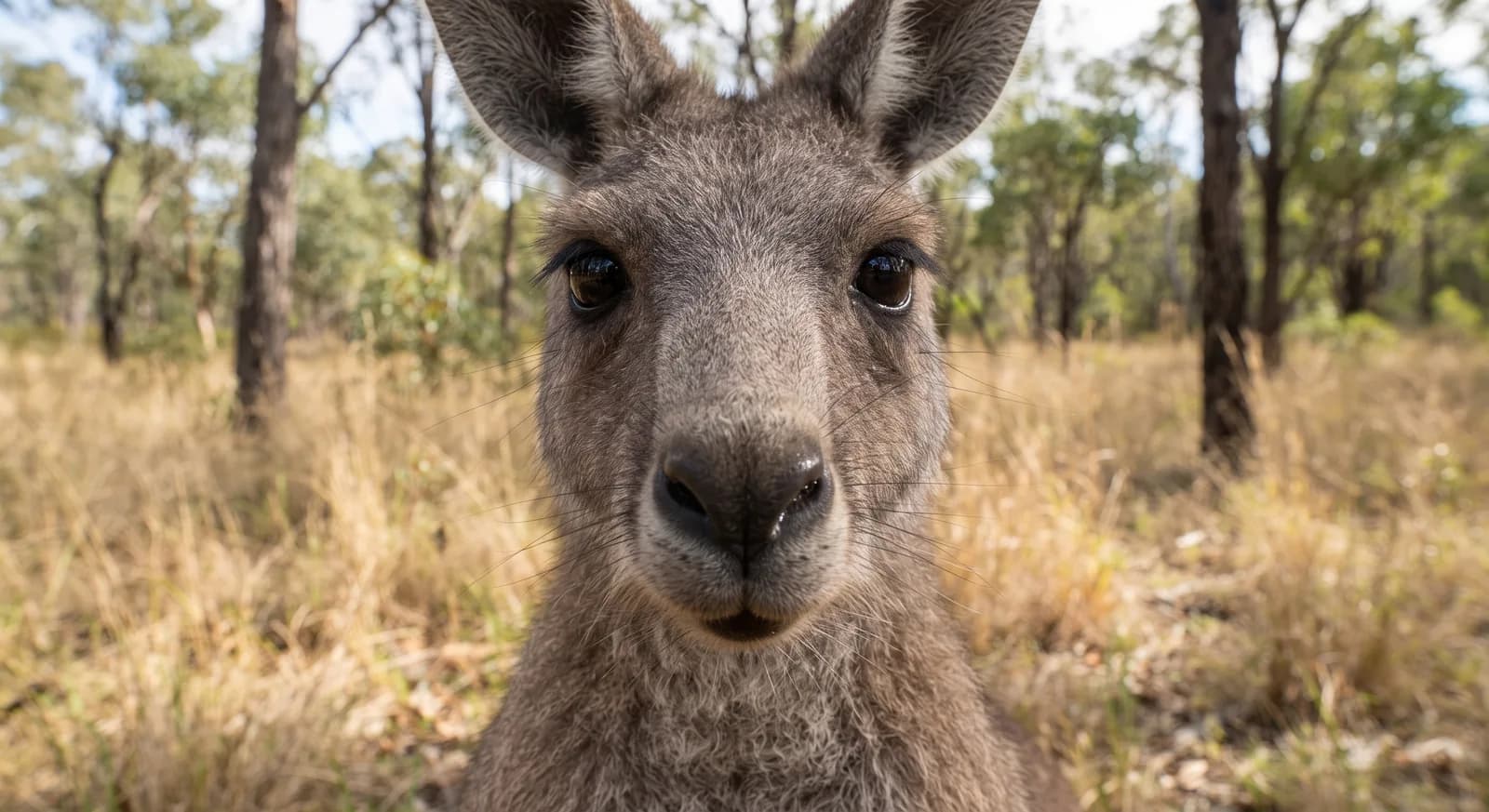
The brush-tailed rock-wallaby is a macropod specialised for steep rocky ground, with rough, padded soles for gripping stone and a long tail tipped with a brush of hair that it uses as a counterbalance. It lives in colonies on cliffs and in gorges, where it spends the day among the rocks and comes out at dusk to graze. It was hunted on a huge scale for its skin in the early twentieth century and is threatened today by foxes, cats and feral goats.

Weight

5 kg – 11 kg

Size

50 cm – 60 cm

Life expectancy

15 years

Diet

Herbivore

Feeds mainly on plants.

Activity

Nocturnal

Active mainly at night.

Social structure

Colony

Lives in large concentrations, often for breeding reasons.

Sighting difficulty

Moderate

Temperate forestMountain
3countries9parks15same family

Fun facts

  • It leaps between vertical ledges with astonishing precision, and can climb sloping trunks and almost smooth walls using the rough pads of its feet.
  • Between 1884 and 1914 more than half a million rock-wallaby skins were exported from New South Wales, an exploitation that collapsed its populations before anyone had studied the species.

Life cycle and biology

Skeleton type
Vertebrate - internal bony skeleton (mammal)
Habitat and environment
Rocky cliffs, scree and vegetated gorges in south-eastern Australia
Sexual maturity
17.7 months
Gestation / incubation
30 days
Litter / clutch size
1

Sources consulted: https://www.iucnredlist.org/ | https://animaldiversity.org/ | https://es.wikipedia.org/

Where to find it

Loading map…

The pins mark the parks where its presence is documented.

Where to see it

Parks and dive sites where this species has been documented.

Related species

Other species in the catalogue with the most in common with Brush-tailed Rock Wallaby — same habitat, park, country, tags or family.

Same taxonomic family

How to help

The brush-tailed rock wallaby is classified as vulnerable. Organisations such as the IUCN, WWF and the Wildlife Conservation Society work specifically on its conservation and that of its habitat; looking into their programmes is a good starting point if you want to get involved.

It's documented in 8 protected areas — one reason why protecting these places matters for its conservation.

Keep exploring

Based on what we already know about brush-tailed rock wallaby.

Comments

Share an experience, a fun fact or a tip for seeing the brush-tailed rock wallaby.

Be the first to comment.

See full glossary
This page in other languages: Español · Deutsch · Français · Português · Italiano
See its range on the interactive map→
Blue MountainsAustralia
Grampians (Gariwerd)Australia
LamingtonAustralia
WarrumbungleAustralia
Ku-ring-gai ChaseAustralia
GirraweenAustralia
Carnarvon GorgeAustralia
SpringbrookAustralia
Border RangesAustralia
Red-legged PademelonLeast Concern

Red-legged Pademelon

Thylogale stigmatica

Red-necked WallabyLeast Concern

Red-necked Wallaby

Notamacropus rufogriseus

Western Gray KangarooLeast Concern

Western Gray Kangaroo

Macropus fuliginosus

Eastern Grey KangarooLeast Concern

Eastern Grey Kangaroo

Macropus giganteus

Least Concern

Swamp Wallaby

Wallabia bicolor

Vulnerable

Quokka

Setonix brachyurus

CountriesAustralia
ParksBlue MountainsAustralia
TagsHerbivore
Herbivore
Nocturnal
Colonial
Vulnerable
Temperate forest
Mountain
Mammal
Australia
New Zealand
United States