Skip to content
WAnimals
  • Map
  • Species
  • Parks
  • Diving
Log inCreate account
WAnimals

The guide for travellers and animal lovers: discover, plan and share your wild adventures around the world.

Discover wildlife

  • Species
  • Ecosystems
  • Glossary
  • Tags

Explore places

  • Map
  • Countries
  • Parks
  • Diving

Plan experiences

  • Guides

Learn

  • Blog

Resources

  • About us
  • How we build our profiles
  • Help centre
  • Contact
  • Install the app

Follow us

Account

  • Log in
  • Create account

© 2026 WAnimals. All rights reserved.

Terms of servicePrivacyCookiesLegal notice
MapSpeciesParksDiving
  1. Home
  2. Species
  3. Pyrenean Frog

One of the 47 frogs on WAnimals

Amphibians · Anura · Ranidae

Pyrenean Frog

Rana pyrenaica

Endangered

At very high risk of extinction in the wild in the near future.

Spotted something wrong?

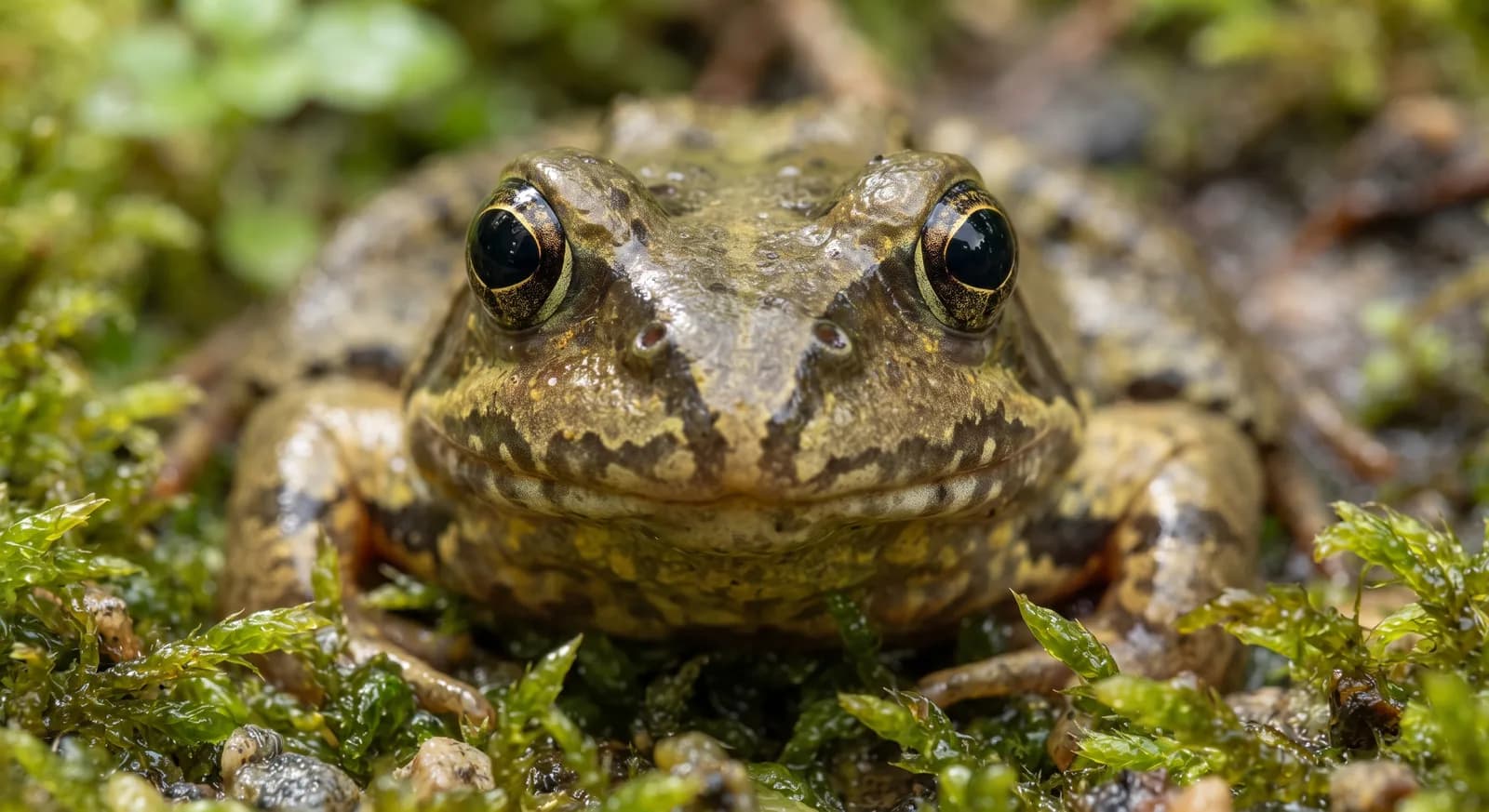
The Pyrenean frog is an anuran amphibian of the family Ranidae. The species was described in 1993, settling the controversy over the presence in the Pyrenees of Rana iberica, which it resembles morphologically. Recent genetic studies suggest that it may be more closely related phylogenetically to Rana temporaria than to R. iberica. It is an endemic amphibian, found almost exclusively in Spain, together with a few scattered localities in France along the border with Navarre, in the Irati Forest.

Size

3 cm – 5 cm

Life expectancy

8 years

Diet

Insectivore

Feeds mainly on insects and other invertebrates.

Activity

Diurnal

Active mainly during the day.

Social structure

Solitary

Lives and hunts alone, joining others only to breed.

Temperate forestMountainFreshwater
3countries2parks11same family

Fun facts

  • GeneralDescribed as a species in 1993; one of the rarest frogs in Europe.
  • It was described in 1993, a remarkable date for a European vertebrate: it went unnoticed for centuries because of its tiny size, its secretive habits and its resemblance to the common frog, with which it shares its habitat.
  • Its entire world range fits into a strip of the western and central Pyrenees, almost all of it on Spanish soil: Spain is directly responsible for its conservation.
  • It depends on cold, well-oxygenated streams in mature woodland, and rising temperatures and falling summer flows are pushing it to ever higher ground.

Life cycle and biology

Skeleton type
Vertebrate - internal bony skeleton (amphibian)
Habitat and environment
Cold streams and torrents in beech and fir forest of the Pyrenees, between 700 and 1,800 metres
Sexual maturity
3 years
Gestation / incubation
Larval development in cold mountain streams
Litter / clutch size
150 eggs

Sources consulted: Wikipedia (es): Rana pyrenaica

Where to find it

Loading map…

The pins mark the parks where its presence is documented.

Where to see it

Parks and dive sites where this species has been documented.

Related species

Other species in the catalogue with the most in common with Pyrenean Frog — same habitat, park, country, tags or family.

Same taxonomic family
Shares a park

How to help

The pyrenean frog is classified as endangered. Organisations such as the IUCN, WWF and the Wildlife Conservation Society work specifically on its conservation and that of its habitat; looking into their programmes is a good starting point if you want to get involved.

It's documented in 2 protected areas — one reason why protecting these places matters for its conservation.

Keep exploring

Based on what we already know about pyrenean frog.
Share an experience, a fun fact or a tip for seeing the pyrenean frog.
See full glossary
See its range on the interactive map→
Ordesa y Monte PerdidoSpain
Pyrenees National ParkFrance
Least Concern

Perez's Frog

Pelophylax perezi

Common FrogLeast Concern

Common Frog

Rana temporaria

Vulnerable

Iberian Frog

Rana iberica

Edible FrogLeast Concern

Edible Frog

Pelophylax kl. esculentus

Least Concern

Agile Frog

Rana dalmatina

Western CapercaillieLeast Concern

Western Capercaillie

Tetrao urogallus

CountriesFrance
ParksOrdesa y Monte PerdidoSpain
TagsInsectivore
This page in other languages: Español · Deutsch · Français · Português · Italiano
Insectivore
Diurnal
Solitary
Endangered
Amphibian
Temperate forest
Mountain
Freshwater
France
Spain
Andorra