One of the 47 frogs on WAnimals
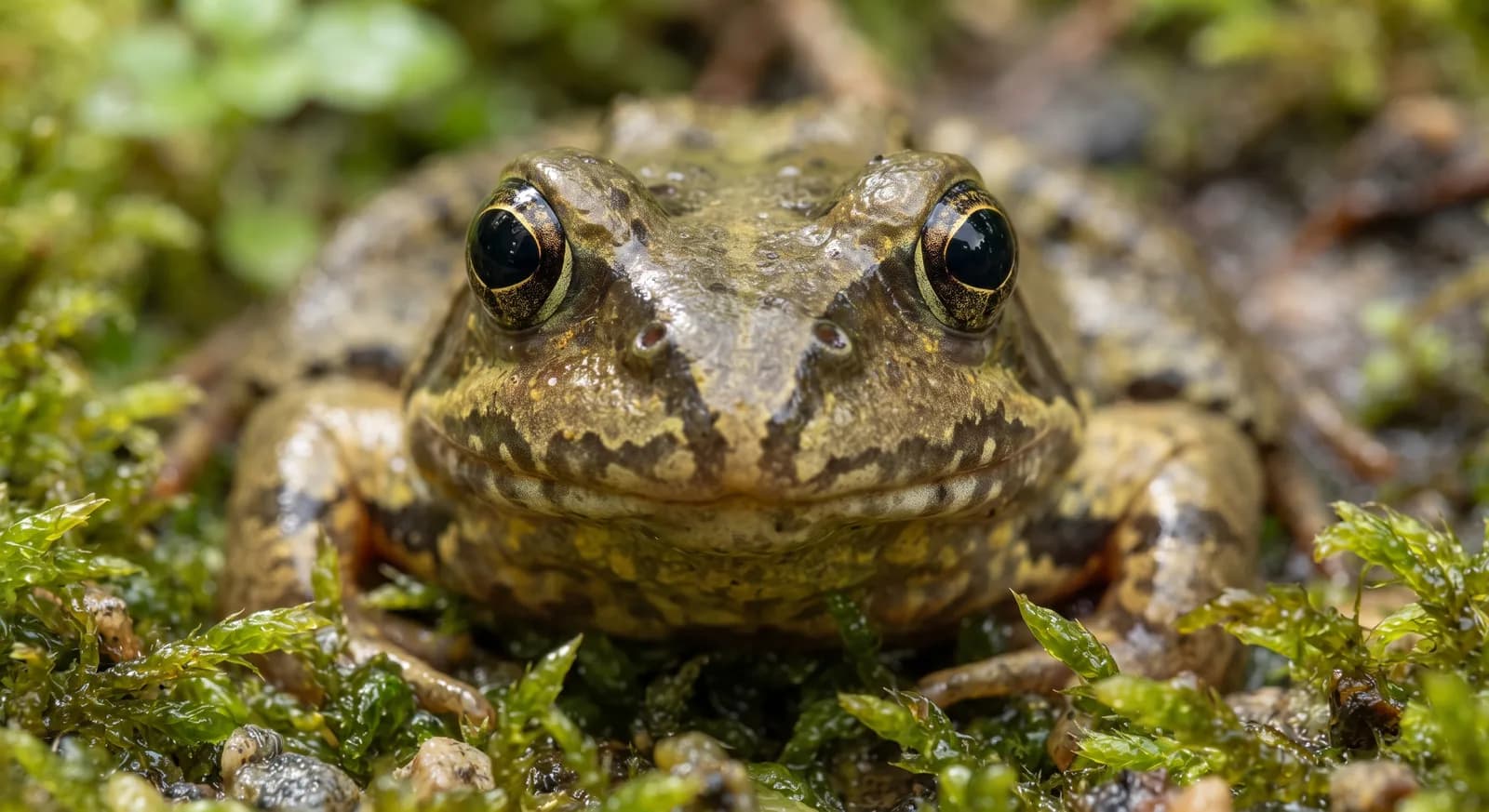
Amphibians · Anura · Ranidae
Rana temporaria
The species is abundant and widely distributed; it faces no significant short-term risk.
It is the amphibian that ranges furthest north in Europe, and the only one living inside the Arctic Circle in Scandinavia.
Weight
2 kg – 5 kg
Size
6 cm – 10 cm
Life expectancy
7 years
Diet
Carnivore
Feeds mainly on other animals.
Activity
Irregular activity
Active at irregular times, by day or night depending on circumstances.
Social structure
Solitary
Lives and hunts alone, joining others only to breed.
Sighting difficulty
Easy
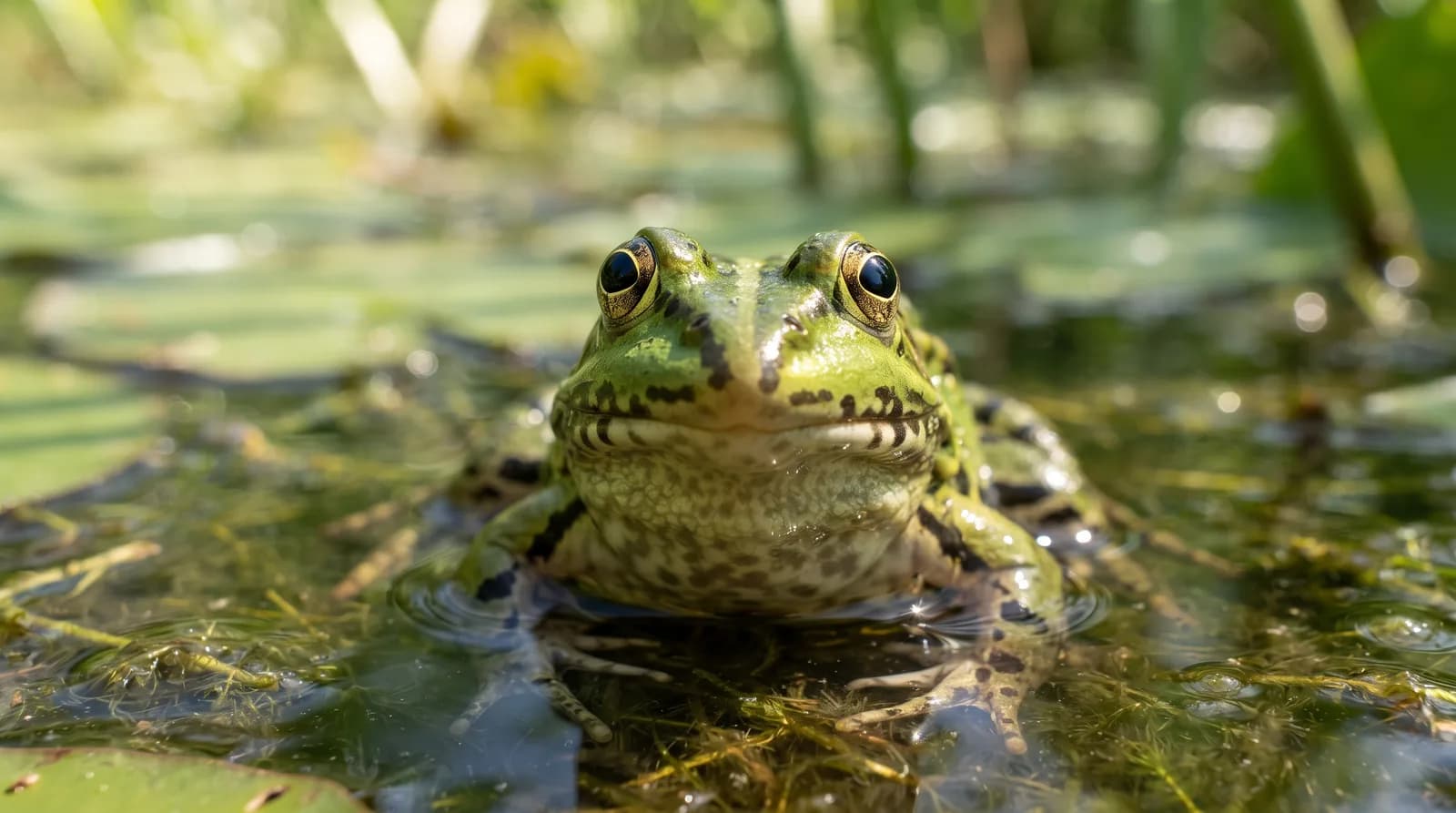
AI-generated images: illustrations, not photographs.
Sources consulted: Wiley (reproductive output study); Britannica; Woodland Trust; A-Z Animals; AnAge (genomics.senescence.info); Animal Diversity Web; Wiley (life-history traits French Alps study)
Best time: From January to April, during spawning, when it gathers in ponds and backwaters; in northern Iberia it can start in midwinter.
Parks and dive sites where this species has been documented — showing 10 of 206.
Other species in the catalogue with the most in common with Common Frog — same habitat, park, country, tags or family.
Based on what we already know about common frog.
Share an experience, a fun fact or a tip for seeing the common frog.
Be the first to comment.
The pins mark the parks where its presence is documented.