Skip to content
WAnimals
  • Map
  • Species
  • Parks
  • Diving
Log inCreate account
WAnimals

The guide for travellers and animal lovers: discover, plan and share your wild adventures around the world.

Discover wildlife

  • Species
  • Ecosystems
  • Glossary
  • Tags

Explore places

  • Map
  • Countries
  • Parks
  • Diving

Plan experiences

  • Guides

Learn

  • Blog

Resources

  • Help centre
  • Contact
  • Install the app

Follow us

Account

  • Log in
  • Create account

© 2026 WAnimals. All rights reserved.

About usHow we build our profilesTerms of servicePrivacyLegal notice
MapSpeciesParksDiving
  1. Home
  2. Species
  3. Tropical Bess Beetle

One of the 24 beetles on WAnimals

Insects · Coleoptera · Passalidae

Tropical Bess Beetle

Passalus interruptus

Not Evaluated

It has not yet been assessed against the IUCN criteria.

Spotted something wrong?

A Neotropical bess beetle, glossy black, with a small horn on the head and a flattened body for moving through narrow tunnels. It lives in family groups inside rotting logs, feeding on decaying wood.

Size

3 cm – 4 cm

Diet

Detritivore

Feeds on dead organic matter as it decomposes.

Activity

Nocturnal

Active mainly at night.

Social structure

Colony

Lives in large concentrations, often for breeding reasons.

Sighting difficulty

Unknown

Rainforest
3countries30parks1same family

Fun facts

  • The adults prepare their larvae's food by chewing the wood and mixing it with their faeces, which are laden with the microorganisms that make it digestible.
  • It stridulates by rubbing its abdomen against its wings, and the whole family communicates inside the log by means of those sounds.
  • Its role as a decomposer is fundamental in the rainforest: it speeds up the recycling of dead wood and with it that of the soil's nutrients.
  • Like its North American relative, it is subsocial: adults and larvae live together in the same gallery, and the parents feed the young with pre-digested wood.
  • It stridulates to communicate inside the trunk, in total darkness, where sight is of no use at all.
  • Its body is flattened and very glossy, adapted to moving through narrow galleries.
  • It contributes significantly to the decomposition of dead wood in the American rainforests, a role that on other continents is played by termites.

Life cycle and biology

Skeleton type
Invertebrate - chitin exoskeleton (insect)
Habitat and environment
Rotting logs in humid Neotropical forest
Gestation / incubation
The larvae feed on the microbe-rich frass and the finely chewed wood paste that the adults produce, in what has been described as an external rumen; the adults re-ingest their own frass once it has been processed by fungi and bacteria
Litter / clutch size
It lives in subsocial family groups inside the galleries, with overlapping generations and cooperative care of the brood; the parents protect the larvae, which are defenceless, and these pupate inside the tunnels

Sources consulted: Schuster y Schuster, revisiones de Passalidae; Universidad de Florida, Featured Creatures; Ecology and Conservation of Passalidae (Springer); guias de la familia Passalidae; Nardi et al. 2006; UWM Field Station

Where to find it

Best time: Present all year inside very rotten hardwood trunks in tropical and subtropical forest; it comes out onto the surface of the trunk by day or when looking for a new one

Loading map…

The pins mark the parks where its presence is documented.

Where to see it

Parks and dive sites where this species has been documented — showing 10 of 30.

Related species

Other species in the catalogue with the most in common with Tropical Bess Beetle — same habitat, park, country, tags or family.

Shares a park
Shares a park
Shares a park
Shares a park
Shares a park
Shares a park

Keep exploring

Based on what we already know about tropical bess beetle.

Comments

Share an experience, a fun fact or a tip for seeing the tropical bess beetle.

Be the first to comment.

See full glossary
This page in other languages: Español · Deutsch · Français · Português · Italiano
See its range on the interactive map→
Sian Ka'anMexico
El VizcainoMexico
CalakmulMexico
Monarch ButterflyMexico
El Pinacate and Gran Desierto de AltarMexico
Sumidero CanyonMexico
Sierra GordaMexico
CorcovadoCosta Rica
TortugueroCosta Rica
Manuel AntonioCosta Rica
See all 30 parks
Least Concern

Jamaican Fruit-eating Bat

Artibeus jamaicensis

Least Concern

Seba's Short-tailed Bat

Carollia perspicillata

Not Evaluated

Hercules Beetle

Dynastes hercules

Not Evaluated

Leaf-cutter Ant

Atta cephalotes

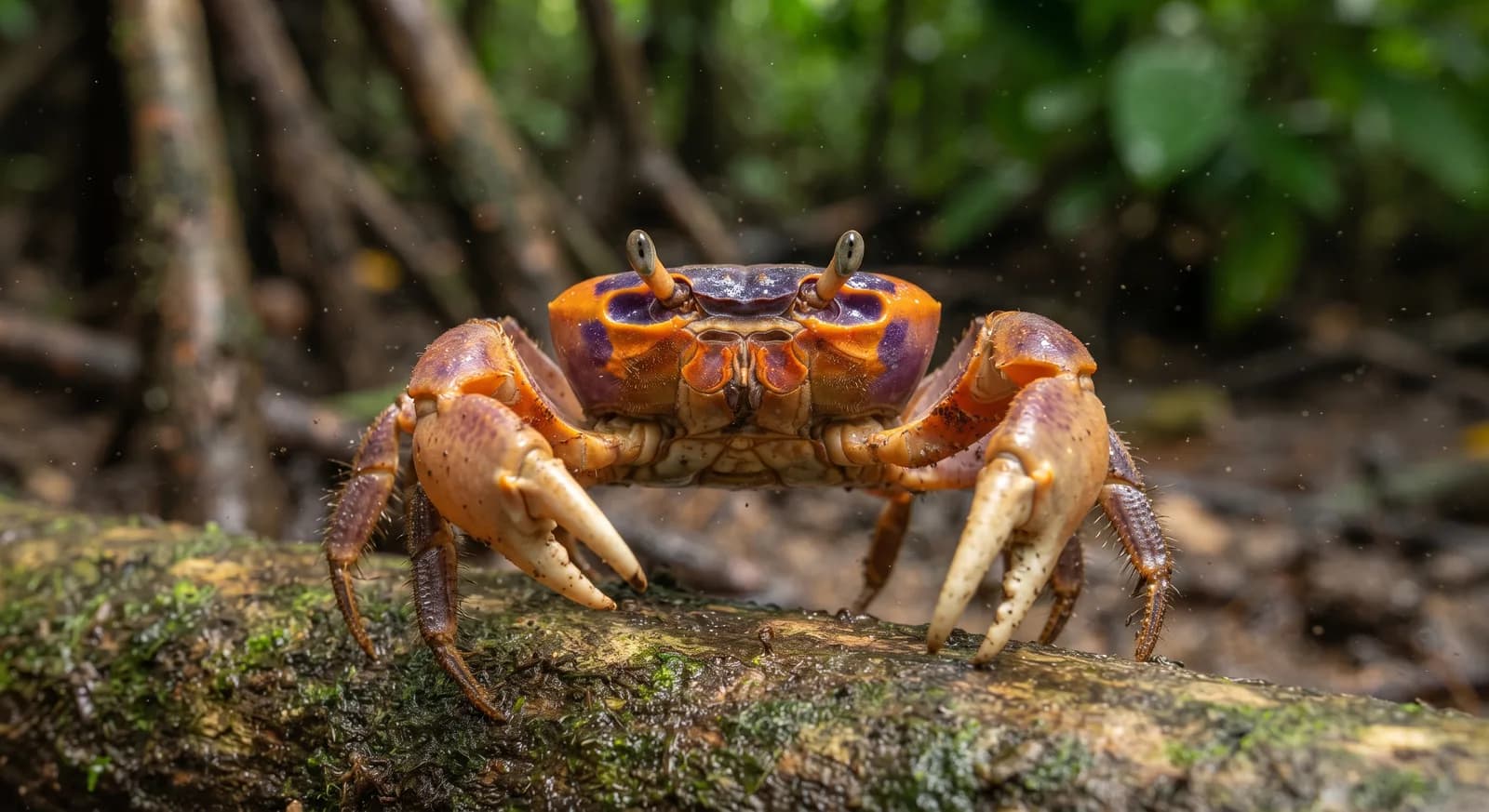
Moon CrabNot Evaluated

Moon Crab

Gecarcinus quadratus

Not Evaluated

Mayan Melipona

Melipona beecheii

CountriesMexico
ParksSian Ka'anMexico
TagsHerbivore
Herbivore
Nocturnal
Colonial
Insect
Rainforest
Mexico
Costa Rica
Guatemala