 Least Concern
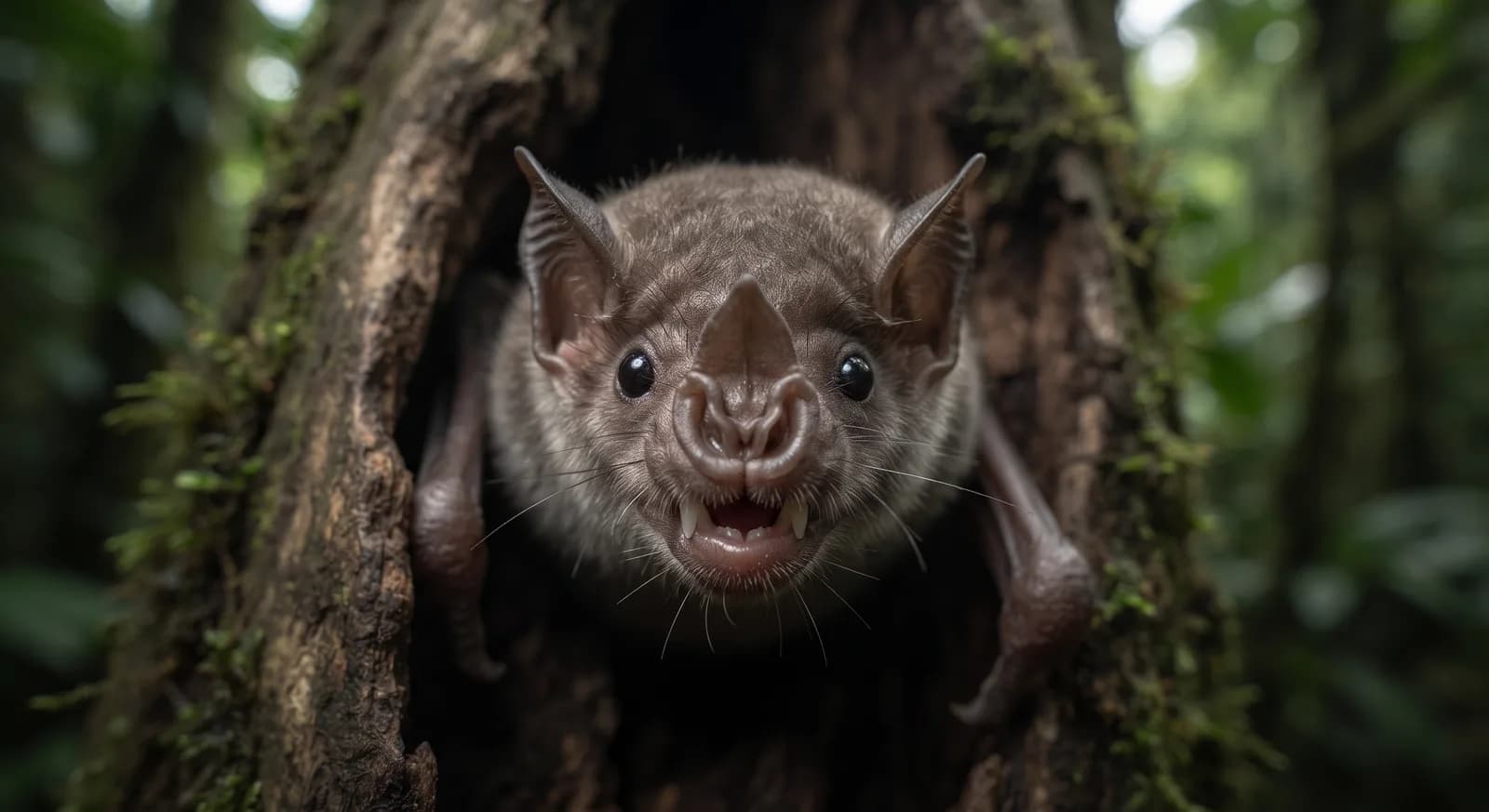
Common Vampire Bat
Desmodus rotundus
One of the 29 bats on WAnimals
Mammals · Chiroptera · Phyllostomidae
Artibeus jamaicensis
The species is abundant and widely distributed; it faces no significant short-term risk.
The Jamaican fruit-eating bat is a fruit-eating bat native to Central and South America. Its distinguishing features include the absence of an external tail and a short, U-shaped interfemoral membrane. The fur is greyish brown, has a faint soapy smell and is slightly paler on the underside. The ears are somewhat more pointed than in related bats. It measures around 9 cm long. It lives in rainforest, deciduous woodland and scrub forest. It roosts in hollow trunks, caves and tree foliage, but has also been found in tents built from the leaves of aroids and palms.
Weight
40 g – 50 g
Size
7 cm – 9 cm
Life expectancy
9 years
Diet
Herbivore
Feeds mainly on plants.
Activity
Nocturnal
Active mainly at night.
Social structure
Colony
Lives in large concentrations, often for breeding reasons.
Sources consulted: Wikipedia (es): Artibeus jamaicensis
The pins mark the parks where its presence is documented.
Parks and dive sites where this species has been documented — showing 10 of 17.
Other species in the catalogue with the most in common with Jamaican Fruit-eating Bat — same habitat, park, country, tags or family.
Based on what we already know about jamaican fruit-eating bat.