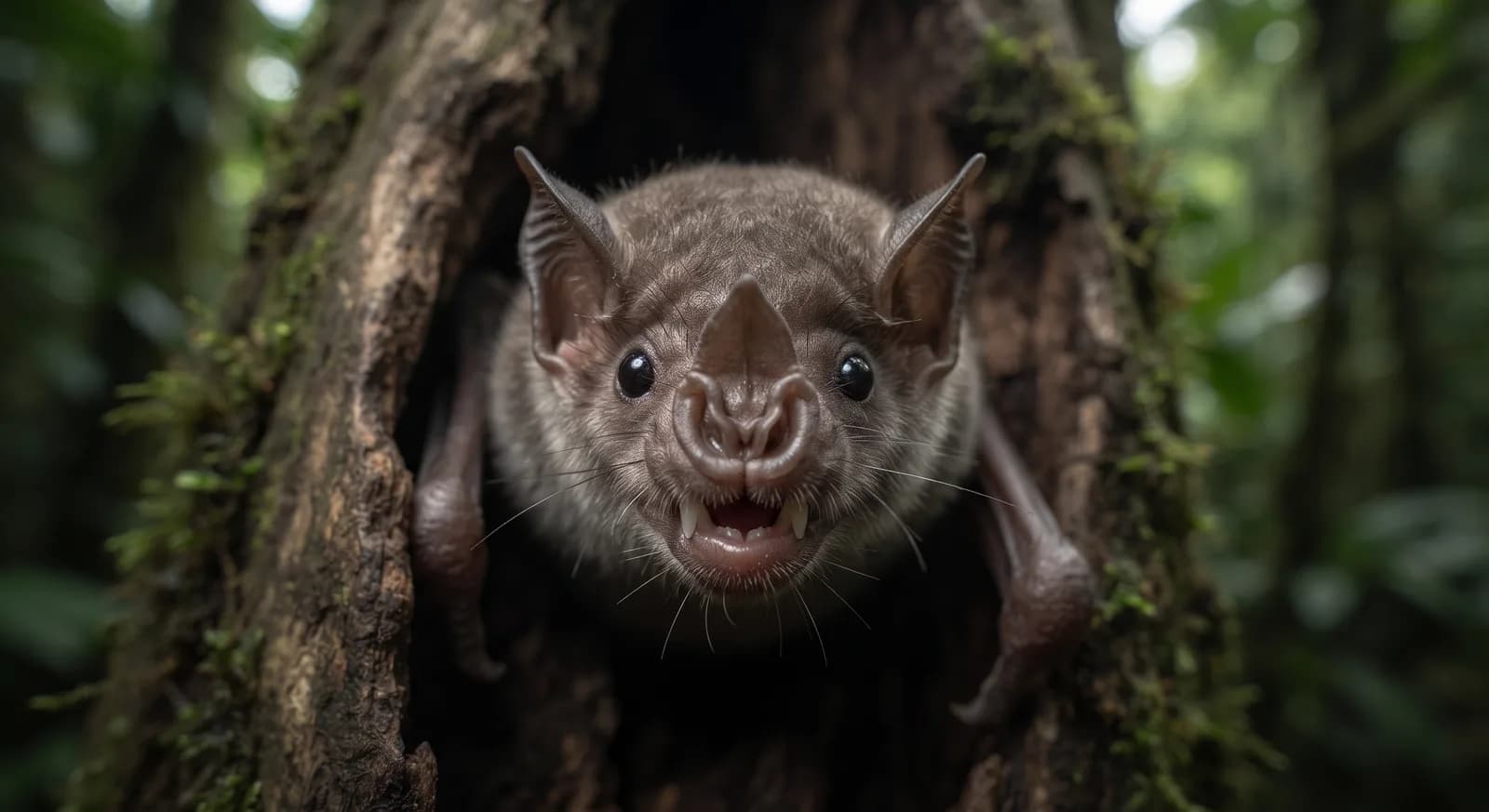
Mammals · Chiroptera · Phyllostomidae
Desmodus rotundus
The species is abundant and widely distributed; it faces no significant short-term risk.
It is one of the few mammals that actively shares food with unrelated members of its colony, regurgitating blood to feed hungry roost-mates.
Weight
15 g – 50 g
Size
6.5 cm – 9 cm
Life expectancy
9 years
Diet
Carnivore
Feeds mainly on other animals.
Activity
Nocturnal
Active mainly at night.
Social structure
Colony
Lives in large concentrations, often for breeding reasons.
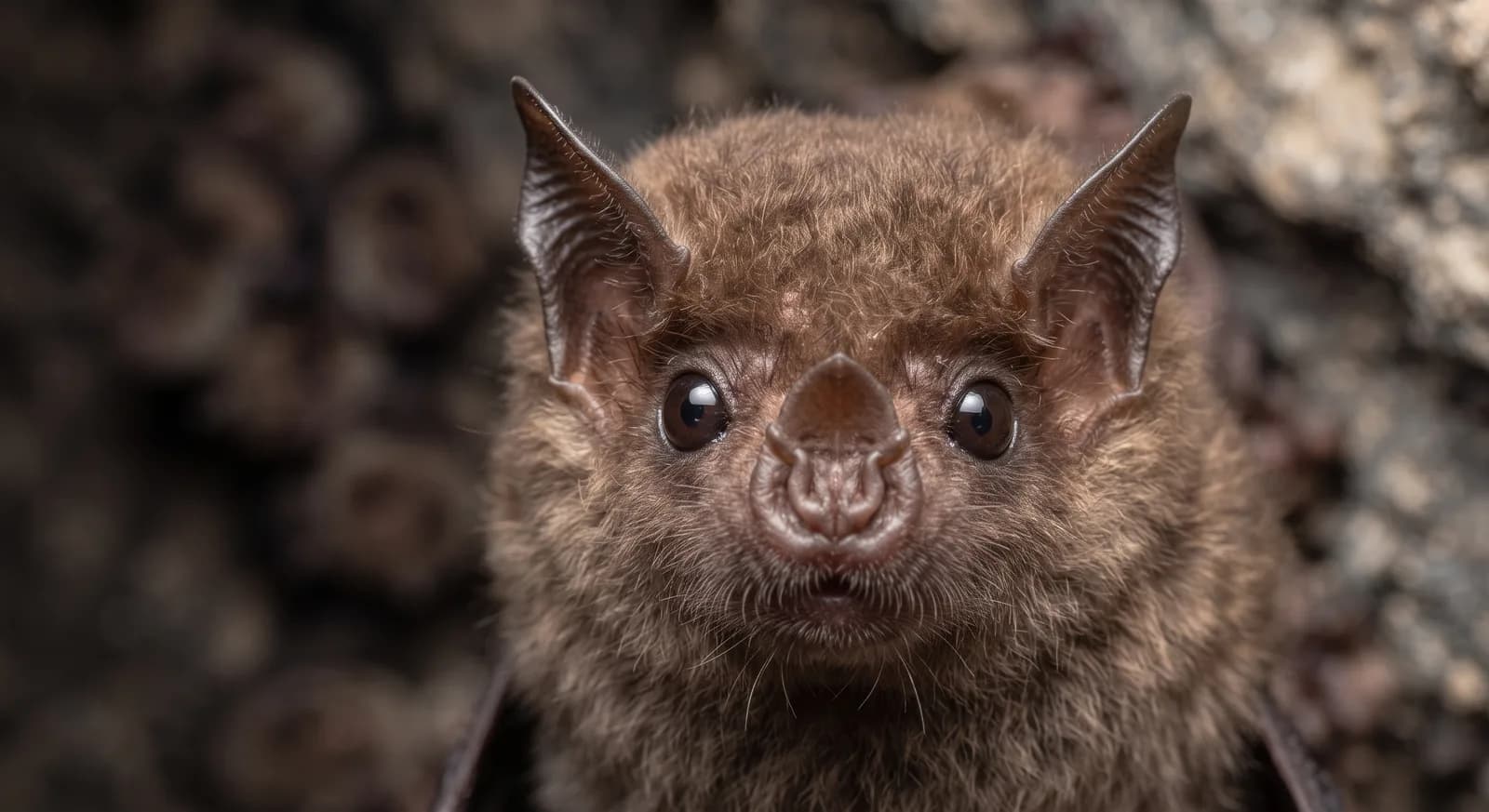
AI-generated images: illustrations, not photographs.
Sources consulted: AnAge (genomics.senescence.info) · University of Maryland (species accounts) · Dimensions.com · Denver Zoo · Animal Diversity Web · A-Z Animals · Animalia.bio · PMC (reproductive seasonality study)
Best time: All year round in tropical America, at night; its colonies occupy caves, mines and abandoned buildings near livestock.
Parks and dive sites where this species has been documented — showing 10 of 107.
Other species in the catalogue with the most in common with Common Vampire Bat — same habitat, park, country, tags or family.
Based on what we already know about common vampire bat.
The pins mark the parks where its presence is documented.