Skip to content
WAnimals
  • Map
  • Species
  • Parks
  • Diving
Log inCreate account
WAnimals

The guide for travellers and animal lovers: discover, plan and share your wild adventures around the world.

Discover wildlife

  • Species
  • Ecosystems
  • Glossary
  • Tags

Explore places

  • Map
  • Countries
  • Parks
  • Diving

Plan experiences

  • Guides

Learn

  • Blog

Resources

  • About us
  • How we build our profiles
  • Help centre
  • Contact
  • Install the app

Follow us

Account

  • Log in
  • Create account

© 2026 WAnimals. All rights reserved.

Terms of servicePrivacyCookiesLegal notice
MapSpeciesParksDiving
  1. Home
  2. Species
  3. Lesser Long-nosed Bat

One of the 29 bats on WAnimals
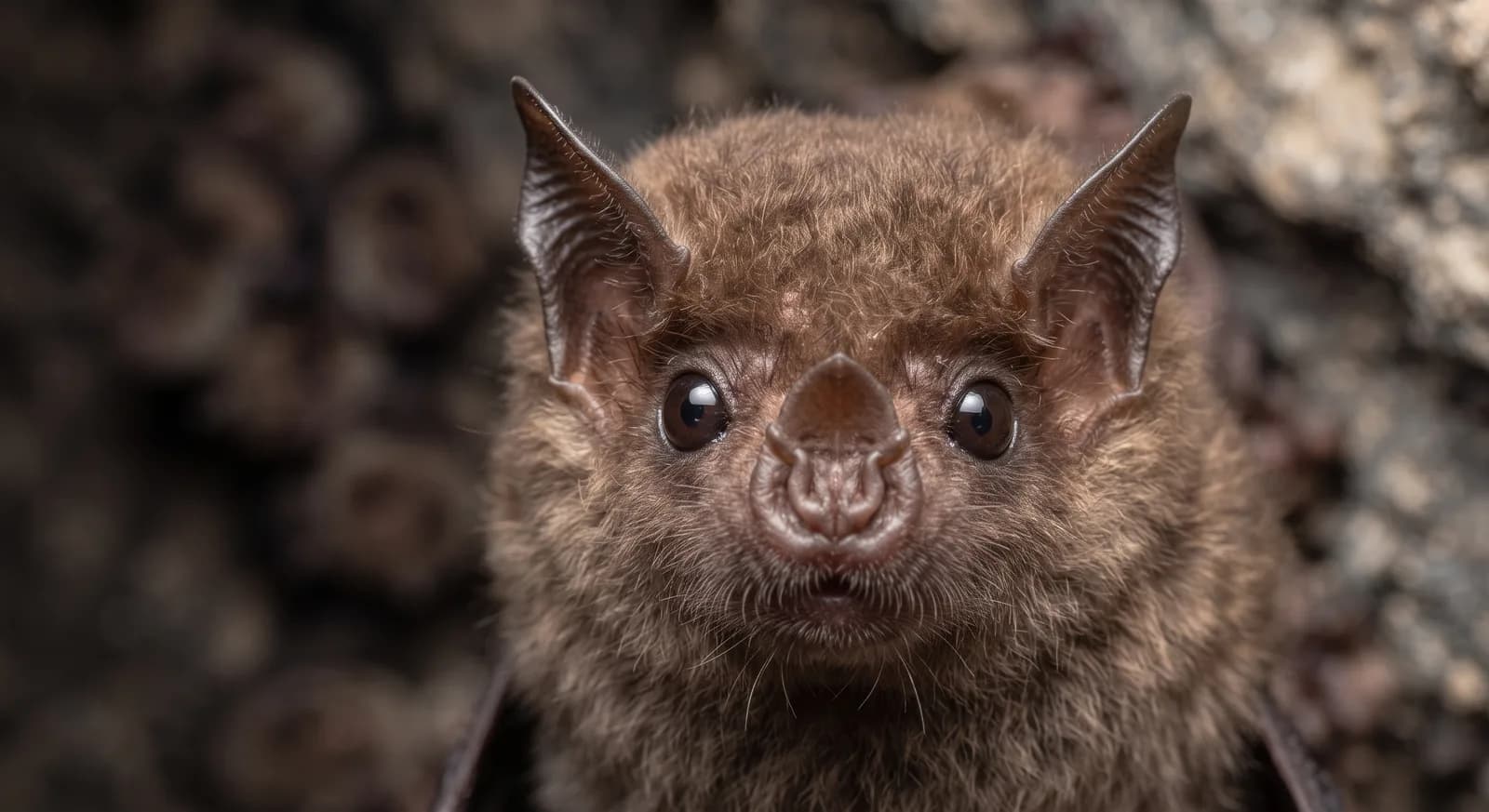
Lesser Long-nosed Bat (Leptonycteris yerbabuenae)

Mammals · Chiroptera · Phyllostomidae

Lesser Long-nosed Bat

Leptonycteris yerbabuenae

Near Threatened

It could become threatened in the near future if current threats go unchecked.

Spotted something wrong?

The lesser long-nosed bat is the principal pollinator of agaves and columnar cacti in northern Mexico and the south-western United States. Each year it migrates along a flowering corridor more than a thousand kilometres long, from central Mexico to Arizona and New Mexico, breeding along the way in maternity caves that hold tens of thousands of females. Without it, the sexual reproduction of wild agaves and of the saguaro would be seriously compromised.

Weight

18 g – 30 g

Size

7 cm – 9 cm

Life expectancy

10 years
Diet

Nectarivore

Feeds mainly on flower nectar.

Activity

Nocturnal

Active mainly at night.

Social structure

Colony

Lives in large concentrations, often for breeding reasons.

Temperate forestDesert
5countries12parks5same family

AI-generated images: illustrations, not photographs.

Fun facts

  • Without this bat there would be no wild tequila: it is the main pollinator of blue agave and other agaves, though the commercial crop is propagated from offsets and does not depend on it.
  • It was one of the first species removed from the United States endangered species list on grounds of recovery, in 2018, after decades of protection of its maternity caves on both sides of the border.

Life cycle and biology

Skeleton type
Vertebrate - internal bony skeleton (mammal)
Habitat and environment
Thorn scrub, deserts with agaves and columnar cacti, and dry forest of Mexico and the south-western United States
Gestation / incubation
5.5 months
Litter / clutch size
1

Sources consulted: Wikipedia (es): Leptonycteris yerbabuenae

Where to find it

Loading map…

The pins mark the parks where its presence is documented.

Where to see it

Parks and dive sites where this species has been documented — showing 10 of 12.

Related species

Other species in the catalogue with the most in common with Lesser Long-nosed Bat — same habitat, park, country, tags or family.

Same taxonomic family
Shares a park
Shares a park
Shares a park
Shares a park

Keep exploring

Based on what we already know about lesser long-nosed bat.

Share an experience, a fun fact or a tip for seeing the lesser long-nosed bat.
See full glossary
This page in other languages: Español · Deutsch · Français · Português · Italiano
See its range on the interactive map→
Big BendUnited States
El VizcainoMexico
El Pinacate and Gran Desierto de AltarMexico
Sumidero CanyonMexico
Sierra GordaMexico
SaguaroUnited States
Carlsbad CavernsUnited States
Guadalupe MountainsUnited States
Constitución de 1857Mexico
Cumbres de MonterreyMexico
See all 12 parks
Least Concern

Pallas's Long-Tongued Bat

Glossophaga soricina

Least Concern

Vampire Bat

Desmodus rotundus

Critically Endangered

Little Brown Bat

Myotis lucifugus

Least Concern

Big Brown Bat

Eptesicus fuscus

Mexican Free-tailed BatLeast Concern

Mexican Free-tailed Bat

Tadarida brasiliensis

Gila MonsterNear Threatened

Gila Monster

Heloderma suspectum

CountriesMexico
ParksBig BendUnited States
TagsNectarivore
Nectarivore
Nocturnal
Colonial
Near Threatened
Temperate forest
Desert
Mammal
Mexico
United States
El Salvador
Guatemala
Honduras