 Near Threatened
Lesser Long-nosed Bat
Leptonycteris yerbabuenae
One of the 29 bats on WAnimals
Mammals · Chiroptera · Phyllostomidae
Glossophaga soricina
The species is abundant and widely distributed; it faces no significant short-term risk.
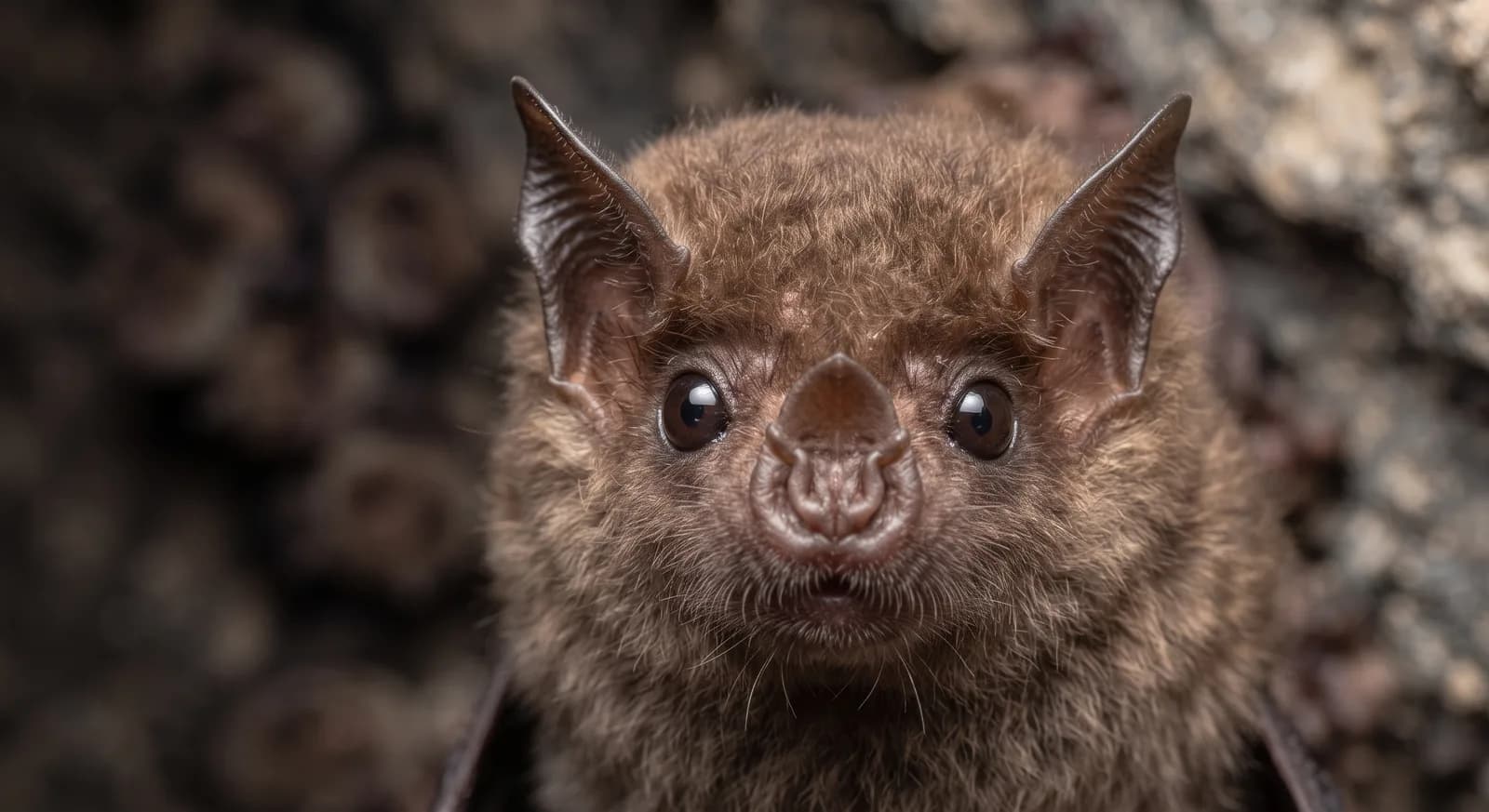
Pallas's long-tongued bat is a nectar-feeder with an elongated snout and an extendable tongue that pollinates dozens of American plants, among them columnar cacti, agaves, kapok trees and bananas. It feeds by hovering in front of flowers like a nocturnal hummingbird, and supplements the nectar with pollen and some insects. It lives in colonies in caves, tree holes and culverts. Its great adaptability makes it common even in gardens and city parks throughout Latin America.
Weight
9 g – 12 g
Size
5 cm – 6 cm
Life expectancy
7 years
Diet
Nectarivore
Feeds mainly on flower nectar.
Activity
Nocturnal
Active mainly at night.
Social structure
Colony
Lives in large concentrations, often for breeding reasons.
Sighting difficulty
Easy
Sources consulted: https://es.wikipedia.org/wiki/Glossophaga_soricina
The pins mark the parks where its presence is documented.
Parks and dive sites where this species has been documented — showing 10 of 64.
Other species in the catalogue with the most in common with Pallas's Long-Tongued Bat — same habitat, park, country, tags or family.
Based on what we already know about pallas's long-tongued bat.
Share an experience, a fun fact or a tip for seeing the pallas's long-tongued bat.
Be the first to comment.