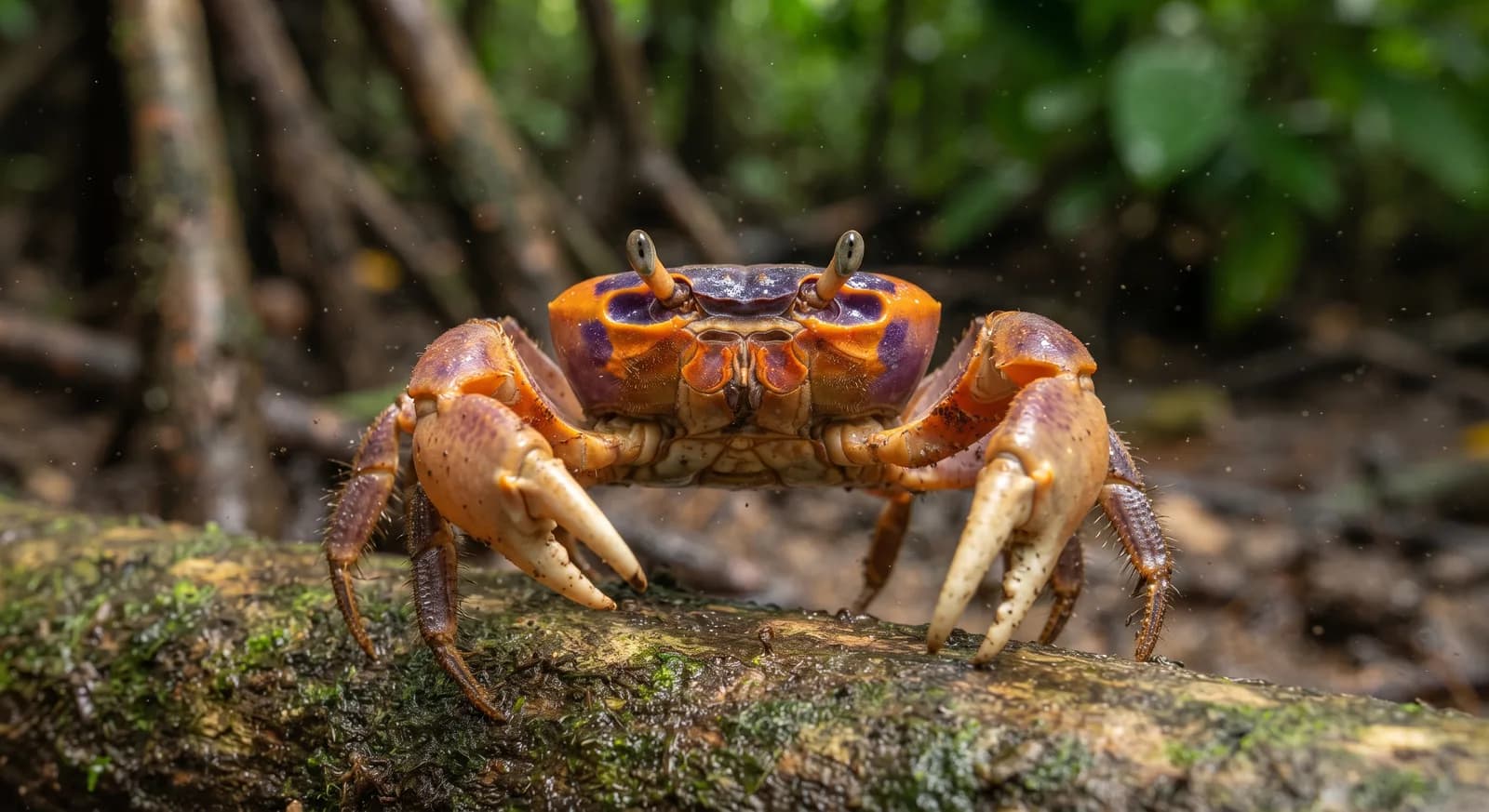
 Not Evaluated
Moon Crab
Gecarcinus quadratus
One of the 13 ants on WAnimals
Insects · Hymenoptera · Formicidae
Atta cephalotes
It has not yet been assessed against the IUCN criteria.
It is one of the few animals besides humans that farm: it grows a particular fungus in underground gardens, using the leaves it cuts as the growing medium.
Size
0.2 cm – 3 cm
Life expectancy
15 years
Diet
Herbivore
Feeds mainly on plants.
Activity
Nocturnal
Active mainly at night.
Social structure
Colony
Lives in large concentrations, often for breeding reasons.
Sources consulted: Marwell Zoo · AntWiki · Antark.net · Ant-Shack Care Sheet · Sara Guiti Prado · Wikipedia (Atta cephalotes, Leafcutter ant) · arXiv (mathematical modeling study) · iNaturalist Mexico, ficha Atta cephalotes · Nakepu, ficha de hormigas cortadoras
Best time: The winged reproductives come out en masse at the start of the rainy season for the nuptial flight, known as the revoada; that is when the species is at its most visible. For the rest of the year it is its foraging trails that give it away, with the workers carrying fragments of leaf
Parks and dive sites where this species has been documented — showing 10 of 82.
Other species in the catalogue with the most in common with Leaf-cutter Ant — same habitat, park, country, tags or family.
Based on what we already know about leaf-cutter ant.
The pins mark the parks where its presence is documented.