Mammals · Artiodactyla · Bovidae
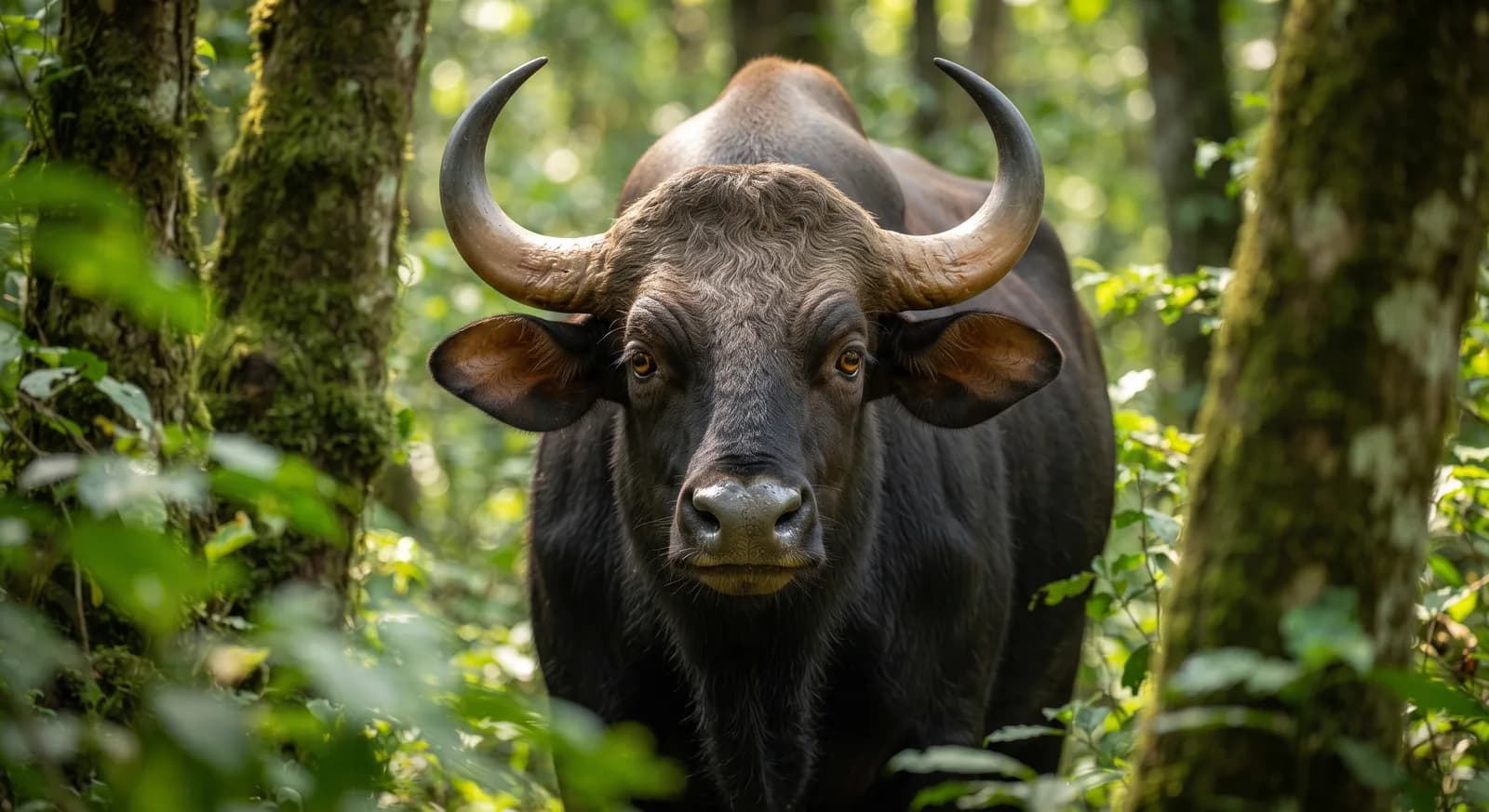
Lowland Anoa
Bubalus depressicornis
It faces a very high risk of extinction in the wild in the near future. See full glossary
It is the smallest member of the genus Bubalus, essentially a water buffalo in miniature adapted to a solitary life in the dense forest of Sulawesi, in sharp contrast to the herding habits of its larger relatives.
Weight
150 kg – 300 kg
Size
1.5 m – 1.8 m
Lifespan
20 years
Diet
Herbivore
Feeds mainly on plants.
Activity
Irregular activity
Active at irregular times, by day or night depending on circumstances.
Social structure
Solitary
Lives and hunts alone, joining others only to breed.
Sighting difficulty
Hard
Fun facts
- It is the smallest wild buffalo in the world, confined to the Indonesian island of Sulawesi.
- Unlike other buffalo it is strongly solitary and territorial; two animals in the same enclosure may gore each other to death.
- Its diet includes more than 146 recorded plant species.
Life cycle & biology
- Skeleton type
- Vertebrate - internal bony skeleton (mammal)
- Habitat & environment
- Undisturbed lowland tropical forest and swamp of the islands of Sulawesi and Buton, in Indonesia
- Birth weight
- Exact weight not found as a precise figure
- Size at birth
- A striking reddish orange at birth, darkening steadily with age
- Sexual maturity
- 2 years
- Gestation / incubation
- 275-315 days (~9-10 months)
- Litter / clutch size
- 1 young (twins extremely rare)
- Lifespan in captivity
- Documented record of up to 31-36.1 years in captivity
Sources consulted: Animal Diversity Web; AnAge; Ultimate Ungulate; Animalia.bio; Facts and Details; Marwell Zoo; Grokipedia; PMC
Where to find it
See its range on the interactive mapBest time: All year round in the forests of Sulawesi, by day; it is very wary and is detected more from tracks and wallows than by sight.
Where to watch it
Parks and dive sites where this species has been documented.
Related species
Other species in the catalogue with the most in common with Lowland Anoa — same habitat, park, country, tags or family.
Banteng
Bos javanicus
Hairy Babirusa
Babyrousa babyrussa
Abbott's Duiker
Cephalophus spadix
 Vulnerable
Gaur
Bos gaurus
Zebra Duiker
Cephalophus zebra
Maxwell's Duiker
Philantomba maxwellii
How to help
The lowland anoa is classified as endangered. Organizations such as UICN, WWF y Wildlife Conservation Society work specifically on its conservation and that of its habitat; looking into their programs is a good starting point if you want to get involved.
It's documented in 1 real protected area — part of why protecting these places matters for its conservation.
Keep exploring
Based on what we already know about lowland anoa.
Comments
Share an experience, a fun fact or a tip for seeing the lowland anoa.
Be the first to comment.