One of the 6 duikers on WAnimals
Mammals · Artiodactyla · Bovidae
Maxwell's Duiker
Philantomba maxwellii
The species is abundant and widely distributed; it faces no significant short-term risk. See full glossary
Maxwell's duiker is one of the smallest antelopes in Africa, the size of a large hare, and one of the most abundant in the forests of West Africa. Greyish-brown with tiny horns, it moves along tunnels through dense undergrowth eating leaves, shoots, fungi and fallen fruit beneath fruiting trees. It copes well with secondary forest and plantations. Despite its abundance it suffers enormous hunting pressure: it is one of the species most often found in the region's bushmeat markets.
Weight
8 kg – 10 kg
Size
55 cm – 90 cm
Lifespan
12 years
Diet
Herbivore
Feeds mainly on plants.
Activity
Irregular activity
Active at irregular times, by day or night depending on circumstances.
Social structure
Solitary
Lives and hunts alone, joining others only to breed.
Sighting difficulty
Easy
Fun facts
- The name duiker comes from the Afrikaans duiker, diver, from the habit these antelopes have of plunging suddenly into the undergrowth when something startles them.
- It has very well developed preorbital glands, in front of the eyes, which it rubs against branches and trunks to mark its territory with a scent of its own.
Life cycle & biology
- Skeleton type
- Vertebrate - internal bony skeleton (mammal)
- Habitat & environment
- Dense understorey of rainforest, secondary forest and mangrove of West Africa
- Sexual maturity
- 2 years
- Gestation / incubation
- 3.9 months
- Litter / clutch size
- 1
Sources consulted: https://es.wikipedia.org/wiki/Philantomba_maxwellii
Where to find it
See its range on the interactive mapWhere to watch it
Parks and dive sites where this species has been documented.
Related species
Other species in the catalogue with the most in common with Maxwell's Duiker — same habitat, park, country, tags or family.
Zebra Duiker
Cephalophus zebra
Royal Antelope
Neotragus pygmaeus
 Near Threatened
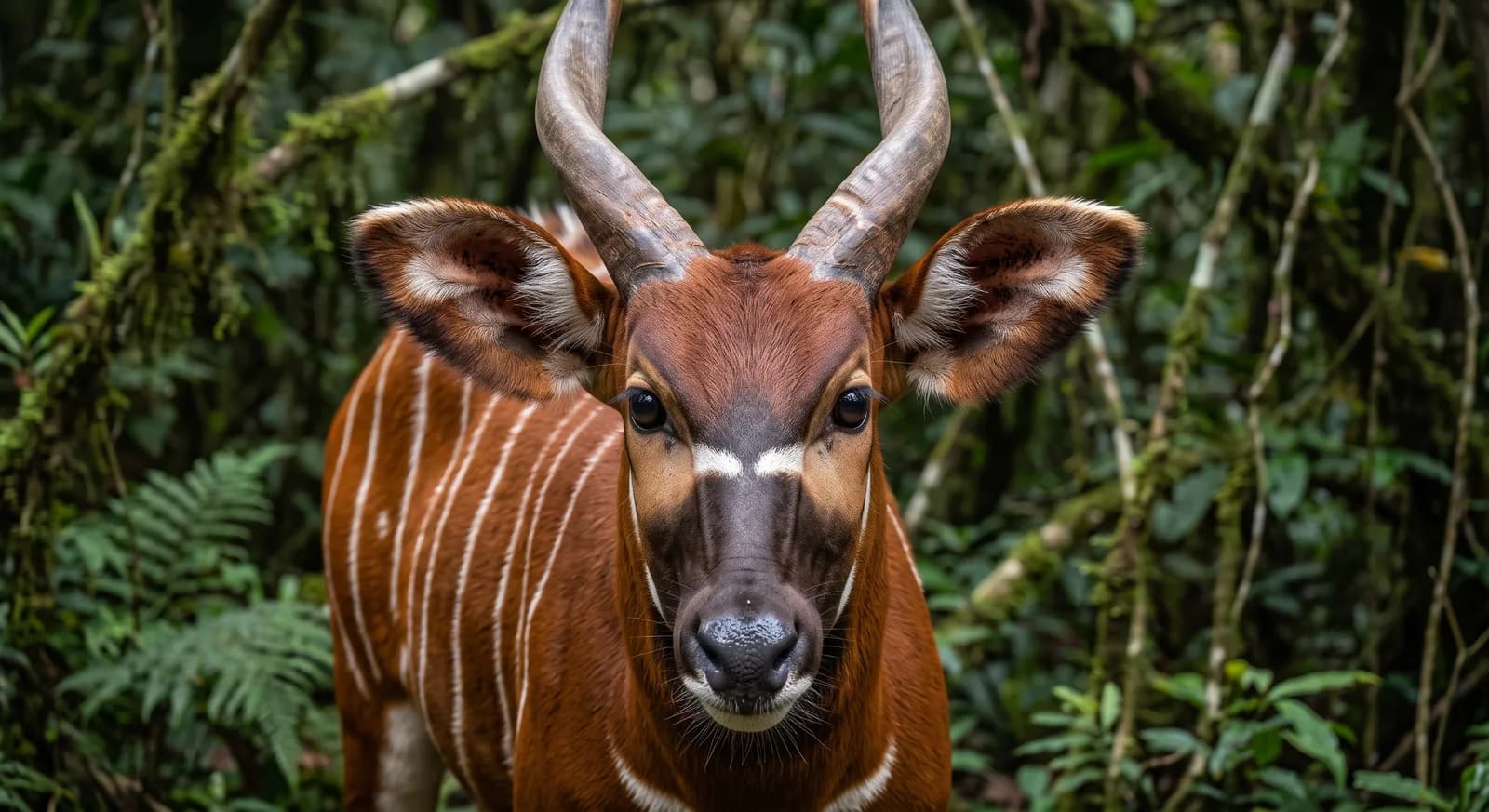
Bongo
Tragelaphus eurycerus
 Least Concern
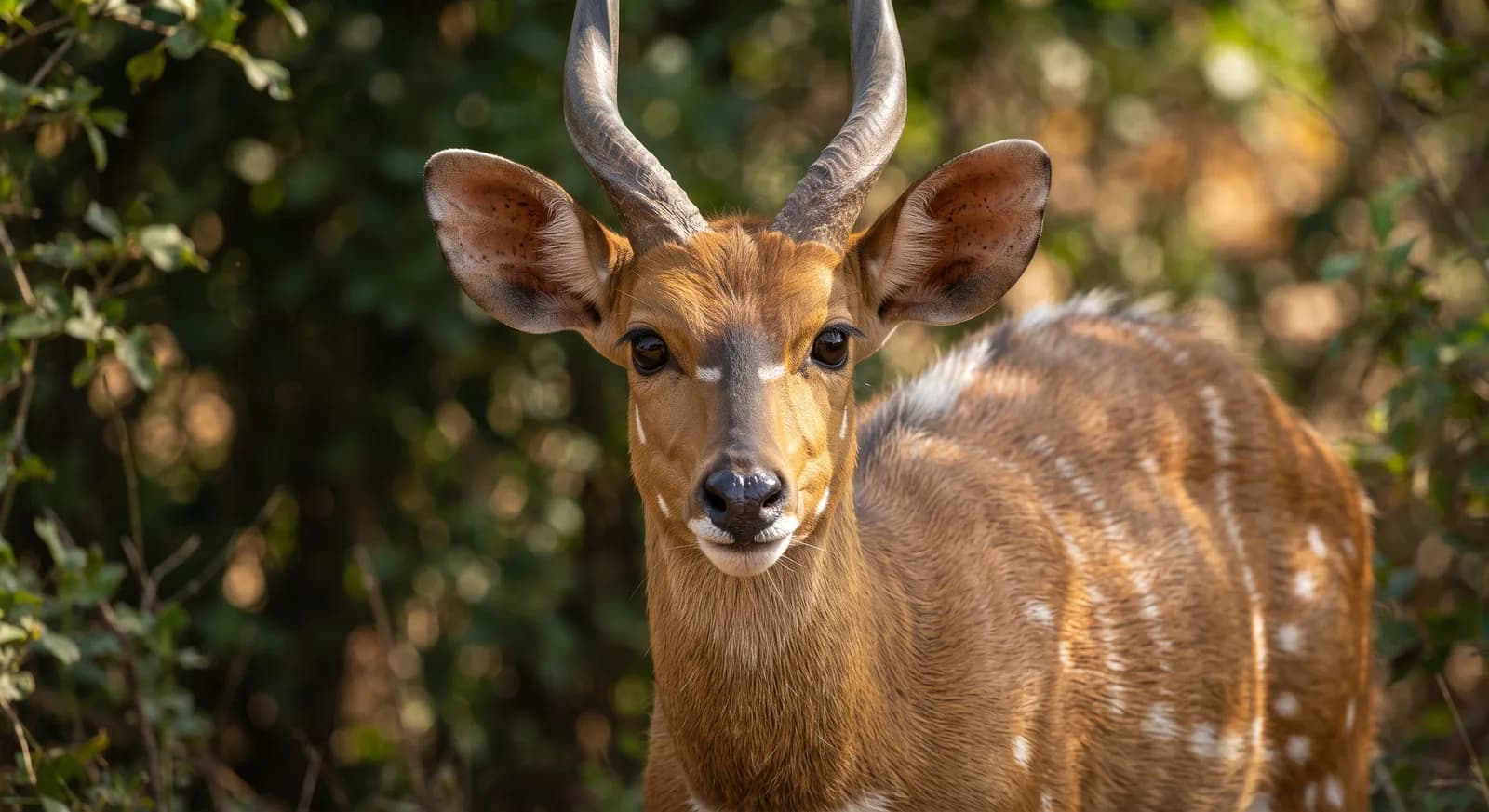
Bushbuck
Tragelaphus scriptus
Waterbuck
Kobus ellipsiprymnus
Kob
Kobus kob
Keep exploring
Based on what we already know about maxwell's duiker.
Comments
Share an experience, a fun fact or a tip for seeing the maxwell's duiker.
Be the first to comment.