Mammals · Artiodactyla · Bovidae
Bongo
Tragelaphus eurycerus
It could become endangered in the near future if current threats go unchecked. See full glossary
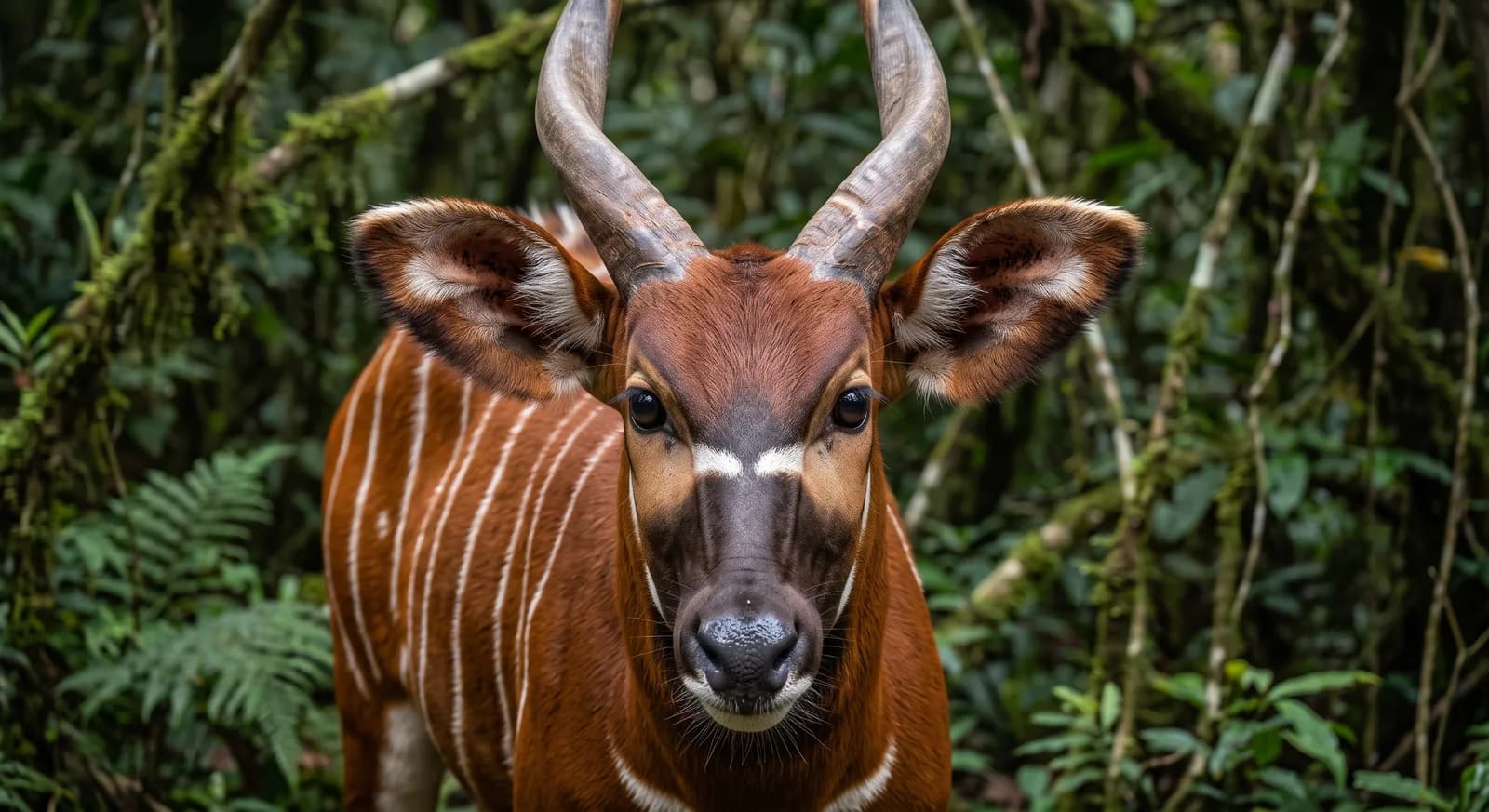
The bongo is the largest forest antelope in Africa and one of the most spectacular: an intense chestnut-red coat crossed by a dozen fine vertical white stripes, and spiral horns present in both sexes. It lives in the closed understorey of the forest and browses leaves, shoots and bark. The mountain subspecies, restricted to a few massifs in Kenya, is one of the most threatened on the continent, with barely a hundred animals in the wild.
Weight
150 kg – 405 kg
Size
1.7 m – 2.5 m
Lifespan
19 years
Diet
Herbivore
Feeds mainly on plants.
Activity
Nocturnal
Active mainly at night.
Sighting difficulty
Moderate
Fun facts
- GeneralThe largest forest antelope; males lose their chestnut colour with age.
- adaptaciónIt is one of the largest forest antelopes in Africa, and the white vertical stripes on its body help hide it among the shafts of light that pierce the dense canopy.
- Its vertical white stripes, which break up its outline in the gloom of the understorey, are as individual as a fingerprint and allow each animal to be identified.
- The mountain subspecies survives with little more than a hundred animals spread across four massifs in Kenya, while zoos around the world hold considerably more than there are in the wild.
Life cycle & biology
- Skeleton type
- Vertebrate - internal bony skeleton (mammal)
- Habitat & environment
- Dense understorey of lowland rainforest and montane forest of central and eastern Africa
- Sexual maturity
- 2.2 years
- Gestation / incubation
- 9.5 months
- Litter / clutch size
- 1
Sources consulted: https://es.wikipedia.org/wiki/Tragelaphus_eurycerus
Where to find it
See its range on the interactive mapWhere to watch it
Parks and dive sites where this species has been documented.
Related species
Other species in the catalogue with the most in common with Bongo — same habitat, park, country, tags or family.
Royal Antelope
Neotragus pygmaeus
Zebra Duiker
Cephalophus zebra
Maxwell's Duiker
Philantomba maxwellii
 Least Concern
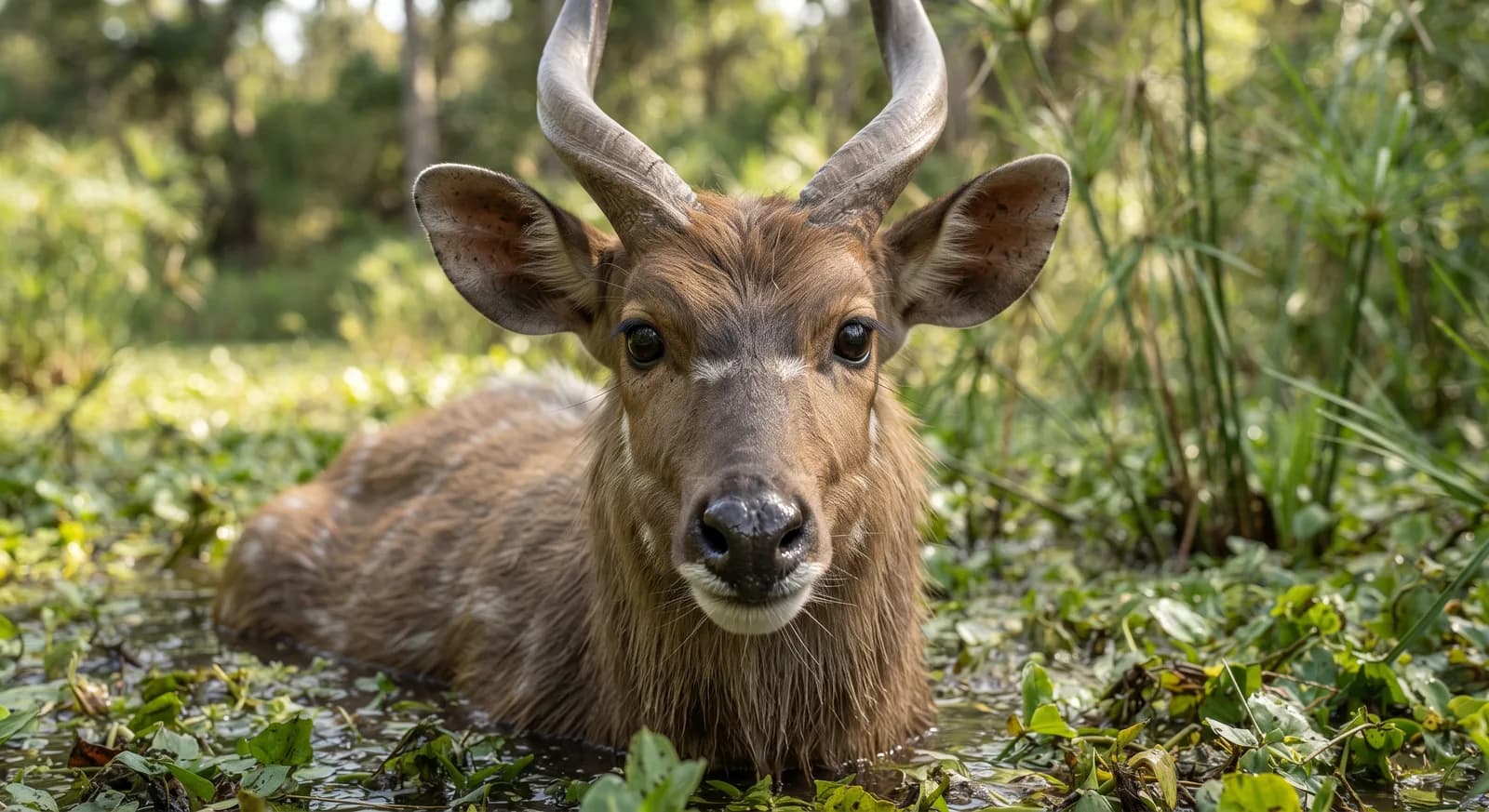
Sitatunga
Tragelaphus spekii
 Least Concern
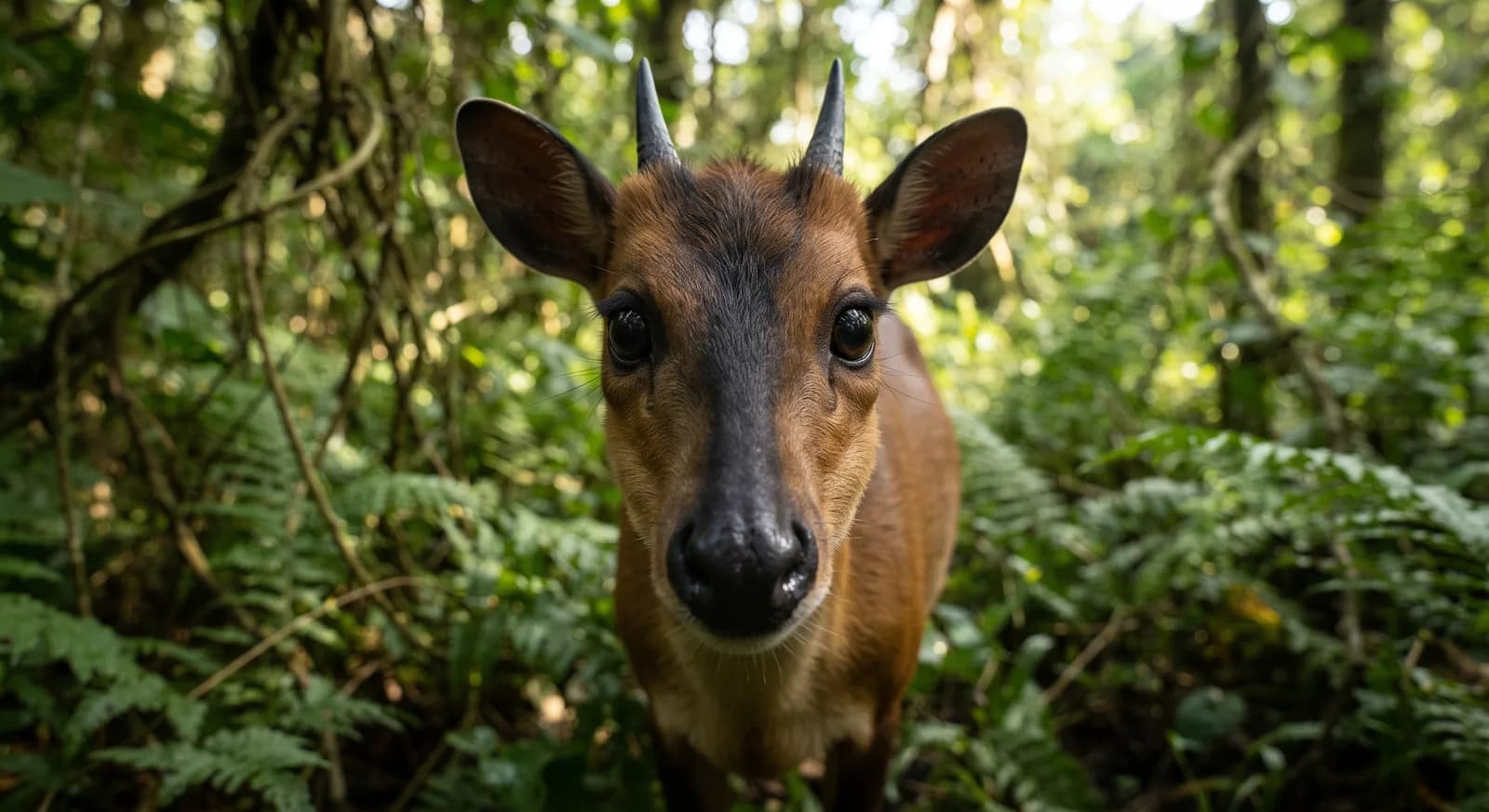
Black-fronted Duiker
Cephalophus nigrifrons
Keep exploring
Based on what we already know about bongo.
Comments
Share an experience, a fun fact or a tip for seeing the bongo.
Be the first to comment.