Mammals · Rodentia · Caviidae
Guinea Pig
Cavia porcellus
It has not yet been assessed against the IUCN criteria. See full glossary
Unlike most rodents it is born extraordinarily well developed, with a full set of teeth and its eyes open, thanks to an unusually long gestation. It was domesticated in the Andes thousands of years ago.
Weight
700 g – 1.2 kg
Size
20 cm – 25 cm
Lifespan
6 years
Diet
Herbivore
Feeds mainly on plants.
Activity
Irregular activity
Active at irregular times, by day or night depending on circumstances.
Social structure
Colony
Lives in large concentrations, often for breeding reasons.
Sighting difficulty
Unknown
Fun facts
- It is born with a full set of teeth, its eyes open and able to walk almost at once.
- It was domesticated in the Andes thousands of years ago.
- It is wholly domestic: there is no wild population of Cavia porcellus.
Life cycle & biology
- Skeleton type
- Vertebrate - internal bony skeleton (mammal)
- Habitat & environment
- Wholly domesticated, with no wild population; its wild relative (Cavia aperea) lives on South American grassland
- Birth weight
- Exact weight not found as a precise figure
- Size at birth
- Extremely precocial: born with its eyes open, fully furred, and able to move and eat solid food almost at once
- Sexual maturity
- Male: 56-70 days | Female: 60-67 days
- Gestation / incubation
- 59-72 days (~2 months), among the longest gestations of any rodent
- Litter / clutch size
- 1 to 6 young per litter (most commonly 2-4)
- Lifespan in captivity
- 3-8 years on average (a documented record of up to 12)
Sources consulted: Animal Diversity Web; AnAge; Britannica; The Animal Facts; Animal Kingdom; PMC; Wiley Journal of Zoology
Where to find it
See its range on the interactive mapRelated species
Other species in the catalogue with the most in common with Guinea Pig — same habitat, park, country, tags or family.
Common Yellow-toothed Cavy
Galea musteloides
 Near Threatened
Patagonian Mara
Dolichotis patagonum
 Least Concern
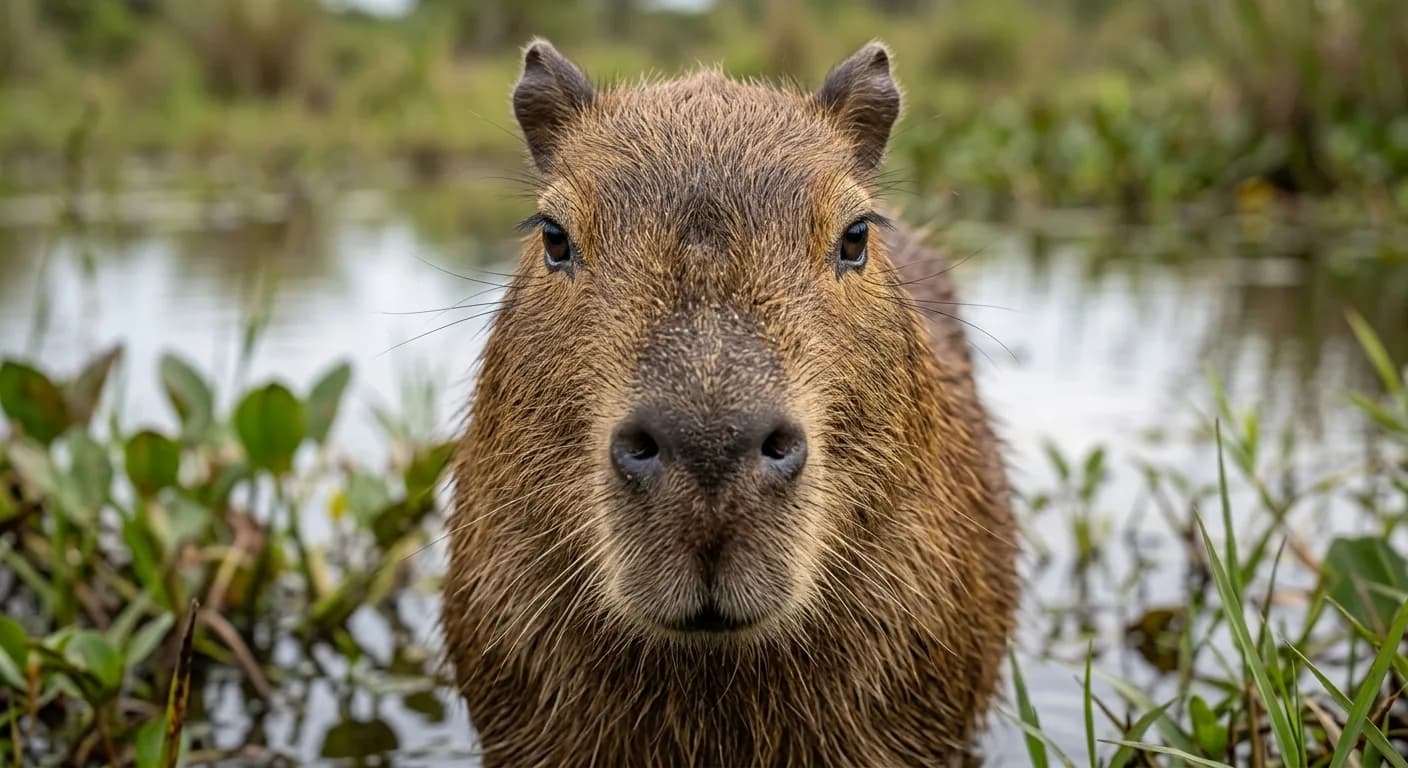
Capybara
Hydrochoerus hydrochaeris
 Least Concern
Black-tailed Prairie Dog
Cynomys ludovicianus
Plains Pocket Gopher
Geomys bursarius
Hispid Cotton Rat
Sigmodon hispidus
Keep exploring
Based on what we already know about guinea pig.
Comments
Share an experience, a fun fact or a tip for seeing the guinea pig.
Be the first to comment.