Mammals · Rodentia · Caviidae
Common Yellow-toothed Cavy
Galea musteloides
The species is abundant and widely distributed; it faces no significant short-term risk. See full glossary
The common yellow-toothed cavy is a caviomorph rodent related to the guinea pig, widespread across Argentina, Bolivia, Peru and northern Chile. It lives in colonies that make use of other animals' burrows and of runways opened through dense vegetation, and is active by day. It feeds on grasses and leaves. Its young are born well developed, with fur, their eyes open and able to eat solid food within hours, a strategy typical of South American rodents that do not depend on a safe burrow.
Weight
200 g – 300 g
Size
17 cm – 25 cm
Lifespan
4 years
Diet
Herbivore
Feeds mainly on plants.
Activity
Diurnal
Active mainly during the day.
Social structure
Colony
Lives in large concentrations, often for breeding reasons.
Sighting difficulty
Easy
Fun facts
- Its young are born so well developed that they can run about and nibble grass on the day they are born, in stark contrast with mice and rats, which are born naked and blind.
- Females mate with several males in the same oestrus, so a single litter can have different fathers.
Life cycle & biology
- Skeleton type
- Vertebrate - internal bony skeleton (mammal)
- Habitat & environment
- Grassland, scrub and field margins of the altiplano and the plains of southern South America
- Sexual maturity
- 2.2 months
- Gestation / incubation
- 54 days
- Litter / clutch size
- 2.63 (average)
Sources consulted: https://es.wikipedia.org/wiki/Galea_musteloides
Where to find it
See its range on the interactive mapWhere to watch it
Parques y spots de buceo donde se ha documentado esta especie — se muestran 10 de 12 documentados.
Related species
Other species in the catalogue with the most in common with Common Yellow-toothed Cavy — same habitat, park, country, tags or family.
 Near Threatened
Patagonian Mara
Dolichotis patagonum
Southern Mountain Viscacha
Lagidium viscacia
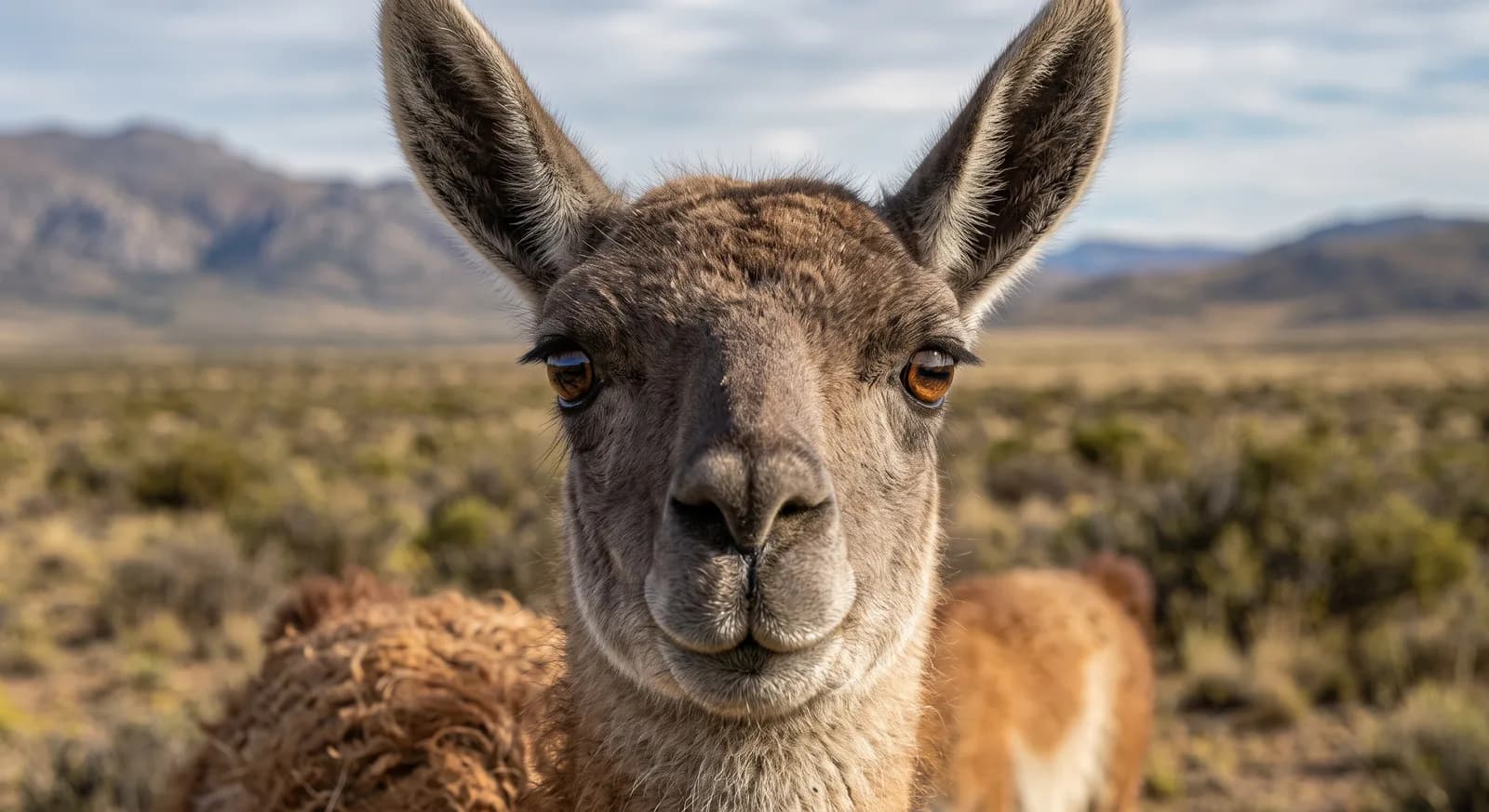 Least Concern
Guanaco
Lama guanicoe
Plains Viscacha
Lagostomus maximus
Monk Parakeet
Myiopsitta monachus
Burrowing Parrot
Cyanoliseus patagonus
Keep exploring
Based on what we already know about common yellow-toothed cavy.
Comments
Share an experience, a fun fact or a tip for seeing the common yellow-toothed cavy.
Be the first to comment.