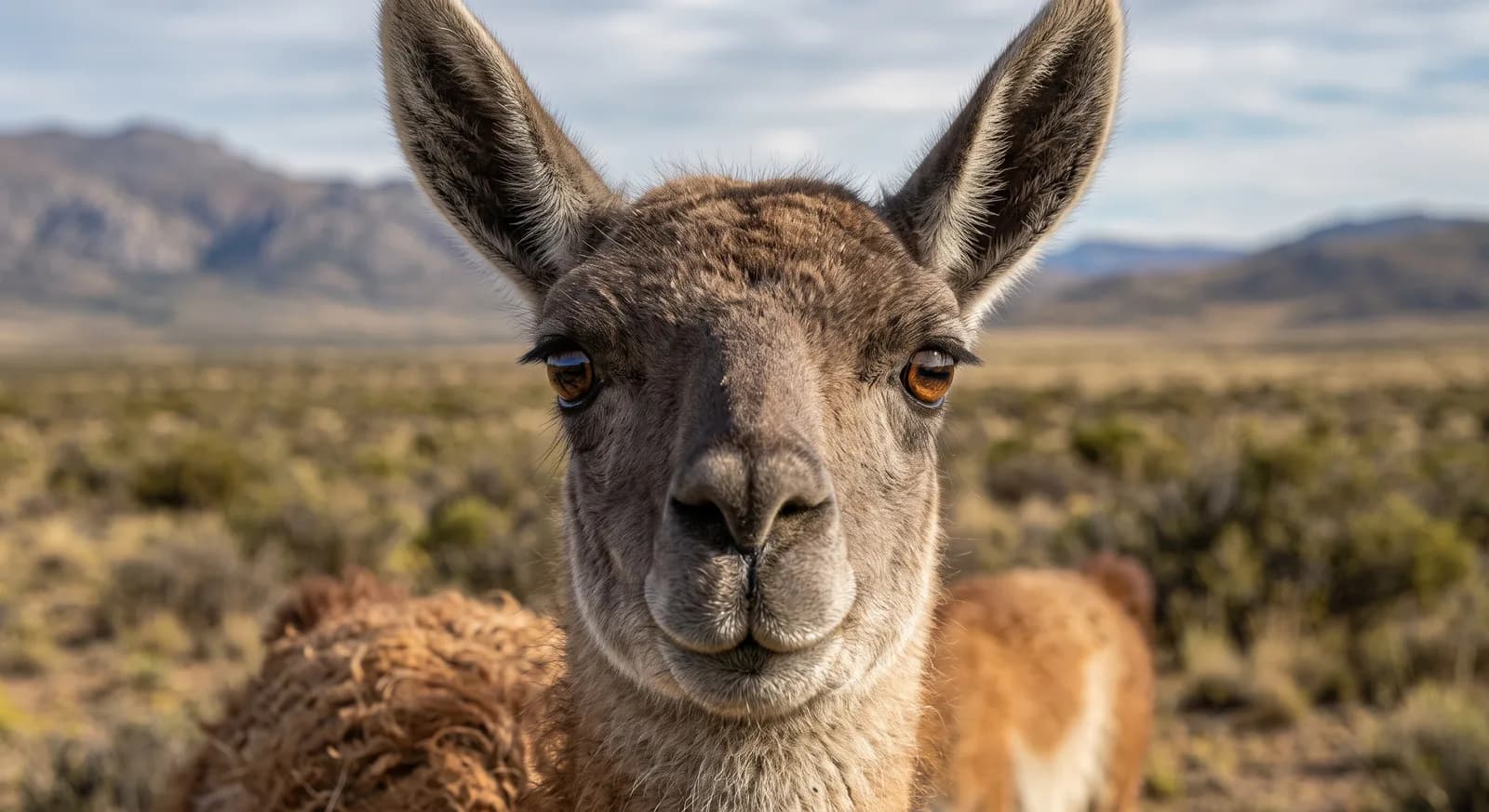
Mammals · Artiodactyla · Camelidae
Guanaco
Lama guanicoe
The species is abundant and widely distributed; it faces no significant short-term risk. See full glossary
It is the wild ancestor of the domestic llama, which descends from it through thousands of years of selective domestication.
Weight
79 kg – 140 kg
Size
1.6 m – 2 m
Lifespan
6 years
Diet
Herbivore
Feeds mainly on plants.
Activity
Diurnal
Active mainly during the day.
Social structure
Herd
Lives in large groups as a strategy against predators.
Sighting difficulty
Easy
Fun facts
- It is the wild ancestor of the domestic llama.
- Dominant males kill unrelated young when they take over a harem.
- It is the largest wild camelid in South America.
- comportamientoIt is the wild ancestor of the domestic llama, and can run at considerable speed across open high-altitude country to escape its natural predators.
Life cycle & biology
- Skeleton type
- Vertebrate - internal bony skeleton (mammal)
- Habitat & environment
- Steppe, arid grassland, scrub and mountain country across much of South America, up to 4,500 m
- Birth weight
- Born precocial, able to stand and run shortly after birth
- Size at birth
- Born precocial
- Gestation / incubation
- 335-360 days (~11-11.5 months)
- Litter / clutch size
- 1 young per birth (a 'chulengo'), with a birth every two years
- Lifespan in captivity
- Documented record of up to 33.7 years
Sources consulted: BioDB; AnAge (genomics.senescence.info); AnimalHub; Grokipedia (Guanaco); Animal Diversity Web; PubMed (endocrine changes guanacos study)
Where to find it
See its range on the interactive mapWhere to watch it
Parques y spots de buceo donde se ha documentado esta especie — se muestran 10 de 18 documentados.
Related species
Other species in the catalogue with the most in common with Guanaco — same habitat, park, country, tags or family.
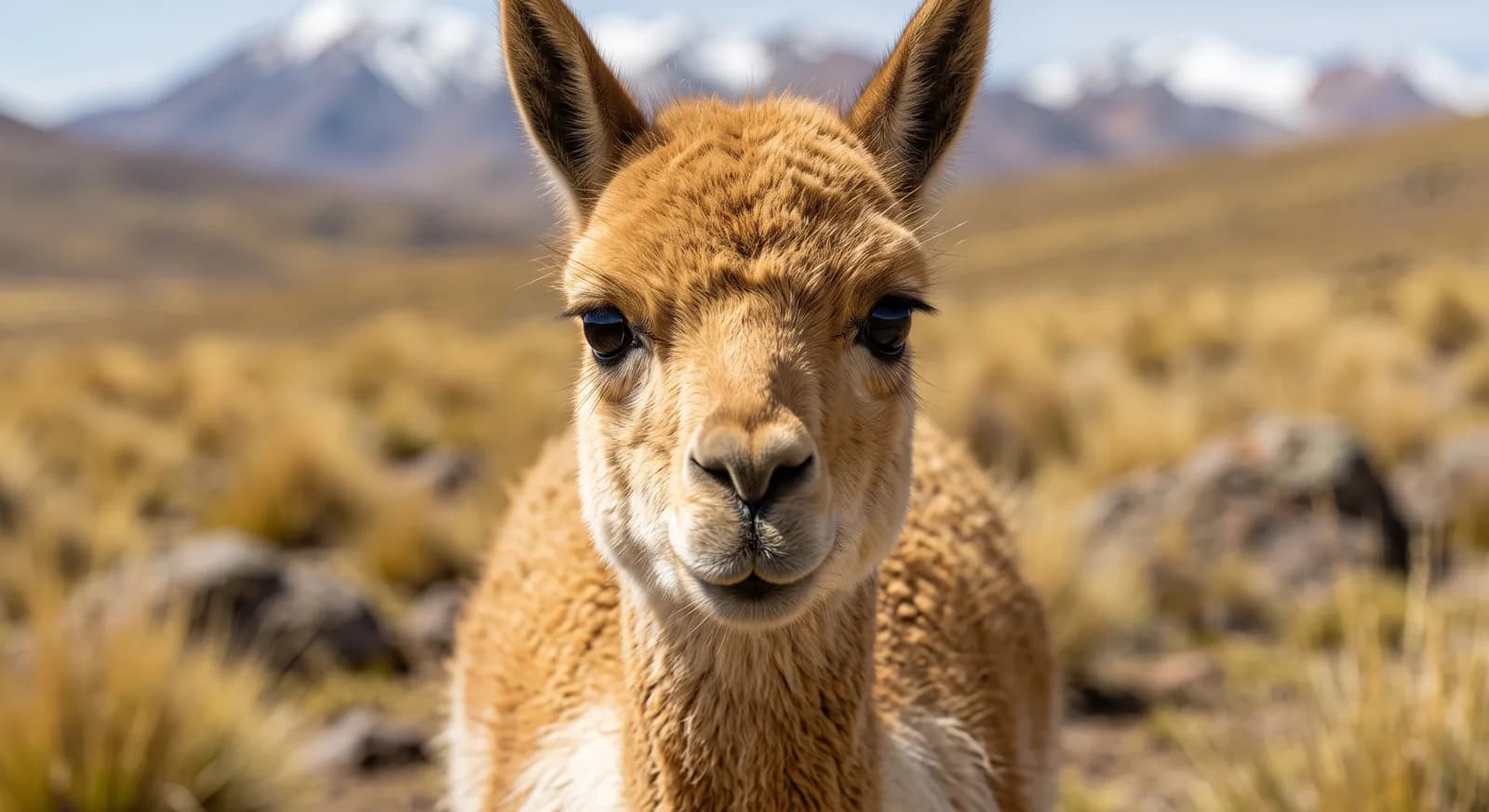 Least Concern
Vicuna
Vicugna vicugna
Southern Mountain Viscacha
Lagidium viscacia
Common Yellow-toothed Cavy
Galea musteloides
Patagonia Mountain Lizard
Phymaturus patagonicus
Alpaca
Vicugna pacos
Llama
Lama glama
Keep exploring
Based on what we already know about guanaco.
Comments
Share an experience, a fun fact or a tip for seeing the guanaco.
Be the first to comment.