Mammals · Artiodactyla · Camelidae
Alpaca
Vicugna pacos
It has not yet been assessed against the IUCN criteria. See full glossary
The alpaca is a domestic camelid bred in the Andes for its fibre, one of the finest and most highly valued in the world. Genetic analyses published in 2001 showed that it descends from the vicuña and not from the guanaco, as had been believed. It grazes the short grasses of the high Andean bofedales, or peat wetlands, and unlike the llama it is not used as a pack animal. Peru holds most of the world's stock. It is a gregarious animal and suffers if kept apart from other camelids.
Weight
45 kg – 85 kg
Size
1.2 m – 1.5 m
Lifespan
20 years
Diet
Herbivore
Feeds mainly on plants.
Activity
Diurnal
Active mainly during the day.
Sighting difficulty
Unknown
Fun facts
- GeneralDomesticated some 6,000 years ago for its fleece; it does not exist in the wild and descends from the vicuña.
- Its fibre contains no lanolin, the grease of sheep's wool, so it rarely triggers allergies and needs no harsh washing before spinning.
- The whole herd uses the same communal latrines, a habit that makes parasite control and the collection of dung for manure easier.
Life cycle & biology
- Skeleton type
- Vertebrate - internal bony skeleton (mammal)
- Habitat & environment
- Andean puna and high grassland (3,500-5,000 m)
- Sexual maturity
- 14.2 months
- Gestation / incubation
- 11.3 months
- Litter / clutch size
- 1.04 (average)
Sources consulted: https://es.wikipedia.org/wiki/Vicugna_pacos
Where to find it
See its range on the interactive mapRelated species
Other species in the catalogue with the most in common with Alpaca — same habitat, park, country, tags or family.
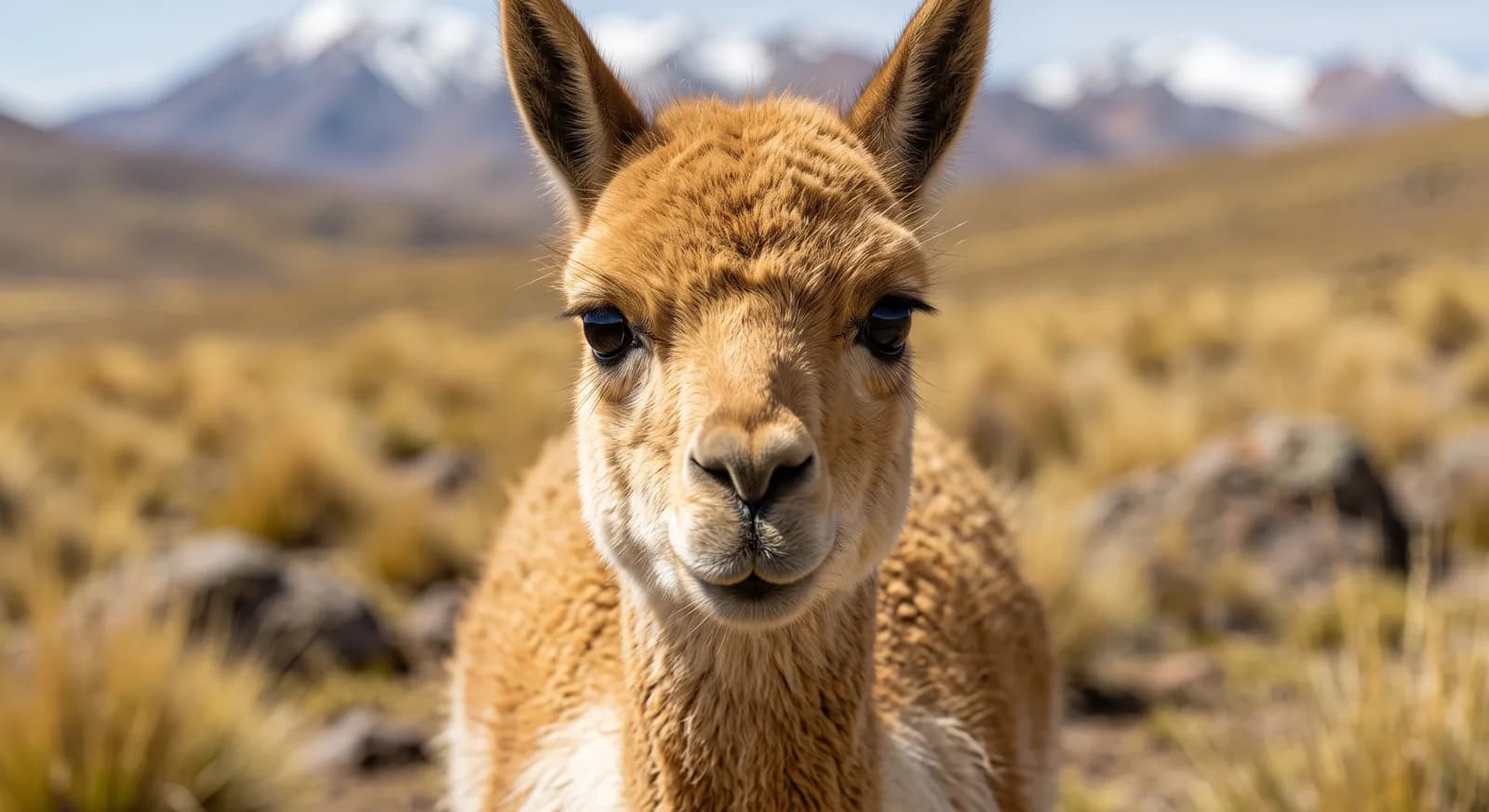 Least Concern
Vicuna
Vicugna vicugna
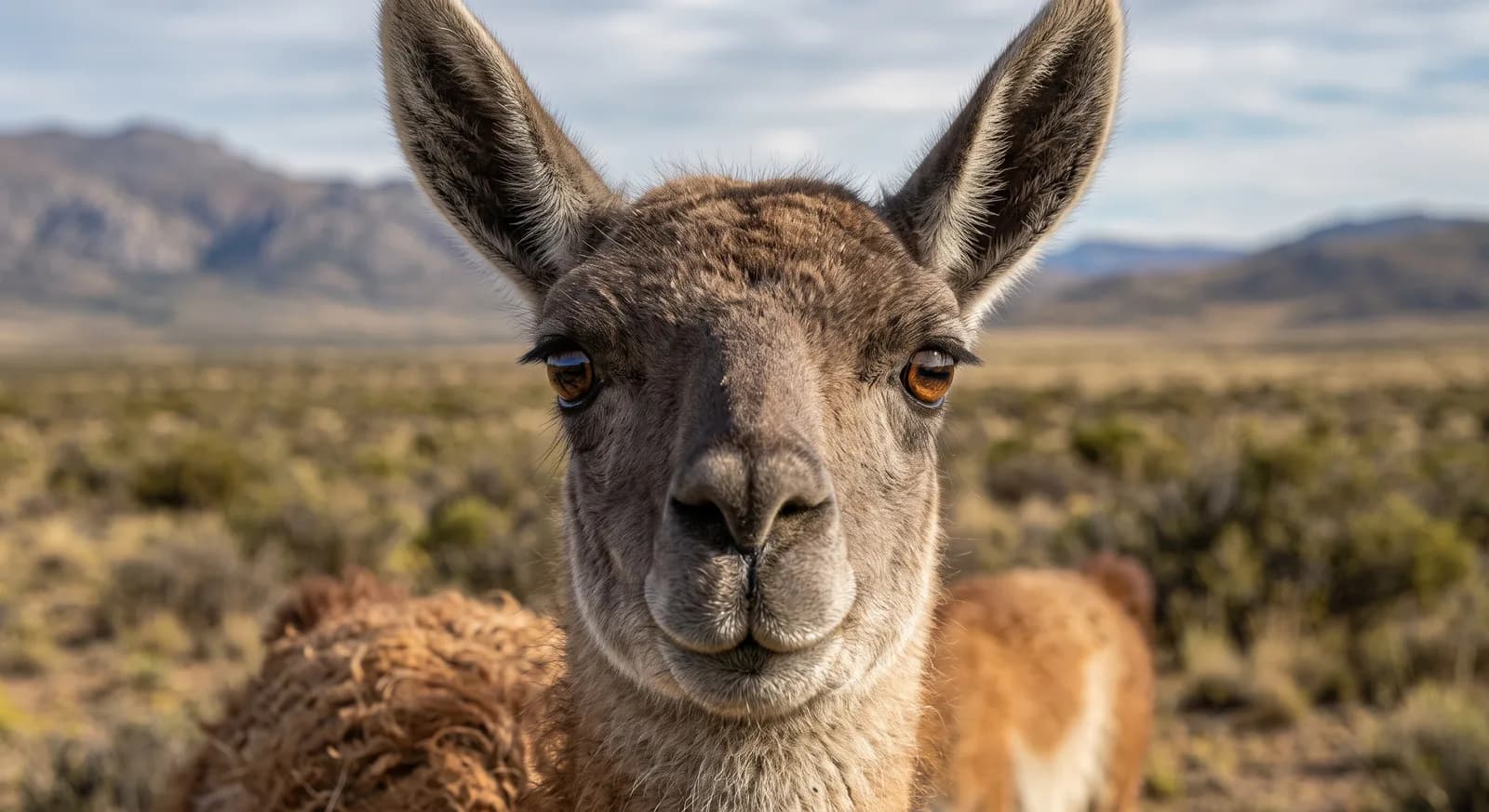 Least Concern
Guanaco
Lama guanicoe
Llama
Lama glama
One-Humped Camel
Camelus dromedarius
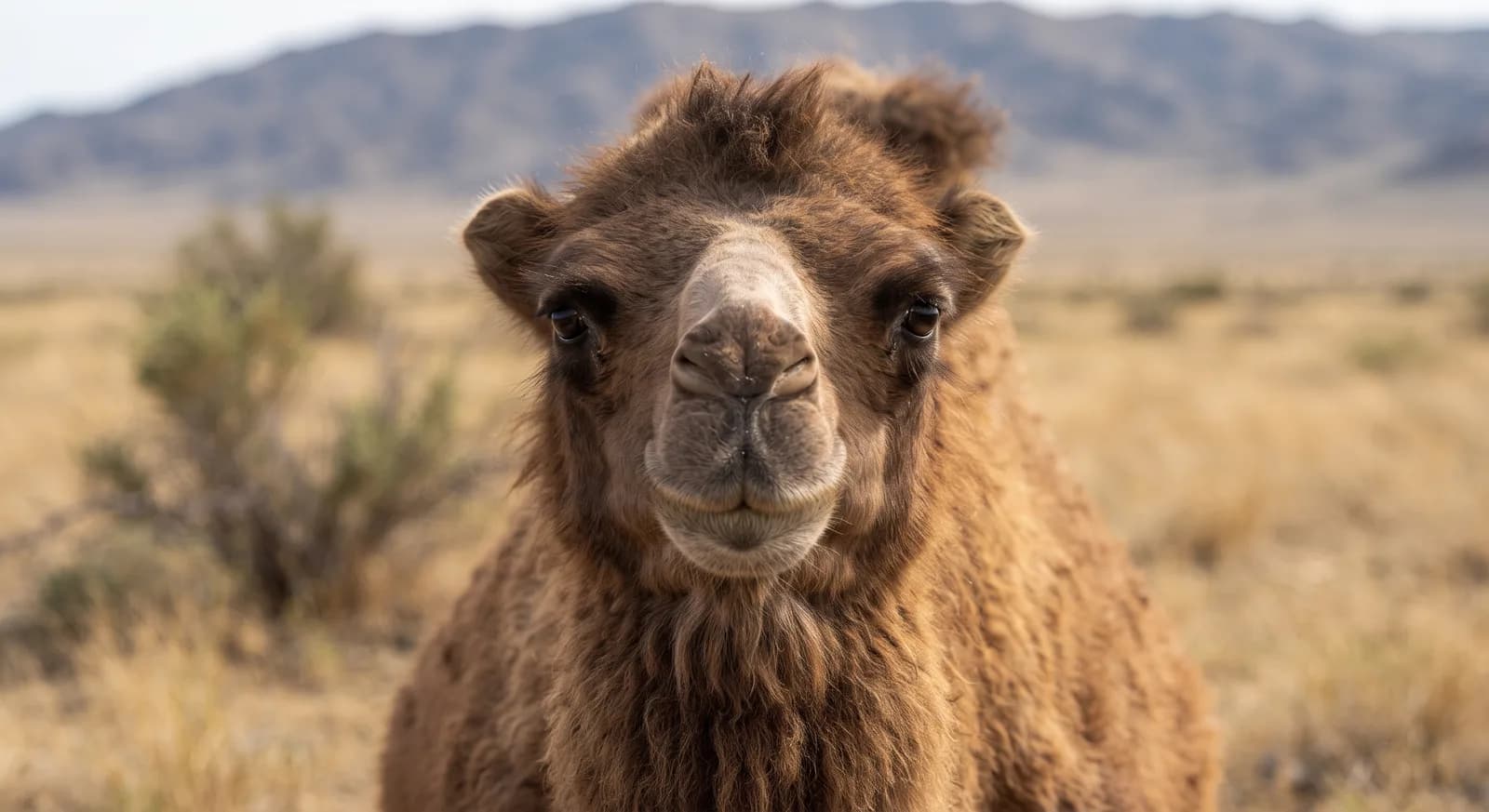 Critically Endangered
Bactrian Camel
Camelus bactrianus
 Near Threatened
Patagonian Mara
Dolichotis patagonum
Keep exploring
Based on what we already know about alpaca.
Comments
Share an experience, a fun fact or a tip for seeing the alpaca.
Be the first to comment.